
Move your home to Japan from Australia
We pack, ship and handle customs.
Guide for Australians relocating to Japan
Japan treats people who really are moving there kindly. Used household goods and personal effects come in free of customs duty and consumption tax when you are moving your home to Japan for at least a year. The price of that deal is a fixed order of events: you declare the shipment on Customs Form C-5360 on the day you land, and the goods must clear Customs within six months of that entry.
Start with the visa, because Customs wants official documents showing you are setting up a home. Australians can land without one and stay up to 90 days, but that is a visit, not a move. Living in Japan takes a status of residence: a work or family visa via a Certificate of Eligibility, a working holiday visa (no annual cap on visas for Australians), the six-month digital nomad status for remote workers on at least ¥10 million a year, or a business or skilled route.
The Australian side is light on customs and heavy on money. Personal effects need no Export Declaration, though the Border Force is still told about them, and a short list of things (firearms, protected cultural objects, wildlife products, 10,000 Australian dollars or more in cash) needs a permit or a report before it can leave. Ceasing to be an Australian tax resident is a capital gains tax event, but leaving the country does not end your residency on its own, and Medicare does not cover you overseas.
Brisbane, Sydney and Melbourne each have sailings that reach Yokohama before any other Japanese port. One carrier's weekly schedule (ANL's, printed 6 November 2026) shows, for its December to February sailings and port to port: Brisbane 13 days, Sydney 15 to 16, Melbourne 19. Its earlier sailings range from 10 to 28 days, and the carrier can change any date without notice. On top of that sit packing, the export report, the wait for a sailing, Japanese clearance and the final delivery.
Plan for three Japanese surprises. Household power is 100 volts against Australia's 230, so anything not marked for both needs a transformer or a replacement. Meat products, soil and most fresh fruit and vegetables cannot come in, and amphetamine medicines such as Adderall cannot be imported even with a prescription. And once you have decided where you live, you have 14 days to register the address at the municipal office; My Number, health insurance and the pension follow from there.
Here's the honest picture: the ocean is the easy part. Australia and Japan are a couple of weeks apart by sea, and Japanese Customs publish their rules for movers in plain English. What catches people out is the order of things. The visa gives you the proof, the day you land gives you your one chance to declare the shipment, and the six months that follow are the clock. Miss the declaration and your sofa is treated as ordinary trade cargo.
The bigger surprise is usually the money, and it isn't the shipping bill. It's finding out that stopping being an Australian tax resident is a taxable event, that Medicare doesn't come with you, and that Japan has its own rules for when you count as a resident and which of your overseas income it can tax. None of that is a reason not to go. All of it is worth an hour with an adviser who knows both systems while you still live in Australia.
Below we go through it roughly in the order you'll meet it: what to sort in Australia, the visa routes, the customs steps on both sides, what the goods can and can't include, the crossing, the car and the dog, and then your first weeks in Japan.
How we get you there
Three things decide an Australia-to-Japan move: a visa that proves you're really relocating, the sealed Customs form you pick up the day you land, and the six months you then have to clear the shipment. We build the plan around them, and the dates are yours to choose.
Tell us about your move
Where you live in Australia, where you're settling in Japan, and a rough idea of what is coming. You get a plan and a realistic arrival window with your estimate, before anything is booked.
Meet your Move Manager
One person maps out the shipment with you and raises the awkward questions early: the 230-volt kitchen, the medicine cabinet, the dog's paperwork, and whether the sofa will fit up a Tokyo stairwell.
We handle the rest
Packing, Australian export reporting, the sailing, Japanese clearance and delivery to your new front door. You do the goodbyes. The one thing only you can do is the form you hand in on the day you land.
Times of year that shape this move
Most of the calendar on this route is set by Japan, not by Australia. Four stretches are worth putting on your planning sheet:
- March and April
Japan's own moving season. The transport ministry says moving requests bunch up in March and April every year, and that March move numbers run at about double a normal month (release of 12 February 2025). That is the stretch to book delivery early and expect crews to be stretched. - 29 April to 5 May
Golden Week. In 2027 the holidays are 29 April and 3 to 5 May. Government offices, Customs included, are shut on national holidays in principle, so a clearance slot can quietly disappear here. - 29 December to 3 January
Government offices close for the New Year in principle, and regional Customs offices publish reduced-service tables for the holiday (Nagoya Customs did for 2025-26). Check yours before you settle on a clearance date close to it. - July to October
Typhoon season. In an average year 11.7 typhoons pass within 300 km of Japan (the weather agency's 1991-2020 figures), most of them from July to October and the most in August and September. No port authority says how much that bends sailing schedules, so build in some slack and don't treat it as a rule.
Leaving Australia: tax, Medicare, super and paperwork
Shipping is only half of leaving. The rest sits with you, not the container, and most of it is easier while you still have an Australian address, an Australian phone number and an Australian adviser you can ring. What follows is what the official pages say, and where they are silent we say that too.
Tax: the day you stop being a resident
This is general information drawn from ATO pages, not tax advice. Your own facts decide the answer.
- Boarding a plane doesn't settle your residency
The ATO weighs your actual life. It starts with whether you still 'reside' in Australia, then checks domicile, the 183-day test and a test for Commonwealth super scheme members. Its own example happens to be set in Japan: a teacher on a one-year contract stays an Australian resident because home is still Australia. Build a home in Japan with no plan to return and the answer shifts, and the ATO warns that someone who never cuts their ties stays a resident. - Stopping being a resident is a CGT event
You are taken to have sold your CGT assets, shares for example, at market value on the day you stop being a resident. Taxable Australian property such as real estate sits outside that rule. The full 50% CGT discount is not available on assets bought after 8 May 2012 and sold once you are a foreign resident, though you may get a part discount for the years you were resident (ATO, page updated 22 June 2026). - The tax return for the year you leave
If your status changes from resident to foreign resident during the year, you answer 'yes' to 'Are you an Australian resident?' and are taxed at resident rates for that year, with a tax-free threshold pro-rated by the months you were resident. Foreign residents don't pay the Medicare levy, and from the date you stop being a resident you no longer return foreign-source income in your Australian return. - If you owe a HELP, VET Student Loan or apprenticeship loan
You must submit an Overseas travel notification and update your contact details within 7 days of leaving Australia if you intend to live overseas for 183 days or more in any 12 months, and report your worldwide income each year by 31 October (ATO, updated 13 October 2026).
Medicare, super and Centrelink
- Medicare stays behind
Services Australia is clear that Medicare doesn't cover you overseas, so organise health cover for Japan before you fly. When you return you may have to enrol again, depending on how long you were away and on your citizenship or residency status. - Super
The ATO's departing Australia superannuation payment exists for people who worked here on a temporary visa. Australian and New Zealand citizens and permanent residents can't claim it, so ask your fund what it does for members living overseas. If an Australian employer is posting you to Japan for a while, the social security agreement may keep you inside Australia's super system (more under Life in Japan below). - Centrelink and child support
If you get a Centrelink payment or concession card, you may need to tell Services Australia that you're leaving. If you have a child support case, call them before you go: a child support debt can lead to a Departure Prohibition Order that stops you leaving until it's paid or you have an arrangement in place. - myGov
Check that your myGov sign-in works from overseas. If it relies on a text message to an Australian number you won't have in Japan, change your sign-in options before you leave, because you can't update your details online without access.
Apostilles and housekeeping
- Apostilles
Both countries belong to the Hague Apostille Convention, so a public document such as a birth or marriage certificate usually gets an Australian apostille before it goes to Japan. Check with the Japanese office asking for it which documents need one. The Department of Foreign Affairs and Trade does the stamping: book an appointment at an Australian Passport Office or post your request in. There is a fee. The stamp goes on your original, but you can have a notarised copy stamped instead if the Japanese side will accept it (Smartraveller, updated 30 September 2026). - Translations
Japan's Immigration Services Agency asks for a Japanese translation of foreign-language documents (its dependent-visa page says so), so budget for a translator before you start collecting certificates. - Housekeeping that isn't law
No official page tells you which accounts to close, so treat this as good practice. Keep one Australian bank account open for the bills and refunds that will keep arriving, tell your bank and your super fund where you're moving, and cancel the subscriptions you won't use.
Which Japanese visa fits your move
A visit and a move are different things in Japan's eyes. On an Australian passport you can arrive with no visa and stay up to 90 days: sightseeing, family, a short course, a business meeting. Japan allows longer only when something truly unavoidable and humanitarian happens; otherwise 90 days is the cap.
Most residence routes run through a Certificate of Eligibility first. It is free, standard processing runs one to three months, and an unused certificate lapses three months after issue. You or the host organisation file for it in Japan; with the certificate in hand, you apply for the visa itself at an embassy or consulate.
The routes Australians actually use
Six routes cover most Australians planning a move. Which one fits depends on your age, who pays you and for how long, and whether a partner or children are coming too.

Visa-free visit (up to 90 days)
Australians are on Japan's visa-exemption list and are granted 90 days on landing as a Temporary Visitor. It covers tourism, family visits, short courses and business contact, not a move. Use it for a look-around trip, and plan the real move on one of the routes below.
Working holiday
Japan has run this arrangement with Australia since 1980 and sets no annual limit on visas for Australians. You apply in Australia as an Australian citizen living here, aged 18 to 30 according to the Embassy of Japan in Australia (Japan's foreign ministry words the limit as 25 unless both governments extend it to 30, so check with the embassy), without dependants and with savings of at least A$2,500 if you are single. The visa is free, valid for entry for a year and issued once. It is a holiday with work on the side, not a way into a full-time job.
Work visas through a Certificate of Eligibility
A job offer from a Japanese employer usually points to the Engineer/Specialist in Humanities/International Services status. Degree-level study in a relevant field, or a decade of hands-on experience, is the usual entry test for technical work, and the pay has to match what a Japanese colleague would receive. Colleagues transferred inside a company group use Intra-company Transferee. Either way, the Certificate of Eligibility comes first, applied for by you or the employer.
Digital nomad (six months)
A Designated Activities status for remote workers, open to Australians. You need at least ¥10 million a year in income and private medical cover of at least ¥10 million, and you may work for an employer abroad or sell services to people abroad, but not take a job with a Japanese organisation. It runs six months with no extension and no residence card, and a spouse or child gets their own status.
Starting a business, or scoring high
A new Business Manager applicant now has to show ¥30 million of business assets (the rules changed on 16 October 2025), employ at least one full-timer who is Japanese or a foreign national on a settled or family-based status, and have Japanese around JLPT N2, in their own head or an employee's. Highly Skilled Professional is a points game scored on degrees, work history and income, and you need 70 points.
Family and dependants
Someone supported by a spouse or parent who holds a work, business, highly skilled or student status can apply for Dependent status, granted for up to five years. Certificates issued in Japan must be less than three months old, and anything in another language needs a Japanese translation. The Immigration Services Agency is silent on whether a dependant can work, so check before counting on a second income.
The order that matters: a status of residence comes first. Customs asks for official documents, your passport or others, showing that you are setting up a home in Japan and will stay at least a year before it treats your goods as a mover's. After you land, you have 14 days to tell the municipal office where you live.
Rules change, so check the current requirements with Japan's Immigration Services Agency and the Embassy of Japan in Australia before you commit to dates, and get advice on anything particular to your situation.
Leaving Australia, arriving in Japan: the customs side
Two sets of rules meet your shipment. Japan decides what you owe when your belongings land, and for a genuine move the answer is usually nothing: used household goods and personal effects of someone moving to live in Japan come in free of customs duty and consumption tax, claimed with a declaration you hand in yourself on the day you arrive.
Leaving Australia is the lighter half. Personal effects don't need an Export Declaration, but the Border Force is still notified through an exemption code, unless a permit-controlled item is in the load. Permits matter for guns, ivory and similar protected goods, native wildlife and listed cultural heritage. Timber and leather can count as wildlife in the environment department's eyes when they come from native or CITES-listed species, which makes the souvenir carving worth a second look. Cash is its own rule: AUSTRAC wants to hear about 10,000 Australian dollars or more before it goes, even when it's packed in freight.
There is also one step in the middle that nobody can do for you. Japan wants the declaration from the person who is moving, handed over in person on arrival. A customs broker can clear the port side of the shipment later, but the declaration and the sealed copy have to come from you. Japan's import rules in full are in our guide to relocating to Japan.
Movers get their relief under Article 14, item 8 of the Customs Tariff Law. It applies to used goods that you and your family use personally, plus the tools of your trade, when you enter Japan to settle there. Customs takes that to mean a stay of at least a year, which your passport or other official documents must show; someone coming back to live in Japan must have lived abroad continuously for a year or more. Cars, boats and aircraft follow their own rule.
Quantities have to make sense for your household. No official page lists items, caps quantities or values, or sets a minimum period of ownership, and none says how a mover's alcohol and tobacco are counted. Ask a Customs counsellor before the cellar goes in the container.
- In Australia · before you pack
Look for anything that needs a permit
Permits are needed for guns, for native wildlife, for certain cultural objects, and for ivory and other CITES-listed wildlife goods. Heritage permits can take many months, and certain Aboriginal and Torres Strait Islander objects are barred from export altogether. Separately, cash or other money worth AUD 10,000 or more must be reported to AUSTRAC before it goes, even when it travels in freight.
- In Australia · before the goods leave
Usually no export declaration
Personal effects don't need an Export Declaration unless something in the shipment needs an export permit, though the Border Force is still told about them under an exemption code. No export duty applies in Australia, and exports usually carry no GST.
- For Japan · when the goods are booked
Mark the shipment as unaccompanied baggage
Before the goods are booked, tell the freight company or customs broker that the cargo is unaccompanied baggage. Not every carrier handles it, and otherwise the shipment may be cleared as ordinary trade cargo. Put 'unaccompanied baggage' on the packages and the invoice, with your name as addressee.
- In Japan · on the day you land
Declare the shipment on Form C-5360
Customs wants two copies of the form officially titled Declaration of Accompanied Articles and Unaccompanied Articles, which is Form C-5360. You hand them over at the airport or port, saying yes at question 3 and writing the number of packages. A family needs only one declaration. Customs seals one copy and hands it back, and that copy can't be reissued. Declaring is only possible while you're entering Japan, so goods that never made it onto the form can't be added afterwards.
- In Japan · within six months of entry
Clear the shipment with the sealed copy
When the arrival notice comes, collect the transport documents from the carrier and take the sealed declaration, a statement of contents, your passport and any receipts to Customs' unaccompanied baggage section. The goods are examined, plants and animals go through quarantine, and you pay anything assessed. A licensed customs broker can do this for you, with your sealed copy. The deadline is six months from entry, unless Customs accepts an unavoidable special reason such as a shipping accident or a port strike.
The paperwork to have ready
Japanese Customs checks one thing above all: that your life really is moving, not just a container. Keep these together:
- Your passport, plus your visa or Certificate of Eligibility, and your residence card once you have it
- Customs Form C-5360 in two copies (you can print it in advance). The copy Customs seals and hands back is the one you need at clearance
- A statement of contents for the shipment. A packing list that names what is in each box is the natural starting point
- The shipping line's arrival notice and the delivery order you collect from the carrier
- Your passport again, and any receipts, at the clearance counter. Tokyo Customs' own checklist also lists a personal seal (inkan), which the national FAQ doesn't mention, so ask your broker what your port expects
- For a car: its Australian registration papers and the vehicle exemption application, Form T-1280, in three copies
- For plants: the phytosanitary certificate from the exporting country. For medicines beyond the one-month limit: the import confirmation certificate
What can slow clearance in Japan
A clean clearance is mostly about paperwork. These are the things that turn it into a longer conversation:
- A late or missing declaration
Goods shipped separately can only be declared as you enter Japan. Miss that moment, or lose the sealed copy, and Customs treats the shipment like trade cargo, with the usual import procedures. - A carrier who doesn't know it's unaccompanied baggage
Some freight companies don't handle it, and a shipment without the marking can be cleared as general cargo before your sealed form is ever used. Check with the carrier or broker first. - Food and plants
Japan bans meat and meat products in principle, ham, sausage and jerky included, even vacuum-packed, and most fresh fruit and vegetables can't come in. Soil is banned. Plants and seeds need a phytosanitary certificate from the exporting country and an inspection, and can travel as unaccompanied baggage if your broker presents the certificate at inspection. Importing without one can mean up to three years' imprisonment or a fine of up to ¥3 million. - Medicines
A month of prescription medicine (two for most others) crosses without a certificate; beyond that you need an import confirmation certificate. Narcotic medicines and anything made from stimulant ingredients need permission from the Narcotics Control Department first, requested at least 14 days before departure, and you must bring them yourself. They can't be mailed or handed to family to carry. Amphetamine, the ingredient in Adderall, is refused even with a prescription, and the Ministry puts dexamphetamine in the same category. Lisdexamfetamine (Vyvanse) is allowed with advance permission. Methylphenidate (Ritalin, Concerta) needs nothing up to the Ministry's quantity table and a doctor's letter beyond it. Plenty of ordinary cold and pain remedies contain codeine or pseudoephedrine, so check the Ministry's list before you pack the bathroom bag. - Vapes and cannabis
Nicotine vaping liquid is treated as a medicine in Japan, so small personal amounts only. Cannabis is banned, and CBN became a banned designated substance on 1 June 2026. - Cash and gold
Cash or securities above ¥1,000,000 (or the equivalent) go on a separate means-of-payment form, and gold of any amount, bullion or jewellery, new or used, must be ticked on your arrival declaration.
What you can import to Japan

Personal belongings
Duty and tax are waived when you move for a year or more, if the amount suits your household

Used clothing

Household appliances
Japan's mains is 100 V, so 220-240 V appliances need a step-up transformer

Fragile items

High-value items
Gold of any amount goes on your arrival declaration; cash over JPY 1 million needs its own form

Large items & furniture

Excess luggage
Tell Customs about it as unaccompanied baggage the day you land, and finish clearance inside 6 months

Pets
Tell the quarantine service 40 days ahead; most origins also need a rabies titre test and a 180-day wait, but not Australia or New Zealand

Vehicles
Duty relief needs form T-1280 and no selling for two years; driving it needs Japanese inspection and registration
What Japan restricts

Illicit drugs & drug paraphernalia
Adderall (amphetamine) is refused even with a prescription

Prescription & non-prescription medicines
Up to a month of prescription medicine clears without a certificate; more needs one. Vyvanse needs approval beforehand, and you carry it yourself

Cannabis & CBD products
Cannabis can't be imported, and CBN products joined the banned list on 1 June 2026

E-cigarettes & vapes
Nicotine e-liquid is treated as a medicine; about a month's use (120 ml) clears without a certificate

Alcohol & tobacco
No published limit for movers (visitors get 3 bottles and 200 cigarettes), so ask Customs about a collection

Weapons, firearms & controlled items
No pistols or the ammunition made for them; hunting guns, air guns and swords are allowed only with permits

Explosives, fireworks & flares

Other hazardous or dangerous goods
Gas cylinders, kerosene and pesticides each fall under separate Japanese laws

Counterfeit & pirated goods

Banned publications & media
Anything obscene or immoral, plus child pornography

Ivory & protected wildlife products
Ivory and other protected-wildlife products need the exporting country's permit and a METI licence

Plants, seeds & anything in soil
No soil, and no plants with soil on them; other plants and seeds need a phytosanitary certificate

Food, supplements & consumables
Fresh fruit and vegetables are mostly refused at the border

Meat & dairy products
Meat is banned in principle, including ham, sausage and jerky
How much can you bring?
We move households from Australia to Japan of every size, from a single room in a share house to a four-bedroom place with a shed nobody has fully cleared since the last move.
- Minimum: 6 boxes
Smaller shipments share a container with other moves heading the same way, which keeps the cost sensible. The trade-off is timing, because a shared container sails when it's full. - No maximum
The whole house, the shed and the contents of the garage can travel in a container of your own, on your dates.
The real question isn't whether it fits in the container but whether it fits in Japan, and how Customs sees it. The relief applies to what is reasonable for you and your family, with no published list or cap, and Customs will read your contents statement against that test, so a plain, honest list is your best friend. Measure the doorways and stairwells at your new place before you decide the sectional is coming.
The forms, explained simply
- Form C-5360, the arrival declaration
Its full title is Declaration of Accompanied Articles and Unaccompanied Articles. C-5360-B is the English edition, and Customs offers other languages too. Question 3 asks whether you have unaccompanied articles; the form tells you to hand it in duplicate and says those articles must be imported within six months. Customs recommends Visit Japan Web for the usual declaration, yet its pages still describe two paper copies for unaccompanied goods and never say the online version replaces them. Carry the paper form. - The sealed copy
The copy an officer stamps and hands back at the airport or port. It is your proof at the clearance counter, and it can't be reissued. - Form T-1280 (cars)
A car's duty exemption is requested on this form, in triplicate, alongside proof that you already used the car abroad and that you're relocating to Japan. More in the car section. - Import confirmation certificate (medicines)
Needed for medicines beyond the one-month limit. You apply to the regional bureau of health and welfare that covers the Customs office where the goods arrive. - Phytosanitary certificate (plants)
Issued by the exporting country's government agency before you ship, and presented at the Plant Protection Station inspection.
Where to check Japanese customs guidance
Japan Customs publishes the rules for people moving to Japan, including its FAQ on duty-free household effects and the Form C-5360 declaration, and points individual movers to its Customs Counselors for questions the FAQ doesn't answer.
Duty, consumption tax and the relief that removes both
If your belongings don't qualify for the relief, Japan treats them as an ordinary import: customs duty where the tariff sets one, plus consumption tax at 10% (8% on reduced-rate goods), worked out on the customs value plus any duty and excise (Japan Customs, as at 6 November 2026). The relief exists so that people genuinely moving house don't pay that, and it comes with published conditions rather than guesswork.
What counts as moving
- Who qualifies
Someone entering Japan to move their home there. For a foreign national, Customs looks for official documents showing that you have set up a home in Japan and will stay at least a year. Someone returning to live in Japan after a continuous year or more abroad qualifies too, Japanese nationals included. - The six-month window
The goods have to be imported within six months of your entry, unless the Director-General of Customs accepts an unavoidable special reason, such as a shipping accident or port strike. The test is import, and Customs speaks of goods that are 'clearable at Customs' within the six months, so aim for release well before the deadline, not just a docked ship. - Used, and reasonable
The relief covers goods for the personal use of you and your family, plus tools of your trade, in a quantity that is reasonable for your circumstances. Customs may put costly goods or commercial quantities through the same procedure as ordinary cargo.
Where it gets less certain
Three places where the official pages are silent or slightly out of step with each other:
- Alcohol and tobacco
The traveller allowance is three bottles of about 760 ml and 200 cigarettes per adult, and it is written for visitors and returning travellers. Customs' pages also say a mover's household effects come in free within a reasonable limit, but nothing we found says how a wine collection or cartons of cigarettes are counted in a move. Ask Customs before the cellar goes in the container, and declare whatever travels. - New and costly things
The relief is for goods that you and your family use. Nothing we found excludes brand-new items or sets a minimum period of use, but Customs' FAQ says costly goods may be put through the same procedures as general cargo, and it gives no figure for 'costly'. List recent purchases separately and keep the receipts. - A stay that sits right on a year
Customs' English FAQ speaks of staying more than one year, while its internal circular says at least one year. If your contract or visa is exactly twelve months, ask a Customs counsellor which reading applies before you book.
Which Japanese port, and how cargo gets there
We checked one weekly service from Australia to Japan: ANL's A3N, part of the CMA CGM group. It loads in Melbourne, Sydney and Brisbane and reaches Japan at Yokohama first. Its schedule, printed on 6 November 2026, shows Tokyo cargo trucked from Yokohama, Kobe cargo trucked from Osaka, and Nagoya and Hakata cargo fed through Busan. Every date on it is, in the carrier's words, subject to change without notice.
Which port suits you is mostly geography: Yokohama and Tokyo for Kanto, Osaka and Kobe for Kansai, Nagoya for Chubu, Hakata for Kyushu. That is our reading of the map, not an official statement, and your Move Manager will choose the port with you.

The routes we use
Yokohama, the first Japanese call
On the printed schedule the ship reaches Yokohama before any other Japanese port. It is the natural gateway for Kanto, and the Tokyo date on the schedule falls about three days later because the cargo is trucked up from Yokohama.
Osaka and Kobe, for Kansai
Osaka is a direct call two to three days after Yokohama on the printed sailings, and Kobe cargo is trucked from Osaka a few days after that.
Nagoya and Hakata, via Busan
Both are fed through Busan on this service, and their dates run roughly two to three weeks after Yokohama on the printed sailings. Hakata is the port for Fukuoka and Kyushu.
If you're leaving from Perth or Adelaide
The schedule has no Fremantle call, and Adelaide cargo goes via Melbourne. Ask your Move Manager how a Western Australian move is routed.
Air freight, for the few things you can't wait for
The boxes you need before the container lands can go by air or express courier. It costs much more per kilo than the sea, so we'll tell you honestly when it isn't worth the money.
A container of your own
Your belongings, your dates and your delivery window. The best fit for a full house or anyone working to a lease start.
Shared container, or groupage
Your things travel alongside other households heading the same way. It costs noticeably less, and the trade-off is waiting for the container to fill.
Storage at either end
Arranged within the same job, because an Australian handover date and a Japanese lease almost never line up.
The awkward extras
The surfboards, the piano, the chest freezer, the esky nobody will part with. Mention them at the survey and they become a line on your estimate rather than a problem on packing day.
Sample sailing times, Australia to Japan (ANL A3N, December to February sailings, schedule of 6 Nov 2026)
| From | To | Est. port to port |
|---|---|---|
| Brisbane, Australia | Yokohama, Japan | 13 days |
| Sydney, Australia | Yokohama, Japan | 15-16 days |
| Melbourne, Australia | Yokohama, Japan | 19 days |
Insuring your shipment
Your things are packed in Australia, trucked to a port, lifted onto a ship, carried north, unloaded in Japan, cleared and delivered. Each of those handovers is a moment where something can knock or crack. Most shipments arrive exactly as they left. Insurance is there for the ones that don't.
What to check in a policy
Every policy reads differently. These are the questions worth asking before you sign:
- The whole move, not just the sailing
Ask that cover runs from your Australian door to your Japanese one, including any storage in between. - The exclusions
Marine cargo policies commonly exclude insufficient packing where you did the packing, delay, and war, strikes and terrorism unless they are bought back. Boxes you pack yourself are the usual sore point, so ask directly if you plan to pack any. - Earthquakes and typhoons
They are part of life in Japan, and the standard cargo wording we read doesn't name them either way. Ask your insurer whether they are covered rather than assuming. - Get the declared value right
It isn't what you paid years ago or what it means to you. It's what each item would cost to replace in Japan, and it's the figure any claim will be measured against. - Our own cover
We can arrange cargo insurance as part of your move. Your Move Manager gives you the terms with your estimate.
Door to door, Australia to Japan
Our service runs from your Australian front door to your Japanese one: packing, export, the sailing, Japanese clearance and delivery. A single Move Manager holds the whole file, so nothing slips between an Australian packing crew and a Japanese broker.
Here's how it unfolds:
- Survey and estimate
At your home or by video walkthrough. We work out the volume, raise the car, the medicines and the pets early, and give you an estimate with the sailing already built in. - Inventory and paperwork
Before packing day your Move Manager goes through the list with you, flags anything Japan restricts, and helps you pull together proof of your life in Australia while the documents are still easy to find. - Packing at your address
Our crew wraps and boxes everything, and the itemised list they write is the base for your statement of contents. You can pack some boxes yourself, though insurers often exclude them, and we'll tell you that up front. - Loading and export
Your belongings go into the container that will carry them, the Australian export side is lodged, and you receive an arrival window rather than a hopeful guess.
Arrival in Japan
A licensed customs broker can clear the goods at the port on your behalf. What a broker can't do for you is the declaration on arrival and the sealed copy, which must come from you. Your Move Manager can advise which documents the broker will need.
Delivery to your new home
Once cleared, your shipment is trucked to your address. The crew carries it in, sets furniture where you point, rebuilds what was taken apart and clears away the packing materials.
When the dates don't match
They often don't. Storage at either end can be arranged as part of the same job, not added as a surprise later.
From first survey to last box, you ring the same person. No call centre queue, no ticket number.
Talk to a real person now
Bringing a car from Australia
Start with the one piece of good news: Australia and Japan both drive on the left, and Japan's Road Traffic Act has vehicles keep to the left part of the road, so you won't be shipping a car built for the other side. What replaces that worry is paperwork, in two stages: Customs first, then road registration.
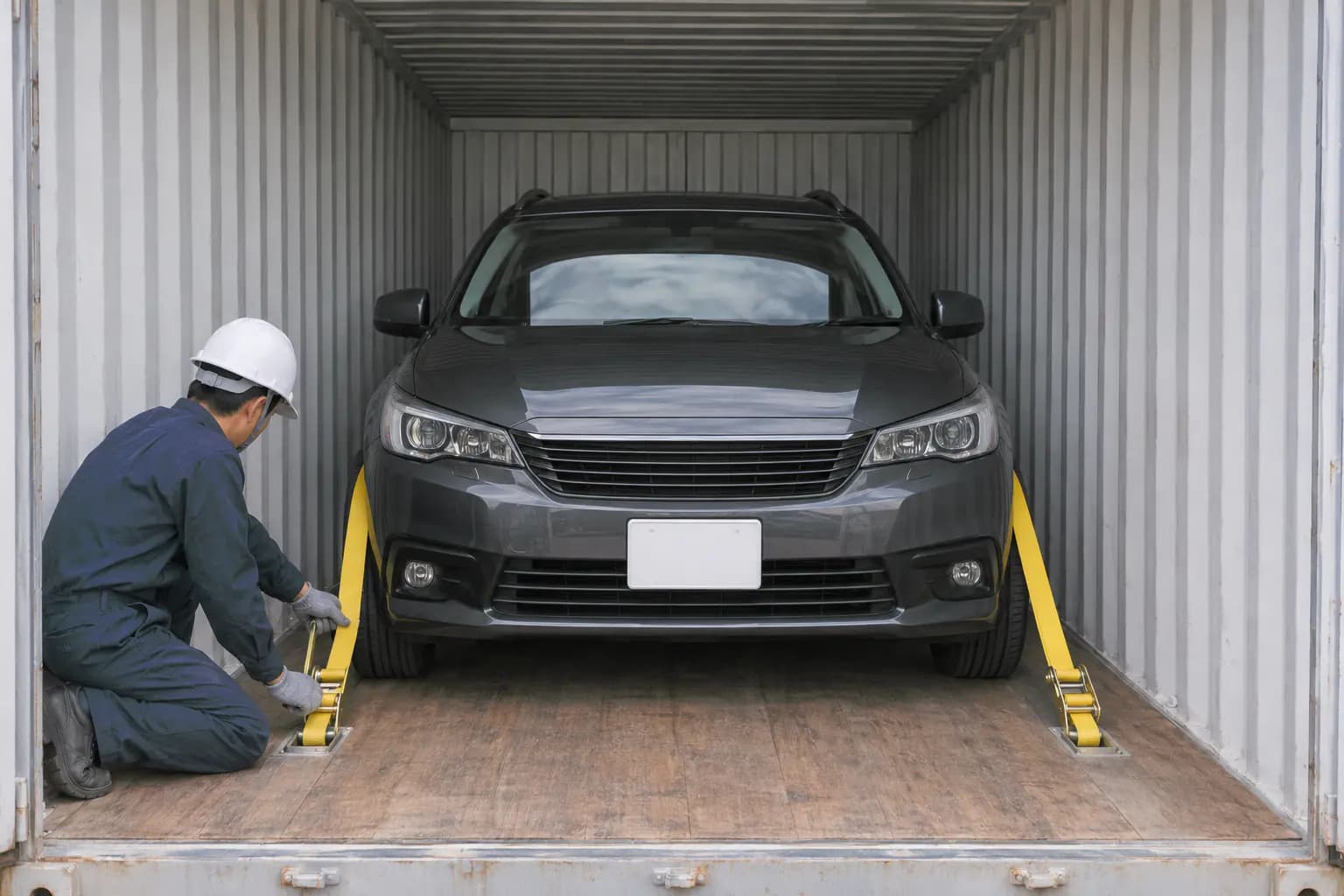
Customs treats a car separately from the rest of your household. It doesn't come under the movers' relief for household goods. It needs its own application, Form T-1280, in three copies, with a document such as a registration certificate showing the car was used before you moved, and proof that you are moving to Japan. Duty is waived on condition that you neither sell the car nor give it to anyone else within two years of the import permit. If the car travels separately from you, it goes in the declaration you make when you land, like the rest of your shipment.
What road registration asks for
What road registration asks for
- Customs first
A car used before you moved goes through a general-cargo style import declaration with Form T-1280 and your proof of use. Customs then provides the clearance certificate you'll need for registration. - Proof it meets Japanese standards
The Land, Infrastructure and Transport ministry's registration checklist for an imported car asks for one of four documents (the customs clearance certificate, an emission-inspection completion certificate, the imported-vehicle special-handling notification or the chassis-stamping notification), and then a preliminary inspection certificate, a conformity certificate from a designated garage, or a presented-vehicle inspection. - Insurance, tax and address
Compulsory liability insurance, the vehicle weight tax and a proof of address issued within three months, such as a resident record, round out the same checklist. It comes from the Miyagi office of the Tohoku Transport Bureau, so ask the office that covers your address.
We found no official figure for what it costs to bring an imported car up to Japanese standards, so get an inspection estimate from a Japanese importer before you book the car onto a ship. That is why many people weigh up selling the car in Australia and buying in Japan. For something rare or sentimental, the effort can be worth it.
Bringing your dog or cat
Australia is one of six places Japan lists as rabies-free designated regions, alongside Iceland, New Zealand, Fiji, Hawaii and Guam. That puts your dog or cat on the simpler of Japan's two entry tracks: a microchip, a residence rule and a government certificate, with no rabies vaccination, blood test or 180-day wait. Every dog and cat still goes through quarantine inspection on arrival.
If you're still choosing where in Japan to land, our guide to relocating to Japan covers the country as a whole.

The short version
- Microchip
An ISO 11784 and 11785 chip with a 15-digit number. Have the vet check that a reader picks it up, because the number has to match every certificate. - Where your pet has lived
Either born in Australia or resident here for 180 days straight immediately before it leaves. A shorter stay means detention in Japan for the days you're missing. - Tell Japan 40 days ahead
Notify the Animal Quarantine Service office at your port of arrival at least 40 days before you land. A notification made later is not accepted in principle. - A vet's check just before the flight
Your vet examines the animal no more than 10 days before it boards. - Certificate and direct travel
A certificate from the exporting country's government authority, and direct travel from Australia. If the route passes through a country that isn't a designated region, the crate needs an official seal or an additional certificate. Dogs can only enter through designated airports and seaports.
Life in Japan after Australia
Most of your first month will be paperwork, and it comes in a fairly fixed order: your address at the municipal office within 14 days, then health insurance and the pension, then a bank account. None of it is hard once you know the sequence, and the sequence is below.
Australians get a head start on a few things, like driving on the left. The surprises are the small ones: rubbish sorted by city rules, a legal duty to carry your passport or residence card, and an electric kettle that was never built for the voltage.
6 months
how long after you enter Japan your shipment has to clear Customs for the movers' relief from duty and consumption tax
14 days
how long you have to tell the municipal office where you live once you've decided
100 V
Japan's household voltage, against 230 V in Australia, which is why many Australian appliances stay behind
Your first weeks: address, My Number, insurance and pension
In rough order of when you'll need them:
- Your address, within 14 days
Tell the municipal office where you've settled as soon as you've decided, and no later than 14 days after. It's free. Take your residence card, or just your passport if the card is still on its way. Ten airports, from New Chitose in the north to Naha in the south, hand the card over as you land (the Immigration Services Agency's Q&A lists them, checked 6 November 2026); if you arrive elsewhere it comes by post once your address is registered. The digital nomad status carries no card. - My Number
Foreign residents with a resident record are assigned a My Number, and the notification arrives by post. Since 14 June 2026 you can also ask for a 'specific residence card' that doubles as a My Number Card. It's optional, applied for in person, and not issued at airports. - Health insurance
Everyone living in Japan has to be in a public scheme. When no employer plans to cover you, you join National Health Insurance at the municipal office. At the clinic you normally pay 30% of the bill, and premiums reflect last year's income and where you live (health ministry leaflet). Medicare stays behind in Australia. - Pension
National Pension covers residents aged 20 to 59 whatever their nationality. Employees are enrolled by their employer; if you're self-employed, a student or between jobs, you register at the municipal office within 14 days. The monthly contribution for fiscal 2026 (April 2026 to March 2027) is ¥17,920 and changes every April (Japan Pension Service). - A bank account
Japan Post Bank opens accounts against a residence card, but it declines if your stay runs out within three months of applying. Expect a wait: it may not open on the day, and the passbook can arrive by mail. We haven't checked other banks' rules. - Rubbish and recycling
Each city sets its own rules. Yokohama wants burnable waste in a transparent or semi-transparent bag and sorts the rest into categories; Kyoto uses fee-based designated bags. Ask your municipal office for the local guide when you register. - Carry your ID, and know two numbers
You must carry your passport or residence card whenever you go out and show it if the police ask (Tokyo Metropolitan Police living guide). Call 110 for the police and 119 for fire, illness or injury.
Driving: your licence and the three-month rule
- Year one: carry an International Driving Permit
Japan recognises permits issued under the Geneva Convention, which last a year from issue. You can drive on one for a year from the day you land, or until it expires if that comes first. Collect yours in Australia before you leave. Australia isn't among the few countries whose own licence plus a Japanese translation is enough (National Police Agency). - Converting to a Japanese licence
You apply in person at the licence centre for your address, because nobody can apply for you. You'll need your Australian licence, a Japanese translation made by the issuing authority, the embassy or a body such as JAF, a resident record, and a passport showing you spent at least three months in Australia after getting the licence. - Tests
In Tokyo, Australia is one of 29 countries and regions whose licence holders are exempt from the knowledge and skill checks at the Fuchu, Samezu and Koto centres (Tokyo Metropolitan Police, updated 7 September 2026). Other prefectures run their own centres, so ask yours.
Tax, on both sides of the move
Japan's tax agency defines a resident as someone with a domicile in Japan, or a residence there continuously for a year or more. Its definition has no 183-day test like Australia's. Until a year has passed, someone with no domicile is treated as a non-resident and taxed on Japan-source income only.
Here's the part that matters for newcomers. If you're not Japanese and you've lived in Japan for five years or fewer out of the last ten, you count as a non-permanent resident. Japan then taxes what you earn in Japan, plus any overseas income that is either paid to you in Japan or brought into the country. Overseas income that is paid to you abroad and stays abroad is left alone. Everyone else who is resident answers for income from anywhere. So where and how your pay lands, and what you move across, are worth planning before your first pay day.
Australia and Japan have an income tax convention, signed on 31 January 2008 and in force since 3 December 2008, which decides which country taxes which kind of income. Once you're a resident other than a non-permanent one, foreign assets worth more than ¥50 million on 31 December go on a Foreign Assets Report due by 30 June the next year. This is general information, so book that adviser while you still live in Australia.
Super, pensions and the social security agreement
Australia and Japan share a social security agreement with two jobs. Job one is stopping you paying into both pension systems. When an Australian employer posts you to Japan temporarily, you remain in Australia's super guarantee system and skip Japanese pension coverage for up to five years from the posting date, with case-by-case extensions in special circumstances. The ATO is plain that the certificate isn't available if you take a new job overseas or you're self-employed.
The second job is totalisation, which counts periods in one country towards the other's pension. Only Japanese old-age pensions and the Australian Age Pension are covered, and superannuation is not part of it. If you later claim the Age Pension while living outside Australia, adding your Japanese periods needs more than 12 months of Australian residence, including at least six months in a row. If you live in Japan, the Age Pension is paid in yen to a bank account there (Japan Pension Service notes, last updated March 2020).
Leaving Japan one day? A non-Japanese who has paid into the pension for six months or more can ask for a lump-sum withdrawal payment, as long as the claim comes within two years of having no address in Japan. The catch is that it erases the Japanese coverage periods it covers, and you can't claim at all if you already qualify for an old-age pension (120 months, with agreement-partner periods counted). If the lump sum comes from the Employees' Pension, 20.42% is withheld from someone no longer in Japan, and you can only reclaim it by naming a tax representative before you leave.
Renting your first place
Japan's land and transport ministry has an English apartment-search guidebook, and it's worth an evening before you sign. Everything in it is custom, not law. Expect to need a guarantor or a rental guarantee company. Move-in costs commonly come to four to seven months' rent, including a deposit around two months' rent. In the Kanto region, many landlords add non-refundable key money, usually one or two months. Contracts tend to run two years, and the process from application to keys takes a week or two.
Treat that as the cost nobody budgets for: a first month that can cost several months' rent. Line up your move-in date and your container date before you sign, because a container that lands before you have an address just waits, and storage at either end can be arranged within the same job.
The weather, and the plugs
The weather, and the plugs
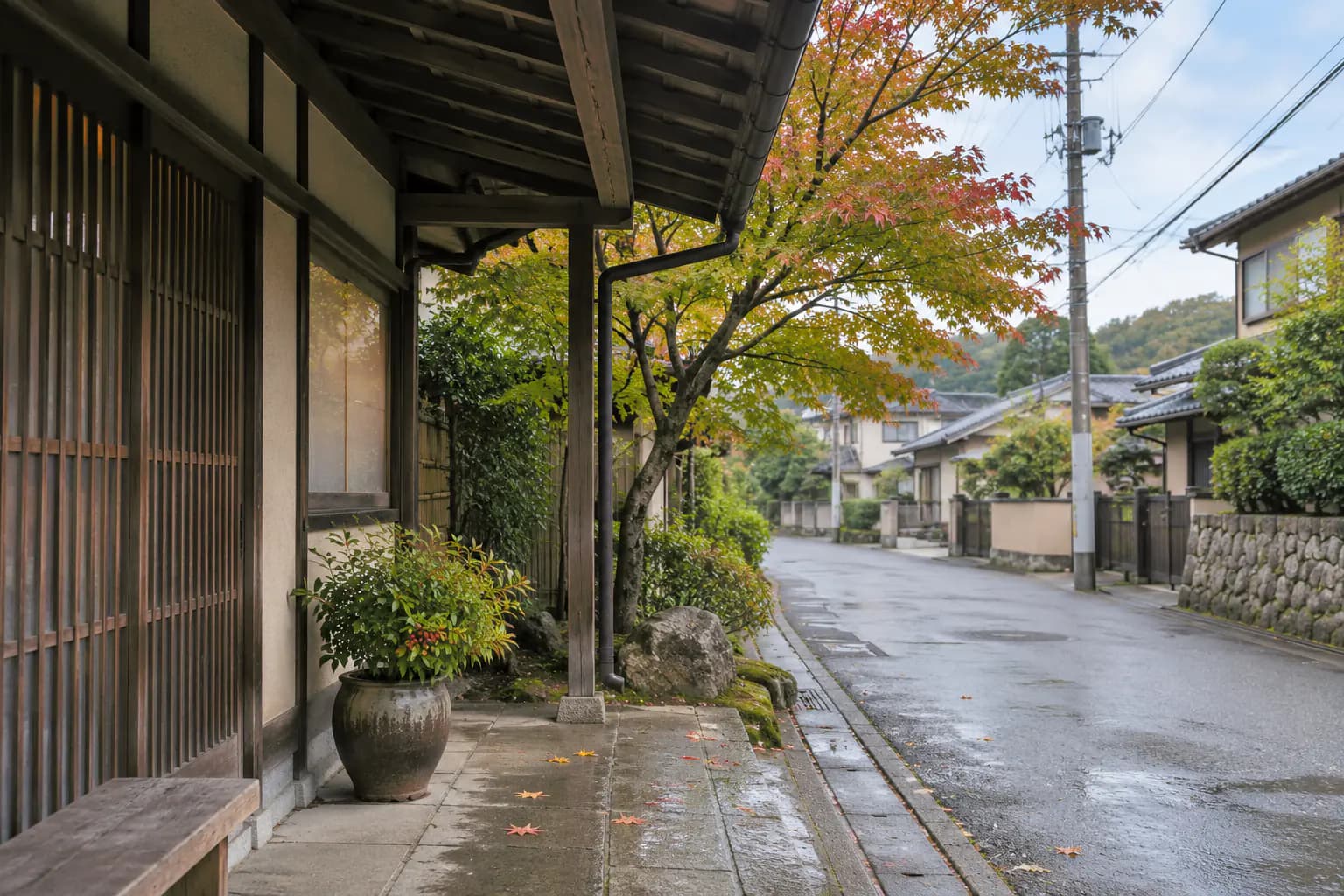
The weather depends heavily on where in Japan you land. Japan's weather agency notes that the rainy season starts in early May in Okinawa, that lows around -20 C are frequent in inland Hokkaido, that Okinawa has mild winters, and that western Japan sometimes reaches 35 C or more in the second half of summer. Typhoons approach mostly between July and October.
And the thing worth knowing before you pack a single appliance: Japan's household voltage is a uniform 100 volts, against 230 in Australia. The frequency is 50 hertz in eastern Japan and 60 hertz in the west, including Nagoya, Kyoto and Osaka, with the line running near the Fuji River in Shizuoka and Itoigawa in Niigata.
A plug adapter changes the shape of the pins, not the voltage behind them. Dual-voltage items such as laptop and phone chargers should work with an adapter. A kettle, a toaster or a heater marked 230 V only needs a transformer or a replacement. Labels reading 50/60 Hz work anywhere in Japan; single-frequency appliances may not work across the line.
Questions Australians ask before moving to Japan
In this order. First a status of residence: a visa through a Certificate of Eligibility for most work and family routes, or the working holiday visa or the six-month digital nomad status if you qualify. Then the Australian side: tax residency, Medicare, super and any documents that need an apostille. Then the shipment: tell the carrier it is unaccompanied baggage, and keep Customs Form C-5360 for the day you land.
On arrival you hand Customs the form in person, the shipment has to clear within six months of that entry, and within 14 days of choosing where you live you register the address at the municipal office. Health insurance, the pension and a bank account follow from there.
Yes to living and working, and yes to a visa for anything longer than a visit. Australians get 90 days on arrival without one. To live there you need a status of residence, and most routes start with a Certificate of Eligibility that you or the organisation hosting you apply for in Japan, then a visa from a Japanese embassy or consulate. The certificate is free, standard processing is one to three months, and it is valid for three months once issued.
The main routes for Australians are a work visa through an employer, a working holiday visa if you qualify, the six-month digital nomad status, Business Manager, Highly Skilled Professional and, for family, Dependent status. Check the current rules with Japan's Immigration Services Agency before you commit to dates.
Yes, if you fit the rules, and Australians face no yearly visa cap (Ministry of Foreign Affairs, page dated 1 November 2026). The Embassy of Japan in Australia asks for an Australian citizen who lives here, has no dependants coming along and has never held a Japanese working holiday visa. You also show savings of A$2,500 (A$3,500 for a couple), as at the embassy's page of 18 September 2026. There's no fee, the visa is valid for entry for a year, and the first stay is six months, which immigration may extend.
The two official pages disagree about age. The embassy says 18 to 30, until the day you turn 31; the Ministry of Foreign Affairs says 18 to 25 for Australians unless both governments agree on 30. Ask the embassy or your state's consulate before you build plans on it.
Whether you can ship goods isn't written down anywhere we could find. Customs' pages don't say a working holiday counts as moving your home, and the movers' relief looks for documents proving a stay of a year or more. A few boxes can ride as unaccompanied baggage under the ordinary traveller allowance (200,000 yen in total; anything under 10,000 yen an item doesn't count). For a container, ask a Customs counsellor first.
For up to six months, yes, under the digital nomad status, which is open to Australians. You need an annual income of at least ¥10 million at the time of application and private medical cover of at least ¥10 million. You may work for an employer abroad or sell services or goods to people abroad using information and communication technology, but not under an employment contract with a Japanese organisation.
The stay can't be extended, no residence card is issued, and after six months you must wait six months before applying for the same status again. A spouse or child can apply for their own status.
Think of two separate clocks. For the sea leg, ANL's A3N December to February sailings (schedule printed 6 November 2026) run, port to port, 13 days out of Brisbane, 15 to 16 out of Sydney and 19 out of Melbourne, all arriving at Yokohama. Its earlier sailings vary more, between 10 and 28 days depending on where they load, and ANL notes that dates can change without notice.
The other clock has no official number. Each of these adds time: packing, the export report, queuing for a sailing, Japanese clearance and delivery. A shared container adds more while it fills. Ask for an arrival window instead of one date. Your six-month Customs allowance starts running the day you land in Japan, not the day the container sails.
Usually not. Personal effects are exempt from needing an Export Declaration, according to the Australian Border Force, though all exports are still reported to it, either on a declaration or under an exemption code. No export duty applies, and exports are generally GST-free.
Permits are where the exemption ends. Firearms, ivory and other CITES-listed wildlife products, native wildlife and listed cultural objects need an export permit, and a permit brings an Export Declaration with it. Cultural heritage permits can take months. Cash or other money of 10,000 Australian dollars or more, freight included, must be reported to AUSTRAC before it leaves.
Usually not, if you're really moving your home. Used household goods and personal effects for you and your family come in free of customs duty and consumption tax when you are entering Japan to live there for at least a year, you declare the shipment on arrival, and it clears Customs within six months of your entry.
The declaration is the step people miss. On the day you land, hand Customs two copies of Form C-5360 at the airport or port, say yes to unaccompanied articles, and keep the copy they seal and return. You can't declare separately shipped goods after you've entered Japan, and Customs can't reissue a lost sealed copy. The rest of the relief is for what is reasonable for your circumstances: official guidance publishes no list or cap, says nothing about how a mover's alcohol and tobacco are counted, and treats cars separately, so ask a Customs counsellor about anything that worries you.
Only if they're built for it. Japan's household voltage is a uniform 100 volts, against 230 volts in Australia, and the frequency is 50 hertz in eastern Japan and 60 hertz in the west, including Nagoya, Kyoto and Osaka. Dual-voltage items such as laptop chargers and travel hair dryers should work with a plug adapter. Other appliances need a transformer, or a replacement bought in Japan.
A plug adapter changes the pins, not the voltage. Check each rating label: 100-240 V is fine, 230 V alone is not. Labels reading 50/60 Hz work anywhere in Japan, while single-frequency appliances may not work across the line, which runs near the Fuji River in Shizuoka and Itoigawa in Niigata.
Possibly, but it's a project. Customs handles a car separately from your household goods: you apply on Form T-1280, in three copies, with proof the car was used abroad and proof you're moving to Japan, and duty is waived on condition that you don't sell or give the car away within two years of the import permit.
Both countries drive on the left, which helps, but the car still has to meet Japan's standards and be registered. The registration checklist asks for customs paperwork, a preliminary or presented inspection or a garage's conformity certificate, compulsory liability insurance and the weight tax. We found no official cost figure, so get an inspection estimate before you decide.
Yes, and Australia gets the simpler track. It's one of six rabies-free designated regions, so your pet needs a microchip, proof it was born in Australia or lived there for at least 180 days before export, a government certificate and a vet check within 10 days of boarding, with notification to Japan's Animal Quarantine Service at least 40 days before arrival. There's no rabies blood test and no 180-day wait.
Dogs can only enter through designated airports and seaports, and every animal is inspected on arrival.
You can, but you apply in person and only once you have a resident record. Bring your Australian licence, a Japanese translation from the issuing authority, the embassy or a body like JAF, and a passport that shows at least three months in Australia after the licence was issued. Tokyo exempts Australian licences from the knowledge and skill checks (it lists 29 countries and regions; page updated 7 September 2026). Other prefectures set their own centres' rules, so ask yours.
In the meantime, an International Driving Permit from Australia (Geneva Convention) lets you drive for a year from landing or until the permit expires, whichever comes first. Your licence plus a translation won't do on its own: only a short list of countries gets that, and Australia isn't on it.
Getting on the plane doesn't make you a non-resident. The ATO looks at where you live, your domicile and your ties, and its own worked example is a teacher on a one-year Japanese contract who stays an Australian resident. Once you do stop being a resident, you're taken to have sold most of your assets at market value on that day (Australian real estate excepted), and foreign residents don't pay the Medicare levy.
On super, the departing Australia superannuation payment is only for temporary visa holders, so citizens and permanent residents aren't eligible, and your fund can tell you what it offers a member abroad. Japan then has its own residency rules, a tax convention with Australia in force since 3 December 2008 and a social security agreement. This is general information, so see an adviser who knows both systems.
Your next steps
Your next steps
Start with the visa. Customs wants official documents showing you're setting up a home in Japan for at least a year, so the Certificate of Eligibility or visa comes before the container does. If you're young enough, look at the working holiday visa first: Japan sets no annual cap on it for Australians.
Book an hour with an adviser who knows both tax systems while you still live in Australia. Stopping residency is a capital gains tax event, and your Japanese residency brings its own rules from the first year.
Pack with the declaration in mind. Tell your carrier or broker the shipment is unaccompanied baggage, write that on the packages, and keep Customs Form C-5360 somewhere you'll find it on the day you land. Two copies, and don't lose the sealed one.
Sort the small, slow things before you fly: an International Driving Permit if you plan to drive, an apostille for any certificate Japan has asked for, a myGov sign-in that works from overseas, and a chat with your doctor if any of your medicines contains codeine, an amphetamine or pseudoephedrine.
If a dog or cat is coming, count back 40 days from your arrival date. That is the latest you can notify Japan's Animal Quarantine Service, and your pet must have been born in Australia or lived there for at least 180 days before export.
Let's get your life across to Japan
Tell us where you're leaving and where you're landing. A personalised estimate reaches your inbox within 24 hours.
Get an estimate


