Move your home to Thailand
Request a free estimate in under a minute.
Complete guide for expats relocating to Thailand
Everything you need to know before your belongings board a ship or plane to Thailand — in five quick points.
Good news first: the things you already own and use can usually enter Thailand without import duty. You'll just need to show they're genuinely yours, keep quantities sensible, and have your paperwork in order.
By sea, plan on 3–6 weeks; by air, 2–3 weeks. One tip fellow expats wish they'd known: for household goods, Thai Customs looks for a one-year basis to stay, so confirm your category with Customs before you ship — a visa-exemption stamp covers only your personal effects.
A few things do attract charges: brand-new appliances, drones, alcohol and new jewellery face 7% VAT plus duties of 5–30%, and some need special permits from Thai regulators.
Our door-to-door quotes cover Thai port fees, the customs bond, careful packing, and delivery to your new home — no storage fees hiding in the fine print. Your exact price depends on how much you're bringing and where it's going.
Here's the honest truth about Thai customs: the system is actually quite fair and predictable — most horror stories come down to a missing signature or a shipment landing outside the timing window tied to its owner's arrival. Get the small things right early and your move will feel surprisingly smooth.
Below, we walk you through everything one step at a time: the documents to gather, how to choose between sea and air, what quarantine officers look for, whether insurance is worth it, and how long you'll realistically wait for your things.
We've been settling expats into Thailand for over two and a half decades — long enough to know which forms trip people up and which shortcuts actually work. Nine out of ten of our shipments clear customs within two days of arrival. When you're ready, we'd love to help with yours.
How much will it cost? That mostly comes down to the size of your home and your route — a studio's worth of boxes and a four-bedroom house are very different moves. Your personalised estimate takes about a minute.
How your move works
Three simple steps between you and your new life in Thailand — and we handle the hard parts of all of them.
Tell us about your move
Tell us about your move Share what you're bringing and roughly where you're headed. Haven't picked between Bangkok and Chiang Mai yet? No problem — most people finish this step over a coffee.
Meet your move buddy
Meet your move buddy One dedicated person gets to know your situation, walks you through Thai customs, and builds a plan around your family — not the other way round.
Leave the rest to us
Leave the rest to us We pack, ship, clear customs, and deliver to your new doorstep. You book the flights and start dreaming about street food.
The months to watch out for
When demand spikes, shared container space vanishes and everything takes longer. If your dates are flexible, steering clear of these three windows makes life noticeably easier:
- Songkran — Thai New Year (mid-April)
The whole country takes a well-earned break: factories close for up to a week, ports run short hours, and freight prices jump around 25%. Ship between 1–15 April and you could wait an extra two weeks. - July–August
European and American summer holidays plus back-to-school season fill every vessel heading east. Air freight climbs 15–20%, shared containers book out a month ahead, and you may pay for warehouse time you didn't plan for. - November–December
The pre-Christmas retail rush clogs ports worldwide. Carriers add a Peak Season Surcharge and Thai customs queues stretch by a few extra days. If you want to be settled by the holidays, ship in September or October.
Thai customs, explained like a friend would
Thai customs has a reputation it doesn't quite deserve. The process is genuinely orderly — shipments get held up for boring reasons, not mysterious ones: a document missing, timing that falls outside the window tied to your arrival, or a restricted item nobody declared. Know those three traps and you've solved most of it.
Thailand lets people who are moving their lives there bring used personal and household things in duty-free, in sensible quantities. The catch is your status. A foreign passport holder needs an immigration quota stamped in the passport or, if you'll be working, a non-immigrant visa of at least a year (until it's issued, an Immigration letter confirming a stay or work permit of a year or more does the job). Experts, government-contract staff and spouses travelling with a worker follow their own routes. Thai Customs' Thai-language guidance says a Non-Immigrant O entered on a retirement basis, or to follow a Thai wife, doesn't meet that first test, so confirm your category with Customs before you book anything. Thai nationals qualify after at least a year of working abroad.
The goods themselves must be things you've owned and used abroad, and they need to arrive no earlier than a month before you and no later than six months after. Think one of each kind of household item per person (two per family): anything beyond that is charged duty. Cars, firearms, food and other provisions, musical instruments and sports gear don't qualify. If you'll be in Thailand for less than a year, only personal effects are exempt.
- In Thailand · to claim the exemption
Apply for the duty exemption
You (or your agent) lodge the Application for Duty Exemption at Customs' duty-exemption office at Bangkok Port or your port of entry, with your passport, proof of your stay or work permit, and the bill of lading or air waybill. Customs checks the paperwork; anything that doesn't qualify is charged duty like ordinary cargo. If an item needs a permit, get it from the agency concerned first.
- In Thailand · once Customs returns your documents
File the import declaration
With your documents back, you or your agent file the import declaration (normally Customs Form กศก. 99/1) and pay any duty and tax due.
- In Thailand · at clearance
Green Line or Red Line
Like any import, your declaration is risk-profiled. A Green Line shipment is released without inspection; a Red Line shipment is opened and checked first. Goods left in customs custody for over 30 days without a declaration, duty payment or guarantee, and not dealt with within 15 days of the carrier's written notice, can be auctioned or destroyed.

The paperwork checklist
Nearly every customs delay we've ever untangled started with paperwork. Gather these before your shipment leaves and you're ahead of 90% of movers:
- Ocean Bill of Lading or Air Waybill — the shipping document, matching your inventory exactly
- Duty Exemption Application (household effects) — completed, if you're claiming duty-free entry
- Copies of your passport photo page and signature page
- A detailed inventory of what's in your boxes, written in English or Thai
- A contents list on each box — yes, every single one
- A copy of your entry stamp, if you fly in around the same time your shipment arrives
- Proof of permission to stay for at least a year (a one-year non-immigrant visa, an Immigration letter confirming an annual stay, or a work permit of at least a year), if you claim the household-goods exemption
- Your home address in Thailand — a real residential one; customs won't accept an office or hotel
What quarantine officers care about
Thailand protects its farms and forests carefully, so anything that might carry soil, seeds, or bugs gets a second look. Give these items a proper clean before packing:
- Garden furniture, bikes, tents, golf clubs and anything else that's lived outdoors — dried mud is the number-one inspection trigger
- Furniture or décor made from raw, untreated wood — including the crates and pallets it's packed in
- Plants, seeds, and anything growing in soil — most of it simply can't come, so gift it to a neighbour
- Food, spices, supplements, and anything edible of plant or animal origin
- Your pet's old bedding, cage, or carrier — anything with organic material on it
Arriving by sea yourself?
If you're personally travelling to Thailand by boat, immigration may ask for your arrival and customs paperwork on top of the documents for your separately shipped belongings. Keep both sets handy.
What you can import to Thailand

Personal belongings

Used clothing

Household appliances

Fragile items

High-value items

Large items & furniture

Excess luggage

Pets
Import permit and health certificate required
Things Thailand is strict about

Plants, seeds & anything in soil

Food, supplements & edible goods

Alcohol & tobacco

Medicines — prescription or not

Weapons & controlled items

Vehicles
Banned in most cases; exceptions are very costly

E-cigarettes & vapes
How much can you bring?
We're a home-moving service rather than a parcel courier, so there's a small minimum:
- Minimum: 6 boxes
Roughly what a studio apartment fits into once the furniture stays behind. Below that, a courier service will honestly serve you better.
- No upper limit
A villa's worth of furniture across several containers? We've done it plenty of times. Bring as much of home as you want.
These limits apply to household goods and personal effects heading into Thailand — the things that make your new house feel like yours.
Official guidance, straight from the source
- Household items import-clearance guidance — duty-exemption criteria, the Application for Duty Exemption and the documents it needs, and clearance steps
- Letter of Authority / Power of Attorney — lets someone (like us) clear customs on your behalf
Handy official contacts

Taxes and duties: what you'll actually pay
If you qualify for the exemption for people changing residence, the answer is: very little, possibly nothing. A stay of less than a year gets the exemption for personal effects only, so confirm your category with Customs before you ship. But it pays to know where the exceptions are before they find you.
The ground rules
- Your used household goods and personal things can enter duty-free — as long as they meet Thai Customs' conditions on ownership, prior use, and paperwork.
- Where duties do apply, expect 7% VAT on top, calculated on the CIF value — that's the cost of the goods plus insurance and freight, plus any duty already assessed.
Who gets the exemption
- In practice, it depends on your situation as well as your goods. For household goods, Thai Customs looks for a one-year basis to stay (a shorter stay gets personal effects only), so confirm your category with Customs before you ship. Beyond that, the goods should be genuinely yours, genuinely used, and clearly for your own life rather than resale. Alcohol and tobacco are the classic exceptions.
- The exemption also covers shipments that travel without you — unaccompanied effects — provided the same rules on ownership, prior use, and sensible quantity are met.
Special cases with extra privileges
A few categories of movers can import goods for official use without duties at all:
- Diplomatic missions
- Government employees
- Staff on official assignments
If that sounds like you, the route to approval looks like this:
1. Get in touch with Thai Customs or the relevant government authority
2. Ask for the duty exemption procedure that matches your posting
3. Submit your official supporting documents and wait for the nod
This route typically applies to embassy staff, foreign aid workers, and volunteers posted to Thailand on recognised official missions.
Should you insure your shipment?
Your belongings will spend weeks at sea, pass through several sets of hands, and possibly sit in a humid port warehouse. Most claims we see are small — a scratched table, moisture in a box of books — but when it's your grandmother's china, small still hurts. Insurance turns that worry into a line item.
What can actually go wrong
A realistic look at the risks your boxes face on a six-week journey to the other side of the world:
- Storms and rough seas — containers move around more than you'd think
- Warehouse and port handling — forklifts don't read "fragile" stickers
- Fumigation or quarantine treatment ordered during clearance
- Plain bad luck — loss, breakage, or damage somewhere along the way
What a policy covers
Exact cover depends on your insurer and policy, but for household moves you can generally expect:
- Protection for the full international journey, sea or air
- Named risks like fire, theft, and moisture damage
- Limits and exclusions tied to the value you declare — so declare honestly
Read the exclusions before you sign, not after something breaks. Ten minutes with the policy document saves a lot of arguing later.
Where to get covered
You've got a few good options for insuring your move to Thailand:
- A general insurer that offers marine or cargo cover
- A specialist relocation insurance broker
- Your bank, if it offers shipment cover
- Our own insurance programme, arranged with your move.
Simple pricing: 3% of your declared shipment value.
Getting your visa sorted
Your visa is the foundation of your whole move — it decides how long you can stay and whether you can work. For household goods, Thai Customs asks foreigners for an immigration quota shown in their passport or, if they are working in Thailand, a one-year basis to stay, so confirm your category with Customs before you ship. Since 15 September 2026, citizens of 60 listed countries (including Australia, Canada, France, the UK and the US; check that your passport is on the list) can enter visa-free for up to 30 days, for tourism — a way in, not a plan for living there — and entering by land on the exemption is generally limited to twice a year. Everyone arriving also completes the free Thailand Digital Arrival Card online (tdac.immigration.go.th) in the three days before landing. Thai visa rules shift fairly often and vary by nationality, so treat this as your map of the landscape, then confirm the details on Thailand's official Ministry of Foreign Affairs and Immigration Bureau sites before you book anything expensive.
The main visa families
Nearly every expat in Thailand arrived on a visa from one of these four groups:

Visitor visas
For scouting trips, short stays, and testing the waters before you commit — no employment allowed, but perfect for house-hunting visits
Working and business visas
For jobs, business ventures, and professional postings — usually tied to a Thai employer or company that sponsors your stay
Student and training visas
For university, language school (yes, learning Thai counts), and approved training programmes
Family and retirement visas
For joining a spouse or family member in Thailand, or settling into retirement — the long-stay routes that don't depend on a job
A tip from experience: if Thailand is the long-term plan, start with a proper non-immigrant visa matched to your situation — work, family, study, or retirement — rather than arriving on a tourist visa and improvising. Converting later is possible but rarely fun.
Rules change, embassies differ, and internet forums age badly. Always confirm current requirements on Thailand's official visa and immigration sites before you apply.
Where your belongings will arrive
Most expat shipments land at one of four gateways: Laem Chabang or Bangkok Port by sea, Suvarnabhumi or Don Mueang by air. Which one suits you depends on your timing, how much you're shipping, and whether your new home is in Bangkok, up north, or down by the beaches.
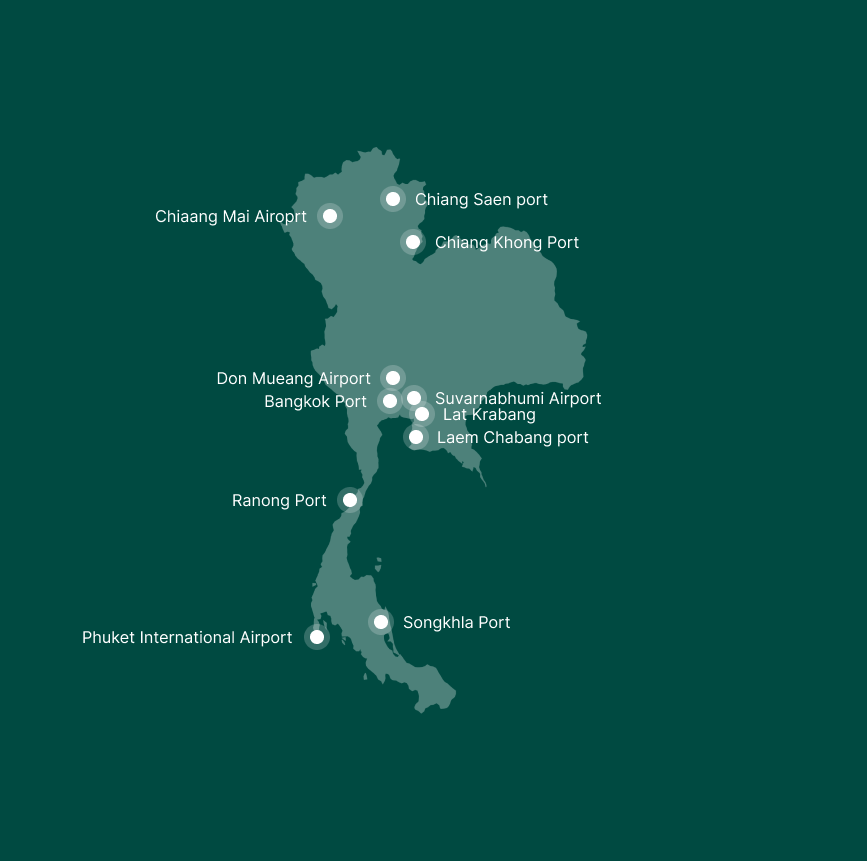
Thailand's ports and airports
Bangkok Port
The classic entry point when your new home is in or around the capital
Suvarnabhumi Airport (BKK)
Where most air shipments land, usually days after take-off
Phuket
Sea and air options if island life is calling
Laem Chabang Port (Chonburi)
Thailand's biggest deep-sea port, workhorse of container shipping
Don Mueang Airport (DMK)
The overflow air hub, busy in high season
Chiang Mai Airport
Air entry for the northern mountains and its beloved expat community
Chiang Saen Port
A small river port serving the far north
Ranong Port
Regional sea routes on the Andaman coast
How long from your city?
| From | To | Est. transit time |
|---|---|---|
| Los Angeles, United States | Bangkok, Thailand | 18-21 days |
| New York City, United States | Bangkok, Thailand | 24-26 days |
| Marseille, France | Bangkok, Thailand | 24-26 days |
| Sydney, Australia | Phuket, Thailand | 23-25 days |
| Melbourne, Australia | Bangkok, Thailand | 21-23 days |
| Cape Town, South Africa | Phuket, Thailand | 28-30 days |
| Shanghai, China | Bangkok, Thailand | 18-21 days |
| Incheon (Seoul), South Korea | Bangkok, Thailand | 21-24 days |
Door-to-door: from your old home to your new one
For more than 25 years we've walked expats through this exact journey — the last box taped shut in your old living room, and the first one opened in your new home in Thailand. Here's what happens in between.
1. We pack your life, properly
Our crew brings the good stuff and does the wrapping, so everything survives weeks at sea or a fast flight east:
- Moving boxes
The right size for the job — books in small ones, linens in big ones, and everything labelled. - Bubble wrap
Generous layers around your glassware, ceramics, and electronics — the things you'd miss most. - Wooden crates
Custom-built armour for artwork, antiques, and anything that deserves extra respect on a long, humid journey.
2. We collect from your doorstep
Our agents pick everything up from your home, log it, and track it from that moment on. You always know where your things are — no black holes, no guesswork.
3. We ship it and talk to Thai customs, so you don't have to
Sea or air, as agreed — and when your shipment reaches Thailand, we handle the clearance conversation. All that paperwork from the sections above? We check it before departure and present it on arrival.
4. We deliver to your new home
Once customs gives the all-clear, your belongings travel the final leg to your new address — whether that's a Bangkok condo tower or a house near the beach.
5. We unpack, you settle in
The team places your furniture where you want it and clears away the packing debris. That first evening, it already feels a little like home.
One person who knows your whole story
From your first question to the day your sofa arrives, you talk to the same person. No call centres, no explaining your situation from scratch every time, no details lost between departments.
Your move specialist handles the coordination, the documents, the customs questions, and the delivery schedule — and because they know your family's plans, they'll spot problems before they happen.
You'll get honest updates at every stage: where your shipment is, how customs is going, and when the truck will pull up outside your new place.
Questions? Just say hello
Thinking of bringing your car?
We'll be straight with you: Thailand has banned imports of used cars and other used motor vehicles since December 2019, so for most people bringing a car simply isn't an option — and many expats were going to sell at home and buy locally anyway. The Ministry of Commerce notification leaves room for a few licensed exceptions; if you think one applies to you, ask the Department of Foreign Trade before you plan anything around the car.
What to do instead
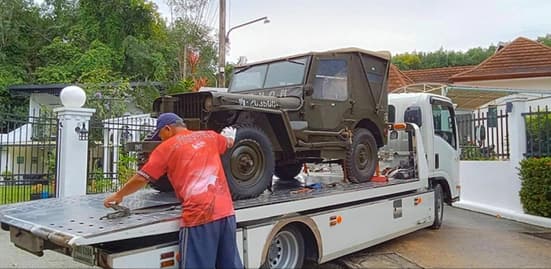
What to do instead
- Check before you assume
If you think a licensed exception applies, ask Thailand's Department of Foreign Trade first — and don't ship a vehicle and hope the paperwork catches up. - Sell at home, buy locally
Most expats sell the car before they leave and buy or lease one once they've arrived and know where they'll be living. - Plan your first weeks without it
Taxis, Grab and the metro cover most daily trips in Bangkok and the other big cities while you sort out a car.
Why we'd skip the car
- The rule — Thailand's Ministry of Commerce prohibits importing used cars, vans, buses and trucks (notification B.E. 2562, in force since 10 December 2019).
- The exceptions — a short list of licensed cases exists. Check with the Department of Foreign Trade whether one covers you before you commit to anything.
- The usual answer — sell at home and buy locally once you've settled.
For most expats, the question isn't how to bring a car in — it's what to do with the one you have. Selling at home and buying in Thailand is the usual answer.
Not sure whether an exception applies to you? Ask your move specialist, and check with the Department of Foreign Trade before you commit to anything.
Bringing your best friend along
For many expats, the move only feels right if the dog or cat comes too — and thousands of pets happily make the journey to Thailand every year. It just takes planning: Thailand requires health checks, vaccinations and an import permit from the Animal Quarantine Station, and airlines may refuse to board your companion without one.
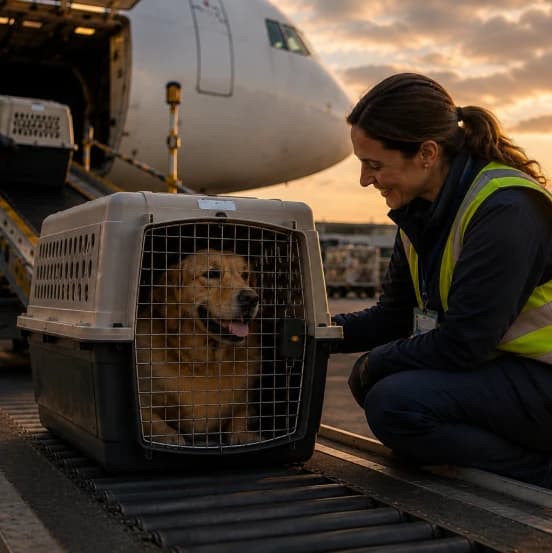
Your pet's travel checklist:
- Import permit, arranged early
Email the Animal Quarantine Station at your arrival airport at least 7 working days before you arrive and no more than 60 days before you fly, with Form R1/1, a copy of your passport, a photo of your pet, your flight itinerary, English-language vaccination records and the microchip certificate. Allow 5 to 7 Thai business days; the permit lasts 60 days. Thai embassies and consulates word this timing differently, so confirm it with the one for your departure country. - Microchip and vaccinations
A microchip, plus rabies and the core vaccines: distemper, hepatitis, parvovirus and leptospirosis for dogs, feline panleukopenia for cats. After a first rabies shot, wait 21 days before applying. - Official health certificate
Thai embassy instructions give the original certificate, endorsed by your government's veterinary authority, a 10-day life from endorsement, so time it close to your flight. The instructions don't ask for a rabies blood test to enter Thailand, but countries you might fly on to or back to, such as the UK and Australia, do. - Arrival inspection
The Animal Quarantine Station inspects your pet on arrival (at Suvarnabhumi its desk is beside baggage carousel 8) and issues the import notice and licence (Forms R-6 and R-7) for THB 500 per animal. Whether your pet is held depends on vaccination history, origin country and health, so check the current rules with the Station before booking anything.
Loved by expats across Thailand
Real stories from people who've unpacked their new lives with Expats Direct:
So, what's it actually like to live in Thailand?
Before we talk boxes, let's talk about the life waiting on the other side. Thailand hosts one of the largest expat communities on earth — an estimated two to three million foreign residents, with more than 100,000 newcomers arriving each year. Some come for a posting, some for retirement, some because they visited once and never quite stopped thinking about it.
The crowd is wonderfully mixed. Beach towns like Hua Hin and Pattaya draw retirees enjoying their 50s and 60s in the sun; Chiang Mai and Bangkok hum with remote workers and professionals in their 30s and 40s. What unites them is the maths: a genuinely comfortable life here costs roughly $1,500–2,500 a month, and Thailand consistently ranks near the top of global surveys for expat happiness. Bangkok alone is home to around 300,000 foreign residents — you will not be short of company.
Our biggest tip? Start earlier than feels necessary. The expats who love their first year in Thailand are usually the ones who gave themselves time — to compare visa options, to choose between city and coast, and to ship their belongings without paying rush prices. The logistics themselves are the easy part: Thailand's ports and airports are excellent, with frequent sailings and flights from almost everywhere. That's where we come in — a quarter-century of helping people land softly, from first quote to the day your pictures go up on new walls.
100,000+
New expats choosing Thailand every year
2,000,000+
Foreign residents already calling it home
$1,500+
Monthly budget for a comfortable expat life
What life costs (and where your money goes furthest)
Most expats find their money stretches further in Thailand than back home — sometimes dramatically so. But "cheap" is the wrong word; "flexible" is closer. Bangkok sits at the top of the price range, especially for central condos, international schools, private healthcare, and anything imported. Head to a regional city or the suburbs and both rent and daily life get noticeably kinder to your budget.
The everyday numbers are friendly: fast internet and utilities are reasonably priced (though your first hot-season electricity bill, powered by air conditioning, may raise an eyebrow), fresh market produce costs little, and eating out spans everything from $2 street-food plates that locals queue for to $30 international dining. Imported cheese and wine? That's where nostalgia gets expensive.
For context on local wages: Bangkok salaries average around $1,000–$1,500 a month, less in the provinces, though skilled professionals in demand can earn well beyond that. It's a useful benchmark when you're weighing job offers or setting a household budget.
Getting around is refreshingly cheap. Bangkok has metros, buses, taxis, and ride-hailing at prices that make car ownership optional; in smaller cities, commutes are short and transport costs barely register.
The bottom line: Thailand lets you choose your number. Pick your city and habits thoughtfully, and a very good life here costs a fraction of what it would in London, Sydney, or New York.
Is it safe? The honest answer

Is it safe? The honest answer
Short answer: yes, and more so than many expats expect. Violent crime in Thai cities is rare, public transport feels safe at any hour, and the famous Thai warmth extends genuinely to foreign residents. The things to watch are the tourist-zone classics — pickpockets in crowded markets, the occasional creative taxi fare — and ordinary awareness handles both. Check your own government's travel advice before a road trip: Australia, the UK, Canada and France all currently advise against, or urge you to reconsider, travel to Pattani, Yala and Narathiwat and along the Cambodian border (the distances differ by country).
Traffic is the real safety topic here. Bangkok's roads look like organised chaos and mostly are; most expats happily rely on Grab, the metro, and taxis instead of driving. Out in the countryside, renting a motorbike is a rite of passage — just get an international driving licence first, wear the helmet, and ride like everyone else forgot their mirrors exist.
As for nature: Thailand sits in a region known for monsoons and the occasional tremor, but it's calmer than most of its neighbours. Rainy season (May–October) brings brief street flooding rather than catastrophe, SMS alerts arrive early, and city drainage teams have seen it all before.
What jobs pay in Thailand
If working in Thailand is part of your plan, calibrate your expectations to local reality: Bangkok pays best, international companies pay better than local ones, and seniority moves the needle a lot. The city's average salary sits around ฿536,000 a year (roughly $17,000), but the roles expats typically fill often pay well above that.
Here's what the sectors expats most often work in actually pay per month:
Tech & IT
The strongest-paying field, especially in Bangkok. Mid-level roles run ฿60,000–฿150,000+ a month, and senior specialists with in-demand skills can negotiate well past that.
Finance & corporate
International banks and corporate management roles typically span ฿60,000–฿180,000 monthly by seniority, with everyday manager positions averaging ฿50,000–฿90,000.
Sales
Expats often land sales roles with international brands and export firms — ฿45,000–฿120,000 a month, with commissions that can meaningfully sweeten the total.
Teaching
The classic expat entry point. English teachers earn ฿45,000–฿75,000 monthly, specialised tutors ฿60,000–฿90,000, and international-school roles with proper credentials pay the most.
Hospitality & tourism
A huge industry with plenty of foreign faces, though the good money — ฿40,000–฿100,000+ — concentrates in management roles at luxury hotels and international brands.
Taxes for expats: the part everyone postpones
Nobody moves to Thailand for the tax paperwork, but ten minutes of understanding now saves headaches later. The magic number is 180: spend that many days or more in Thailand in a calendar year and you become a Thai tax resident. Residents are taxed on Thai-sourced income and on foreign income they bring into Thailand; non-residents only on what they earn locally. Rates are progressive from 0% to 35%, softened by deductions and allowances that meaningfully shrink the bill for most people.
The rules have been evolving: since 1 January 2024, foreign income you earn in a year you're a Thai tax resident (180 days or more in Thailand) is taxable if you bring it into Thailand — even in a later year — while income earned before 2024, or in a year you weren't a resident, isn't. That's an important shift for retirees living on pensions and remote workers paid abroad. Double Taxation Agreements between Thailand and most Western countries prevent paying twice on the same income, and filings are due by 31 March (paper) or early April (online). If your finances have any complexity — investments, a pension, an LTR visa — a good local tax adviser is the best money you'll spend in your first year.
Finding work as a foreigner: a realistic guide
Building a career in Thailand is entirely possible — expats do it every day — but it rewards strategy over luck. Geography matters most: Bangkok holds the lion's share of international roles, while Chiang Mai and Phuket lean toward tourism, hospitality, and the remote-work crowd. And even a little spoken Thai opens doors (and hearts) far out of proportion to the effort.
1. Fish where the fish are
Start with Thailand-focused job boards and expat-friendly sites. Teaching, corporate roles, startups, and service-industry jobs all get filled this way every week.
2. Let recruiters do the legwork
Agencies know exactly which companies hire foreigners and for what — a shortcut worth taking, especially for skilled and senior roles. Robert Walters, Adecco, PRTR, and JAC are the established names in Bangkok.
3. Show up — online and in person
Thailand runs on relationships. Business events, expat meetups, and industry gatherings surface roles that never get advertised, and a sharp LinkedIn profile plus direct outreach still works better than waiting.
4. Aim at the industries that say yes
Education, hospitality, tech, and international business hire the most foreigners — match your experience and languages to where the demand already exists.
5. Keep it legal from day one
Working legally means a Non-Immigrant "B" visa plus a work permit arranged through your employer.
For senior professionals, the LTR (Long-Term Resident) visa is an increasingly attractive route to living and working here long-term.
Worth knowing: since October 2025, all work-permit applications, renewals, and cancellations go through Thailand's e-Work Permit platform — paper permits are being phased out. Everything is filed digitally at https://eworkpermit.doe.go.th.
Schools, hospitals, and everyday life admin
Parents, breathe easy: Thailand's education options are genuinely excellent. Bangkok and the major cities offer a wide choice of international schools across IB, British, American, and Australian curricula, alongside strong bilingual programmes — most expat families find a school that fits both their child and their philosophy.
Healthcare is one of Thailand's quiet superpowers and a genuine reason many expats choose it. Private hospitals in the big cities are modern, efficient, and staffed with English speakers — many people fly here specifically for treatment. Public hospitals offer broad access at low cost, and while rural care is more basic, it still leads the region.
The everyday admin — utilities, banking, immigration desks, tax offices — runs more smoothly than newcomers fear. English is common at the counters expats use most, and instructions are usually posted online. Yes, a few processes still involve paper forms and exact cash — consider it part of the charm, and bring a book.
All told, the infrastructure of daily life here is a solid foundation for your new chapter. And for the biggest piece of admin — getting your entire household across the world — that's exactly the part we take off your plate.
Getting your baht: the smart ways to handle money
Sorting out how you'll access Thai Baht is one of those small decisions with a surprisingly big impact on your budget. Here are the four main options, ranked by how kindly they treat your money.
1. Currency exchange booths
Licensed exchange booths — especially in the cities — offer some of the best rates you'll find anywhere, with markups around 0–1% and no service fees.
Pros:
- Best value when exchanging larger sums
- No withdrawal or banking fees
- Easy to find in cities and expat areas
Cons:
- Means carrying foreign cash with you
- Unlicensed booths can hide sneaky fees — stick to the known names
2. ATM withdrawals
Thai ATMs are everywhere and always open — but each withdrawal costs a fixed ~220 THB (about $7), before your home bank adds its own fees and exchange markup.
Pros:
- Convenient and available around the clock
- No need to carry piles of cash
- Accepts most international cards
Cons:
- Those fixed fees quietly add up
- The exchange rate depends on your home bank's mood
3. Multi-currency cards & digital wallets
The modern expat favourite: transparent rates with a 0.5–1% markup, instant spending notifications, and easy top-ups from your home account.
Pros:
- Competitive, transparent exchange rates
- Spending is easy to track from the app
- Much safer than a wallet full of cash
Cons:
- ATM fees still apply when you need cash
- Smaller shops and markets remain cash-only
4. Exchanging before you leave home
Convenient for peace of mind, but home banks typically charge 3–10% markups on baht — the most expensive option on this list by a distance.
Pros:
- Baht in your pocket the moment you land
- One less thing to think about at the airport
Cons:
- Noticeably worse exchange rates
- You're locked in before you arrive
What most long-term expats settle on: exchange booths for the big sums, a multi-currency card for daily life, and an ATM run only when the market stalls demand cash.
The weather (yes, it's always warm)

The weather (yes, it's always warm)
Let's set expectations: you're moving to the tropics, and the tropics deliver. Thailand is warm every single day of the year, which is glorious in December and a commitment in April. The year splits into three acts:
- Hot season (March–May) — regularly past 35°C (95°F); this is when you learn why every Thai home has good air conditioning
- Rainy season (June–October) — dramatic afternoon downpours that clear as fast as they arrive, high humidity, and the occasional flooded street
- Cool season (November–February) — the payoff: 20–30°C (68–86°F), low humidity, and the reason every visitor books December flights
Humidity is the real adjustment, especially in central and southern Thailand. If you're arriving from a temperate climate, give yourself a season to acclimatise — everyone does, and then wonders how they ever lived through actual winters.
Daily life bends around the heat in pleasant ways: markets and runs happen early, evenings are social, and air conditioning hums through homes, offices, and the BTS. Rainy season is less dramatic than it sounds — think spectacular hour-long storms rather than weeks of grey, though your commute will occasionally get wet. Up north in Chiang Mai the cool season feels genuinely fresh, while the southern islands stay warm and swimmable all year.
The net effect is a life lived largely outdoors — just with more sunscreen, better umbrellas, and a new appreciation for iced coffee.
Questions expats actually ask us
1. What most expats actually spend per month
The broad range is $1,000 to $2,500 per month, and where you land in it is largely a choice.
- Living simply: A local-style apartment, Thai food most days, and public transport puts you around $1,000–$1,300 monthly — covering rent, utilities, food, transport, and weekend fun, especially outside the tourist hotspots.
- Living comfortably: A modern one-bedroom condo with a pool, regular restaurant dinners, a gym membership, and a healthy social calendar runs $1,500–$2,000.
- Living well: Imported groceries, upscale dining, private transport, and international-standard everything lands closer to $2,200–$2,500, particularly in central Bangkok or the popular beach towns.
2. The big three: housing, food, transport
Rent will be your largest line item:
- Bangkok: central one-bedrooms run $600–$1,200 monthly; step outside the core and similar comfort costs $400–$700.
- Chiang Mai: the budget favourite — $300–$600 buys comparable comfort.
- Islands and beach towns: Phuket and friends charge more, especially in high season.
Food is where Thailand spoils you: local dishes cost $2–$4, and a realistic mixed diet of Thai and Western meals totals $250–$400 monthly. Transport is similarly gentle — $40–$100 a month covers most people who don't own a vehicle.
3. Healthcare, visas, and the lifestyle wildcards
Private healthcare is excellent and affordable: international health insurance typically runs $50–$150 monthly depending on age and cover, and even uninsured hospital visits cost a fraction of Western prices.
The wildcards are lifestyle choices: international school fees, frequent regional travel, and nightlife can push budgets past $3,000 — while retirees and remote workers who embrace local rhythms routinely live beautifully on far less than they spent at home.
Here's the honest picture: Thailand doesn't hand out permanent settlement in one step — but it absolutely offers a well-trodden path, and thousands of expats walk it every year. Think of it as three stages: long-term visas first, then Permanent Residence, and eventually citizenship for those who want it.
Stage 1: Long-term visas — where everyone starts
Most expats live in Thailand for years, even decades, on renewable long-term visas:
- Long-Term Resident (LTR) Visa: a 10-year visa aimed at well-funded retirees, remote workers, investors, and highly skilled professionals.
- Thailand Privilege (the programme formerly known as Thai Elite): a paid membership buying multi-year stays with VIP immigration treatment.
- Work visas: the Non-Immigrant B plus work permit combination, tied to employment.
- Marriage and family visas: Non-Immigrant O visas for those with Thai spouses or family.
- Retirement visas: for the over-50s who meet the financial thresholds.
These renewable visas let you build exactly what Thailand wants to see before granting deeper status: a stable history of lawful residence, income, and tax payment. Newer options like the Destination Thailand Visa (DTV) make good bridges but aren't permanent solutions.
Stage 2: Permanent Residence (PR)
PR is the real prize for long-stayers: indefinite residence with no more annual renewals, plus easier property dealings. It's quota-limited — only a set number of approvals per nationality each year — and applicants need years of documented residence, steady income, tax records, and an interview conducted largely in Thai.
Plenty of long-term expats happily never apply, since their existing visas already give them everything they need. Others see PR as the milestone worth the paperwork mountain.
Stage 3: Citizenship
The final step for the fully committed: after holding PR and several more years of residence, you can apply for Thai citizenship — with language, income, and integration requirements to meet along the way.
The realistic takeaway? "Permanent" in Thailand is a journey measured in years, not a form you fill in on arrival. But the path is clear, well-documented, and genuinely achievable — and life on the way there is pretty wonderful too.
Spend a week here and you'll meet all four tribes. Everyone's story is different, but they rhyme:
1. The retirees
The largest group by far. They come for warmth that's kind to joints, a pace of life that lets afternoons breathe, and the discovery that their pension buys roughly twice the life it did at home. Excellent private healthcare seals the deal, and the established retirement communities in Hua Hin, Chiang Mai, and Pattaya mean arriving never feels like starting from zero.
2. The remote workers and digital nomads
Fast internet, cheap coworking, world-class cafés, and a two-hour flight to half of Asia. Chiang Mai practically invented the digital-nomad lifestyle, Bangkok offers big-city energy at small-city prices, and the islands let you take video calls with a sea view. Thailand's newer long-stay visa options have only strengthened the pull.
3. The professionals
Bangkok is Southeast Asia's corporate crossroads — regional headquarters, startups, and international schools full of posted families. The draw: real career opportunity in a city where your salary buys a dramatically better life than it would in Singapore, Hong Kong, or Tokyo.
4. The families and love stories
Marriages, family ties, and parents who want their kids to grow up somewhere culturally rich and endlessly warm. These are often the deepest roots of all — renewed visa by visa, school year by school year, until Thailand simply becomes home.
Yes — genuinely. Ask any long-term expat and you'll usually hear they feel safer in Bangkok than in the city they left. Violent crime against foreigners is rare, the streets feel calm at night, and Thai culture's famous warmth is real, not a brochure line.
Daily life — shopping, commuting, eating out, getting home late — is comfortably low-risk by international standards, especially in the neighbourhoods where expats actually live.
The honest risk list looks like this:
- Petty stuff: pickpockets and scams work the crowded tourist zones and nightlife streets. Standard big-city awareness handles it.
- The roads — this is the real one: traffic accidents, especially on motorbikes and scooters, are far and away the biggest genuine danger expats face. If you ride, get licensed, wear a real helmet, and assume nobody has seen you.
- Rules are rules: Thailand takes visa compliance and drug laws very seriously. Stay on the right side of both and you'll never have a problem.
- Seasonal air: the burning-season haze (roughly February–April, worst in the north) is worth planning around if you have respiratory sensitivities.
Live aware, ride carefully, respect the rules — and Thailand will feel like one of the safest places you've ever lived.
Anywhere from under a week to two months — the spread comes down to one decision: plane or ship. Air freight is fast and priced accordingly; sea freight is economical and demands patience. Most families end up using both.
Air freight: roughly 2 to 8 days
For things you'll need immediately, air is worth every dollar. A typical US-to-Thailand air shipment lands within 2–8 days depending on routing, flight space, and customs processing.
- Pricing works per kilogram and moves with fuel prices and season.
- Smaller loads (50–200 kg): about $6–$12 per kg — so 100 kg runs $600–$1,200.
- Bigger loads (300–1,000 kg): about $4–$8 per kg — 500 kg lands around $2,000–$4,000.
- Send by air: work equipment, kids' essentials, the things that make the first fortnight livable.
Sea freight: roughly 15 to 60+ days
For the bulk of a household, sea is the sensible choice. Count on:
- Typical routes: 30–45 days port to port
- Peak season or congestion: 45–60+ days when the calendar works against you
Pricing depends on whether you share a container or fill your own:
- LCL (shared space): $80–$200 per cubic metre — 5 CBM runs $400–$1,000 plus handling
- Your own 20ft container: $2,500–$5,500
- Your own 40ft container: $4,000–$8,500
- Send by sea: furniture, books, bikes, and everything that can wait a month.
The playbook most families use: essentials fly, everything else sails. You're comfortable from day one, and the sofa arrives just as the novelty of the empty apartment wears off. Get your personalised estimate to see both options priced for your move.
Air freight: fastest at 2–3 weeks door-to-door — ideal for the "survival kit" of clothes, work gear, and things you can't live without.
Sea freight (LCL): you share container space and split the cost — the sweet spot for one- and two-bedroom homes.
Sea freight (FCL): a 20ft or 40ft container all to yourself — the secure, efficient choice for full family households.
The combination most of our families choose: essentials by air, everything else by sea. First-week comfort without paying air rates for the bookshelf.
It depends mostly on where your journey starts:
From Europe (Le Havre, Hamburg, Rotterdam, Genoa): typically 25–35 days to Laem Chabang or Bangkok Port. Around Songkran in April, the July–August rush, and December, pad your plans by 5–10 extra days.
From the US East Coast (New York, Baltimore): 30–40 days. West Coast (Los Angeles, Seattle): a quicker 18–28 days.
From Australia (Sydney, Melbourne): 12–20 days.
From South Korea or Japan: just 10–18 days to Laem Chabang.
Air freight arrives in 2–5 days from anywhere, at a matching price. The popular strategy: sea freight for the household, one air shipment for the essentials that can't wait.
Whichever mix you choose, we handle the whole journey — packing, collection, customs, and delivery to your new Thai address.
Paperwork is the whole game at Thai customs — files that arrive complete sail through, files with gaps sit in warehouses accruing fees. Your checklist:
- Ocean Bill of Lading or Air Waybill matching your shipment exactly
- Detailed packing inventory in English or Thai
- Passport copies — the photo page and signature page
- Duty exemption application for household effects, if claiming duty-free entry
- Entry stamp copy if you're travelling around the same time as your shipment
- Proof of permission to stay for at least a year if you claim the household-goods exemption
- A residential address in Thailand — offices and hotels won't be accepted
Our approach: every document gets checked before your shipment leaves, because fixing a problem at origin takes a day — fixing it at a Thai customs warehouse takes one to three weeks and a storage bill.
Almost never — Thailand bans importing used cars.
The Ministry of Commerce has prohibited used cars, vans, buses and trucks since 10 December 2019 (notification B.E. 2562), with only a few licensed exceptions that a household move rarely meets. Selling at home and buying in Thailand is the usual answer; if you think an exception applies to you, check with the Department of Foreign Trade first.
Your move, step by step
Your move, step by step
Tell us about your move — a minute, tops.
Look over your estimate and shipping options.
Pick the plan that fits your timing and budget.
Gather your documents with your specialist's checklist.
Follow your shipment's journey with regular updates.
Answer any customs questions — usually there are none.
Unpack, exhale, and start exploring your new home.