Your French chapter starts on the other side of the world
Join the Australians who handed us the boxes, the customs forms and the long sea crossing, and kept their last weeks at home for the people and places they'll miss.
Swapping Australia for France?
Australia to France: the short version
Your belongings go by sea, on one of the longest household moves there is. Since 2024 the direct Australia to Europe service has sailed around southern Africa instead of through the Suez Canal, and its published schedule puts Fremantle to Le Havre at about 61 days and Sydney to Le Havre at about 75. Add packing, customs and delivery, and most households should plan on three to four months door to door. Our minimum is six boxes in a shared container, and there's no maximum for a container of your own.
Where you leave from and where you land both matter. The ship loads in Sydney first and Fremantle last, so West Australians spend the least time at sea. In Europe it reaches Le Havre about 11 days before Fos-sur-Mer, so a container bound for Provence or the Riviera can reach the south sooner by landing in Normandy and finishing the trip by road or rail.
For a genuine move, French customs usually charge nothing on your belongings. The relief for a transfer of normal residence removes duty and the 20% TVA, provided you've lived outside the EU for at least 12 months, owned and used the goods for at least 6 months, bring them in within 12 months of moving, and don't sell or lend them for 12 months afterwards. Alcohol and tobacco are never covered, which matters if the wine is coming too.
Some genuinely good news: Australian appliances run on the same 230V/50Hz as French ones, Australians aged 18 to 35 can spend a year in France on a working holiday visa, and pets from Australia need no rabies blood test and no quarantine. The less convenient parts: an Australian car has its steering wheel on the wrong side for French roads and usually needs an individual approval before it can be registered, and anything longer than a working holiday means a long-stay visa arranged before you leave.
The part most Australians underestimate is leaving the Australian tax system. The ATO treats assets like shares as sold on the day you stop being a resident unless you choose to defer, a home sold while you're a foreign resident generally loses its main residence exemption, your super stays locked until you meet a condition of release, and no social security agreement links Australia and France. Get advice before you leave, not after.
Here's the honest picture: this is about as far as a household can move, and both countries have a say along the way. Australia has rules about what, and how much money, can leave with you. France has rules about what can arrive free of tax. Neither is difficult, but both reward the people who sort them out before the container is packed rather than after it has sailed.
The surprise for most Australians isn't the paperwork at the French port. It's everything that happens when you stop being an Australian tax resident: the capital gains rules that treat your shares as sold on the day you leave, the family home that loses its tax exemption if you sell it as a foreign resident, the super you can't touch, and a pension system with no bridge to France's. None of it is a reason not to go. All of it is worth an hour with a good adviser while you still live in Australia.
Below we go through it in the order you'll meet it: the French customs relief and how to qualify, what Australia restricts on the way out, the visa, the long crossing and why the port matters, the car, the dog, and then the money questions on both sides of the move.
How we get you there
An Australia-to-France move is decided long before the ship sails: by when the visa lands, how honest the inventory is, and which French port your container is heading for. We plan around those three things, and you choose the dates.
Tell us about your move
Your Australian address, where you're settling in France, and a rough idea of what's coming. You get a plan, a realistic arrival window and a price before anything is booked.
Meet your Move Manager
One person maps out the shipment with you and asks the awkward questions early: the wine fridge, the ute, the dog's paperwork, and whether the sofa will make it up a Parisian staircase.
We handle the rest
Packing, export, the long crossing, the French customs declaration and delivery to your new front door. You get a proper farewell barbecue; we keep the move on schedule.
Times of year that shape this route
The two countries run on opposite seasons and opposite school calendars, which shapes when people on this corridor tend to move:
- December to February
The Australian school year finishes in mid-December, so families often pack up over the summer holidays. It means arriving in the middle of a European winter, with children joining French schools partway through a year that began in early September. Removal crews and container space get booked early around Christmas, so plan well ahead. - May and June
The window for families aiming at the start of the French school year in early September. With sea freight on this route often taking two months or more, a container that leaves Australia in winter is the one that arrives before the first day of school. France's run of public holidays in May also slows anything that needs a French office. - The rest of the year
Retirees, couples and people without school-age children have the most freedom. The dates that actually constrain you are your own: when the visa is granted, when you must validate it in France, and when your Australian home sells or your lease ends.
Leaving Australia, arriving in France: the customs side
Two sets of rules apply to your shipment. France decides what you owe when your belongings arrive, and for a genuine move the answer is usually nothing: the relief for a transfer of normal residence lets used household goods in free of customs duty and the 20% TVA, claimed on form Cerfa 10070 with a detailed inventory.
Australia decides what can leave, and although the list is short, it catches people. Some Aboriginal and Torres Strait Islander objects can never be exported, and others, along with certain fossils, meteorites, older artworks and historic sporting memorabilia, need an export permit that can take many months. Firearms packed in a container need a Defence export permit, because the permit travellers use only covers guns that fly with them. And cash or bearer instruments worth A$10,000 or more must be reported before they leave the country, whether in your pocket or in a box.
The paperwork to have ready
French customs are checking one thing above all: that your life has genuinely moved, not just a container. Keep these together:
- Your passport, plus your French long-stay visa or residence permit if your nationality needs one
- The Cerfa 10070 declaration, the form for bringing personal belongings into France free of duty from outside the EU
- A detailed inventory of everything in the shipment, dated and signed, in two copies, which our crew writes as they pack
- Proof you lived outside the EU for at least 12 months: an Australian lease or rates notice, utility bills, payslips or an ATO notice of assessment
- Proof of your new address in France, such as a lease, a property deed or a utility contract in your name
- Evidence the goods have been yours and in use for at least six months, which for most households is simply an honest, itemised inventory
- For a car, its Australian registration papers and proof of purchase
- For a pet, its microchip number, rabies vaccination record and the EU animal health certificate endorsed by the Australian government
- A phone number and email in France, because customs will want to reach you rather than a company
Checks, holds, and how long they add
After Australia, this will feel gentle. France has no biosecurity inspection of household goods, so nobody is looking for soil on your hiking boots. What can happen is a question about the paperwork or a look inside the container, and both are usually counted in hours or days.
- A question about the paperwork
The most common outcome by far. Usually a value that looks high, an item that reads like stock, or a gap in your proof of residence. Most are answered the same day.
- A physical inspection
Less frequent. Officers open the container and compare what's inside with the inventory. A precise list is your best protection, which is why we name items rather than writing '60 cartons, household'.
- Alcohol and tobacco in the load
These fall outside the relief and are assessed on their own. Declared up front, they become a separate line on the bill instead of a reason to hold the whole container.
- Residence evidence that isn't there yet
The hold that genuinely costs time. If you can't yet show your residence has moved to France, the relief can't be applied and the container waits until you can.
- Protected wildlife products
Worth a thought on this corridor. Crocodile-leather goods, for example, are allowed as personal effects only in small numbers, four worked items per person, and anything beyond that needs CITES permits at both ends.
The long way round, and why the port matters
The direct shipping service between Australia and Europe calls at Sydney, Melbourne, Adelaide and Fremantle, then Singapore, India and Sri Lanka, before rounding the Cape of Good Hope to northern Europe and the Mediterranean. The shipping line's published times to Le Havre are about 61 days from Fremantle, 67 from Adelaide, 70 from Melbourne and 75 from Sydney. They're estimates rather than guarantees, and a missed connection or a congested port can add a week. Brisbane isn't a port of call on that service, so Queensland shipments usually connect through another port first.
Here's the part that surprises people: on the direct service the ship reaches Le Havre well before it reaches Fos-sur-Mer near Marseille, roughly 11 days earlier. If you're moving to Provence, the Riviera or Occitanie, landing in Normandy and trucking south is often quicker than staying on board, though it costs more on the road. Shared loads can travel on other routings through transhipment hubs, so we quote the timing for your actual sailing rather than a brochure figure.
What you can import to France

Personal belongings

Used clothing

Household appliances

Fragile items

High-value items

Large items & furniture

Excess luggage

Pets
EU pet rules; attack-type dogs banned

Vehicles
Customs certificate and French type approval required
What France restricts

Illegal drugs & drug paraphernalia

Explosives, fireworks & marine flares

Biological & contaminated materials

Dangerous chemicals

Corrosive substances

Counterfeit & pirated goods

Ivory & protected wildlife products

Loose or damaged lithium batteries

Flammable liquids, gas bottles & fuel

Firearms, ammunition & weapon parts

Prescription & controlled medicines

Other dangerous goods

Meat & dairy products
Banned from outside the EU

Plants, seeds & anything in soil
Plant-health certificate required

Alcohol & tobacco
No relocation relief; duty and excise payable
How much can you bring?
We move households from Australia to France of every size, from a share-house room to a four-bedroom home with a shed full of things nobody has looked at since the last move.
- Minimum: 6 boxes
Smaller shipments share a container with other moves heading the same way, which keeps the price reasonable. The catch is timing: a shared container leaves once it's full, so allow a week or two extra.
- No maximum
The whole house, the outdoor setting and the contents of the garage can travel in a container of your own, on your dates. On a crossing this long, a full load is often better value in its own container than shared.
The real question isn't whether it fits in the container. It's whether it fits in France. Australian homes are generous, French apartments are not, and a period building in Paris or Lyon may have a staircase that turns twice before the first landing and no lift at all. Measure doorways and stairwells before you decide the corner lounge is coming.
The forms, explained simply
- Cerfa 10070
The declaration for bringing personal property into France duty free from a non-EU country. It's how you claim the relief, and the document that removes duty and TVA from your belongings. - The inventory
A detailed list of everything you're shipping, dated and signed, in two copies that customs certify. It's what officers check the container against, so it has to be precise. - Proof of residence, at both ends
Evidence of at least 12 months living outside the EU, together with evidence of your address in France. Between them they show the move is real. - Certificate 846 A
Only if a vehicle is coming. French customs issue it once the car is cleared, and you can't register the car without it. - The Australian export side
Your belongings leave Australia under export paperwork that your remover lodges. For an ordinary household there's nothing for you to file with Australian Border Force yourself.
Where to check French customs guidance

France's customs authority, the DGDDI, publishes the conditions for bringing your belongings in duty free when you move your main residence to France, including the residence, ownership and timing tests and the Cerfa 10070 declaration.
Duty, TVA, and the relief that removes both
If your belongings don't qualify for relief, France treats them as an ordinary import: customs duty where it applies, plus TVA at 20%, worked out on the value of the goods including the cost of getting them there. For a household that has crossed half the world, freight is a big part of that base, so the bill can be painful. The relief exists precisely so that people genuinely moving house don't pay it, and it comes with clear conditions rather than an official's discretion.
What's due without the relief
- TVA at 20%
France's standard rate of VAT, applied to the customs value of the shipment. Because it lands on everything rather than a few items, it's the part that makes the bill large.
- Customs duty, depending on the goods
The rate depends on what each item is and where it was made. A car imported without relief is the costly case: 10% duty, then 20% TVA calculated on top.
The relief, and who it's for
- The four conditions
You've lived outside the EU for at least 12 months. You've owned and used the goods privately for at least 6 months before moving your residence. They reach France within 12 months of your move. And you don't sell, lend, rent out or pledge them for 12 months after they arrive.
- Who can use it
Anyone genuinely moving their main residence from Australia to France, whatever passport they hold. French citizens coming home qualify on the same terms. What it won't cover is furniture for a holiday home in France while your real life stays in Australia, however long you've owned it.
Where it goes wrong
The relief is generous, and the cases where it doesn't apply are predictable. Nearly all of them come down to one of these:
- Alcohol and tobacco
Excluded by name, however long you've had them. For anyone with a proper collection of Australian reds, that means duty, excise and TVA on the wine. - Things you've had for less than six months
The new fridge bought to replace the one you sold, the TV from the Boxing Day sales. They can still come, but they belong on a separate list, not tucked into the main inventory. - Equipment for your work
Professional tools, stock, and anything that looks like a business asset fall outside the relief. So do caravans and motorhomes. - A residence that hasn't really moved
The most expensive refusal and the most avoidable. With no proof that you now live in France, the relief doesn't apply and the container sits. That's why the visa, the French address and the inventory need to be planned together. - An inventory that looks like stock
Ten identical items, sealed boxes, or values that read like shop prices. Customs expect to see a lived-in household, and a genuine inventory shows them one.
The wine gets its own paragraph because on this corridor it deserves one. Plenty of Australians moving to France have spent years building a cellar, and it's the exclusion that stings. Alcohol isn't covered by the relief at all, so every bottle is assessed for duty, excise and TVA. A handful of bottles won't change much. A serious collection of Barossa shiraz or Margaret River cabernet is worth costing before it's packed. Your options are to ship it and pay, to drink it or sell it before you go, or to leave it in storage in Australia. Wrapping it in towels and labelling the box 'linen' isn't one of them.
The other item worth raising early is the car, covered further down. It can travel under the same relief if you've genuinely owned and used it for at least six months and the other conditions are met, and it needs certificate 846 A from French customs before it can be registered. Without relief it's 10% duty and 20% TVA, which is usually the moment an ordinary family car gets sold in Australia instead.
Insuring your shipment
Very few household moves travel further than this one. Your things are packed in Australia, loaded at an Australian port, carried most of the way around the planet, unloaded in France and trucked to your door, and each of those handovers is a moment where something can knock or crack. Most shipments arrive exactly as they left. Insurance is there for the ones that don't.
Why it's worth having
The weeks at sea sound like the risky part. In practice the knocks tend to happen at the edges of the journey:
- Cranes, stacks and transhipment
On a route this long a container may be lifted more than once before it reaches Europe, and each lift is a chance for the load inside to shift.
- The last few metres in France
Tight spiral staircases, narrow village lanes and apartment lifts built for two people and a baguette are where furniture most often meets a wall.
- Time in storage
If your Australian settlement and your French lease don't line up, your belongings wait somewhere in between. You want cover that runs through that gap, not just the sailing.
- The pieces you can't replace
No policy brings back your grandmother's dresser. What it can do is stop the loss becoming a financial one as well.
What's usually covered
Every policy reads differently, but cover for an Australia-to-France household move typically includes:
- Loss or damage along the whole journey
From collection at your Australian home through to delivery in France, treated as one continuous move rather than a string of separate legs.
- Damage while your things are being handled
Loading, unloading, port handling and placing items in your new home, which is where most genuine claims come from.
- Storage periods arranged with us
Cover can usually be stretched across storage at either end, useful because the dates on a move this long rarely match perfectly.
Read the exclusions and the declared values carefully with your insurer or broker before you sign. Boxes you pack yourself are often excluded or covered only against total loss, so ask directly if you're planning to pack any of your own.
How to get insured through us
There are a few ways to insure your Australia-to-France move:
- A broker or insurer you choose
A sensible option if you already work with one. Ask specifically about international removals, because a standard Australian home and contents policy usually stops at the border.
- A policy you already hold
A few contents policies extend to a move. Check what they say about owner-packed boxes and about goods while they're in a removalist's care.
- Our own cargo insurance, arranged as part of your move.
Note: our cover is charged at 3% of your declared shipment value.
- Get the declared value right
It isn't what you paid years ago and it isn't sentimental worth. It's what each item would cost to replace in France, and it's the figure any claim will be measured against.
Which French route is open to you
An Australian passport gets you into France for a holiday without a visa, but not into a life there. To live in France you need a long-stay visa, applied for at the French consulate before you leave, and you can't arrive as a tourist and switch once you've landed. The good news for younger Australians is a door most other passports on this site don't have: a working holiday agreement between Australia and France, open until your 36th birthday.
The routes people on this corridor actually use
Four routes cover most Australians moving to France. Which one fits depends on your age, whether you'll work, who pays you, and whether you have a French or EU partner.
Working holiday (vacances-travail)
Open to Australian citizens aged 18 to 35 inclusive on the date they apply. It gives you a year in France to travel and work to fund the stay, and it generally can't be extended, so treat it as a trial year rather than a route to settling. Holidays of up to 90 days in any 180 need no visa at all.
Long-stay visitor (VLS-TS visiteur)
The usual route for retirees and anyone living on savings or income from abroad. You show that you have enough to live on and health insurance for your stay, and you can't take a job in France or apply for permission to work on this visa. If you plan to keep working remotely for an Australian employer, raise it with the consulate before you apply rather than assuming it's fine.
Work and the talent residence permit
If a French organisation will pay you, you need a work route. A salaried visa runs through your employer and a work authorisation. The multi-year talent permit covers qualified employees, researchers, company founders and several other profiles, lasts up to four years, and gives your partner and children a matching family permit.
Family and partner
For the spouse of a French citizen, or the family of an EU citizen living in France. The long-stay visa for a French citizen's spouse can be refused only on narrow grounds, such as fraud or a threat to public order, though the paperwork around the marriage itself takes time to assemble.
The timing that matters: you apply at the consulate no more than three months before you leave, and once you're in France you must validate the visa online and pay its fee within three months of arriving. For a visitor visa that fee has been 300 euros since 1 May 2026. Customs also want to see that your residence has moved before they apply the relief to your belongings, so the visa isn't the last step of the move. It's the first.
Rules change, so check the current requirements with the official France-Visas service before you commit to dates, and get advice on anything particular to your situation.
Ports, routes and where they land
Your shipment leaves from one of Australia's main container ports and arrives at one of France's two big gateways. Le Havre, the country's busiest container port, has river and rail links up the Seine to Paris and serves the north and west. Fos-sur-Mer, the container port of Marseille, runs river services up the Rhône towards Lyon and serves the south. On this corridor, which Australian port you leave from sets how long your belongings spend at sea.
The routes we use
The routes we use
- Fremantle, the shortest time at sea
The last Australian port the ship calls at before heading for Europe, so cargo loaded in Western Australia spends the fewest days on board: about 61 days to Le Havre on the published schedule. - Adelaide and Melbourne
Loaded before Fremantle, which adds about six to nine days compared with a West Australian departure. Melbourne handles a large share of household shipments from Victoria and southern New South Wales. - Sydney and Brisbane
Sydney is the first Australian port the ship loads at, so it carries the longest journey, about 75 days to Le Havre. Brisbane shipments usually connect through another port, which adds time again. - Air freight, for the few things you can't wait for
Too expensive for a whole household on a route this long, but worth it for the handful of boxes you'll need during the months before the container arrives. We'll tell you honestly when it isn't worth the money.
- A container of your own
Your belongings, your dates and your delivery window. The best fit for a full house or anyone working to a settlement date. - Shared container (LCL)
Your things travel alongside other households' shipments heading the same way. It costs noticeably less, and the trade-off is waiting for the container to fill, so add a week or two. - Storage at either end
Arranged within the same job, because an Australian settlement and a French lease almost never start on the same day. - The awkward extras
Surfboards, the barbecue, the kayak, the piano. Mention them at the survey and they become a line on your quote rather than a surprise on packing day.
Australia-to-France sailing times
| From | To | Est. port to port |
|---|---|---|
| Fremantle, Australia | Fos-sur-Mer, France | 72-79 days |
| Fremantle, Australia | Le Havre, France | 61-68 days |
| Adelaide, Australia | Fos-sur-Mer, France | 78-85 days |
| Melbourne, Australia | Fos-sur-Mer, France | 81-88 days |
| Melbourne, Australia | Le Havre, France | 70-77 days |
| Sydney, Australia | Fos-sur-Mer, France | 86-93 days |
| Sydney, Australia | Le Havre, France | 75-82 days |
| Brisbane, Australia | Le Havre, France | 80-95 days |
Door to door, Australia to France
Our service runs from your Australian front door to your French one: packing, export, the long sea crossing, the French customs declaration and delivery. A single Move Manager holds the whole file, so nothing slips through the crack between an Australian packing crew and a French broker.
Here's how it unfolds:
- Survey and quote
At your home in most Australian cities, or by video walkthrough if you're regional. We work out the volume, raise the car, the cellar and the pets early, and give you a price with the crossing already built in. - Inventory and paperwork
Before packing day your Move Manager reviews the list with you, sets aside anything the French relief won't cover, and helps pull together proof of your life in Australia while the documents are still easy to find. - Packing at your address
Our crew wraps and boxes everything, and the itemised list they write is the one French customs will read. You can pack some boxes yourself, though insurers often exclude them, and we'll tell you that up front. - Loading and export
Your belongings go into the container that will carry them all the way, the Australian export side is lodged, and you receive an arrival window rather than a hopeful guess.
Arrival in France
Our customs broker lodges the Cerfa 10070 declaration, your inventory and your residence evidence at Le Havre or Fos-sur-Mer, and deals with any question or inspection directly.
Delivery to your new home
Once cleared, your shipment is trucked to your address. The crew carries everything in, puts it where you want it, rebuilds what they took apart and takes the packing materials away.
When the dates don't match
They often don't on a move this long. Storage at either end is arranged as part of the same job, not added as a surprise later.
And from start to finish, the same person picks up the phone. No call centre, no ticket number.
One person on your side the whole way
On this corridor you work with one Move Manager from the first survey in Australia to the last box in France. They own the packing, the crossing, the French clearance and the delivery, so you never have to explain your move again to someone new halfway through.
That matters more than usual here, for two reasons. First, the order of things: the long-stay visa, the French address and your proof of residence all need to exist before French customs will apply the relief, and a container that arrives before the paperwork does simply waits. Second, the time zones. France sits eight to ten hours behind the east coast of Australia, and having one person who already knows your file makes the difference between a quick message and a lost day.
From collection in Australia, across the ocean, through French customs and on to your doorstep, your Move Manager keeps you updated at every stage.
Talk to a real person now
Bringing a car from Australia
Australia drives on the left and France on the right, so an Australian car arrives with the steering wheel on what will become the wrong side. That doesn't stop it being imported, and the money side can be kind if it travels under the relief. What it changes is daily life: overtaking on a country road, taking a ticket at an autoroute toll booth, and the price you'll get if you ever sell it in France.
What French registration asks for
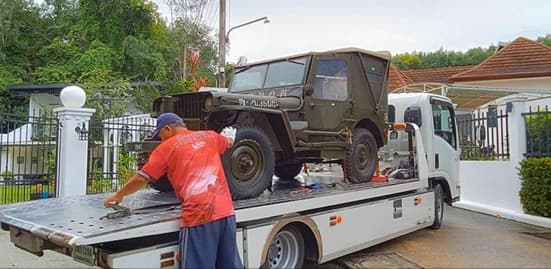
What French registration asks for
- Certificate 846 A
Issued by French customs once the car is cleared, using its Australian registration and purchase papers and your proof of residence. Under the relief there's nothing to pay; without it, duty and TVA come first. - Proof it meets European standards
Start by asking the manufacturer's French representative for an attestation of conformity. Cars built for the Australian market often get only a partial attestation or none, and in that case the car goes through an individual approval, a réception à titre isolé, with the regional DREAL office. - Registration through ANTS
With 846 A and proof of conformity in hand, the car is registered online through the national vehicle agency.
What it really costs
- With the relief: no duty and no TVA
Provided you've owned and used the car for at least six months and it arrives within the 12-month window. The 12-month rule on not selling applies to the car exactly as it does to the furniture. - Without the relief: 10% duty plus 20% TVA
Calculated on the car's value plus the cost of shipping it. On anything but an older car, this is usually where selling in Australia and buying in France becomes the cheaper answer. - Freight and the approval process
Shipping a car across the world isn't cheap, and an individual approval can mean inspection fees, test reports and parts such as headlights changed to suit driving on the right. Costs depend heavily on the model, so get the manufacturer's answer on conformity before you book the car onto a ship.
The question worth asking isn't only what it costs, but how you'll feel driving it. For a classic, a much-loved four-wheel drive or something hard to find in Europe, bringing it can make sense. For an everyday hatchback, most people on this corridor sell it before they leave and buy a French car on arrival: no approval process, the wheel on the correct side, and a car that's easy to sell later.
Bringing your dog or cat
Here's some good news after the tax talk. Australia is on the EU's list of countries whose pets don't need a rabies blood test, and there's no quarantine on arrival in France. One thing surprises people, though: your pet still needs a rabies vaccination, even though Australia has no rabies. The exemption removes the blood test, not the jab.
The work sits mostly on the Australian side, where the Department of Agriculture signs off the export and endorses the EU health certificate. And think about the trip back before you leave. Bringing a pet into Australia is a far longer process than taking one out, and some of the preparation has to happen before your pet departs. If there's any chance you'll come home one day, talk to the department first, and read our guide to leaving Australia with your pet.
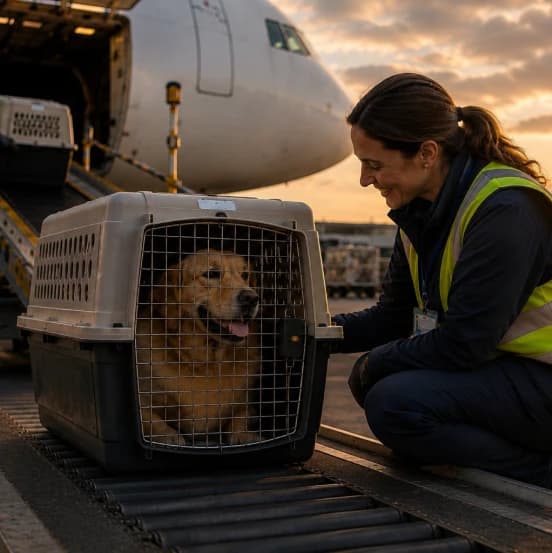
The steps, in the order that matters
- 1. Microchip first
The rabies vaccination can't be dated before the microchip was implanted or read, so a vaccination given too early simply doesn't count. - 2. Rabies vaccination
Given when your pet is at least 12 weeks old, and valid from 21 days after the primary vaccination. That date sets the earliest your pet can enter the EU. - 3. The Australian export steps
A Notice of Intention to export lodged with the Department of Agriculture at least 10 working days before departure, a final vet check within 72 hours of the flight, and an appointment with a government vet who issues the export permit and endorses the certificate. - 4. The EU animal health certificate
Endorsed no more than 10 days before your pet enters the EU, travelling with a signed declaration that the move isn't commercial. Your pet has to arrive through an airport or port designated for pet checks, so confirm the route with your airline. - 5. Up to five pets
The rules for a personal move cover up to five animals. If they don't fly with you, they must travel within five days of your own journey, with your written authorisation. No tapeworm treatment is needed for France.
What people who've made this move say
Australia to France
Life in France after Australia
Distance is the part that takes getting used to. France is eight to ten hours behind the east coast, so calls home happen early in the morning or late at night, and a trip back for a wedding is a serious undertaking rather than a long weekend. Christmas arrives in winter, the summer holidays land in August, and your first French winter will teach you why everyone owns a proper coat.
The day-to-day adjustment is mostly administrative. Australians used to handling most of government online find France runs on documents: the visa validation, the social security number, the bank account, the health card, each one asking for a piece of paper that comes from another. It's slow for a few months, and then it isn't. The people who struggle are usually the ones who expected the first month to feel like the twelfth.
12 months
how long you must have lived outside the EU before your belongings qualify for France's duty-free relief
20%
the French TVA charged on your household goods if the relief doesn't apply, before any customs duty
35
the oldest you can be, on the day you apply, for Australia and France's working holiday visa
What things cost
Coming from Sydney or Melbourne, Paris rents are unlikely to shock you, though you'll get less space for the money and very few apartments come with a car park. Leave the capital and the difference is real: in regional cities and country towns, the rent on a small city flat in Australia can cover a house with a garden.
Everyday spending shifts in ways Australians notice quickly. Bread, cheese, wine and a set lunch at a local restaurant are cheaper than you're used to, and the quality is hard to argue with. Petrol, motorway tolls, anything imported from outside the EU and most tradespeople cost more. Buying property carries higher upfront costs than you might expect, mostly transfer taxes collected by the notaire, so budget for them from the start.
For your move, the costs that matter most are timing costs. If your container arrives before you have a French address, storage fees start, and if you sell in Australia before you can buy in France, you'll be renting in between. Lining those dates up is worth more than haggling over the freight.
Safety, and what changes

Safety, and what changes
France is a safe country by international standards, and daily life in most towns will feel calm. As in any big city, pickpockets work the busy places: metro stations, tourist streets and crowded trains. Keep your phone out of your back pocket in Paris and you've dealt with most of it.
The practical differences are about paperwork. You're expected to be able to prove who you are, so carry your residence permit or passport. Home insurance is compulsory for tenants and your landlord will ask for proof. And forget 000: in France you dial 112 for any emergency, 15 for an ambulance, 17 for police and 18 for the fire brigade.
What catches Australians out isn't crime, it's the system. French administration follows the rules on the form rather than the spirit of your request, and one missing document can stop a process completely. Keep copies of everything, and bring more paperwork than you think you need.
What people earn
France's minimum wage, the SMIC, is 1,867.02 euros gross a month for full-time work as of 1 January 2026, or about 1,478 euros once employee contributions come out. Salaries in Paris and in sectors like tech, finance and aerospace run well above that, but most Australians find French pay lower than they're used to for similar work, and the cost of living is what makes the sums add up.
The gap between gross and net is wider than in Australia. Employee social contributions come out before income tax, and in exchange you get health cover, a state pension, unemployment insurance and family benefits. There's no superannuation guarantee on top of your salary; the French pension comes from those contributions instead.
When you compare offers, look past the headline figure. French salaries are quoted as an annual gross amount, some employers pay a thirteenth month, and being hired as a cadre changes your contributions, your notice period and sometimes your working hours. Ask which one you're being offered.
Tax, on both sides of the move
Start with leaving Australia, because it happens first. When you stop being an Australian tax resident, the ATO treats you as having sold assets like shares at their market value on that day, unless you choose to defer the gain. Australian real estate isn't caught by that rule, but it has its own trap: if you sell your home while you're a foreign resident for tax purposes, you generally can't claim the main residence exemption, even as an Australian citizen and even if you lived in it for years. Temporary visa holders are treated differently on the first point, and the ATO decides residency on your circumstances rather than your passport.
On the French side, income tax on 2025 income, declared in 2026, runs at 0% up to 11,600 euros, 11% to 29,579 euros, 30% to 84,577 euros, 41% to 181,917 euros and 45% above that. Those bands apply to each share of the household under the family quotient system, so a couple with children pays very differently from a single person on the same income. France and Australia have a tax treaty, in force since 2009, which decides where each kind of income is taxed so you aren't taxed twice on the same money.
Two more things worth knowing. How France taxes Australian super, whether it's a lump sum, an income stream or growth inside the fund, isn't spelled out clearly in official guidance, so get specialist cross-border advice before you draw on it as a French resident. And France's wealth tax on property, the IFI, applies above 1.3 million euros of net real estate, but someone who wasn't French tax resident in the previous five years pays it only on French property until the end of the fifth year after arriving, a useful window if you're keeping a house in Australia.
Finding work
First, the permission. Unless you're on a working holiday or have a French or EU family route, you need a visa that allows work before a French employer can take you on. A salaried position means the employer applying for a work authorisation, which smaller French firms often find daunting. The talent permit is easier for them to say yes to, because far less of the paperwork lands on their side.
Native English is a genuine advantage in international companies, tourism and teaching, and in Paris and Lyon's tech and business scenes. In a regional French company it counts for much less, because working French is part of the job. Most people find interviews start to go well at around an upper-intermediate level of French.
If you're self-employed, look at the structures before you arrive. France has a simple micro-entrepreneur regime with turnover ceilings, and the obligations grow quickly above them. Regulated professions, from nursing and medicine to law, accounting and trades, need your Australian qualifications recognised in France, which is rarely automatic and worth starting early.
Healthcare, schools and getting around
French healthcare is excellent, and it works differently from Medicare. You usually pay the doctor and are reimbursed a share, with a top-up insurance called a mutuelle covering most of the rest. If you work in France you're covered through your job. If you don't, you can join the public system, PUMa, after three months of stable residence. Australia and France have no reciprocal health care agreement, and Medicare doesn't pay for treatment overseas, so arrange private international cover for the gap. France has also legislated a contribution for some residents who don't work and pay no French social contributions, with the details set by decree, so ask your local health insurance office whether it applies to you.
State schools are free, secular and academically demanding, and younger children usually pick up French faster than their parents expect. Teenagers arriving mid-way through secondary school find it harder, so talk to the school about language support before you settle on a start date. International and bilingual schools exist in Paris, Lyon, Toulouse and on the Côte d'Azur, at private-school fees.
Getting around is a pleasant surprise. High-speed trains put Lyon or Bordeaux about two hours from Paris, city public transport is cheap, and motorways are excellent but tolled. Rural France, like regional Australia, assumes you have a car, though the next town is usually minutes away rather than an hour.
Super, pensions and banking
Your super stays in Australia. Citizens and permanent residents can't withdraw it because they're leaving the country; it stays locked until you meet a condition of release, such as retiring after reaching your preservation age, which is 60 for anyone born from 1 July 1964. The departing-Australia payment you may have heard of is only for former temporary visa holders.
The Age Pension is where this corridor needs care. There's no social security agreement between Australia and France, so years in France don't count towards it. If you draw it while living in France, it's paid at your normal rate for the first 26 weeks, after which it depends on how long you lived in Australia between age 16 and pension age: 35 years or more usually keeps the full rate, fewer means a proportional amount. From 20 September 2026, the Pension Supplement stops as soon as you leave Australia to live overseas.
For banking, open a French account early, because rent, salary and bills all expect one. If a bank turns you down, the Banque de France can designate one that must open a basic account for you, usually within a working day of your request. Keep your Australian account open too: super, any Australian income and your final tax refund are all easier with one, and moving larger sums through a specialist currency service rather than a bank wire usually saves real money.
The weather, honestly

The weather, honestly
If you're heading for Paris, Normandy or Lille, expect proper winters: short grey days, frost and the occasional snowfall, colder than anything in Sydney or Brisbane. Melburnians will find the grey familiar, just longer. Bring the good coat, or buy one there.
Further south is a different story. Provence and the Mediterranean coast have hot, dry summers that will feel familiar to anyone from Perth or Adelaide, and summer heatwaves have become a regular part of July and August. The Mistral in Provence can blow for days, and old stone houses with thick walls and shutters handle the heat better than you'd think.
And one thing that genuinely makes the move easier: Australia and France both run on 230 volts at 50 hertz. Your kettle, toaster and coffee machine will work in France with nothing more than a plug adapter, so weight and freight cost, not voltage, decide what's worth bringing.
Questions people actually ask
Plan on three to four months door to door. The direct shipping service publishes about 61 days from Fremantle to Le Havre, 70 from Melbourne and 75 from Sydney, with Fos-sur-Mer around 11 days later again, and packing, export, French customs and delivery add a few weeks on top.
A shared container can add a week or two while it fills, and Brisbane shipments usually connect through another port first. Because the ship has been sailing around southern Africa rather than through the Suez Canal, older guides that quote five or six weeks are out of date for this route.
Usually not, if you're genuinely moving your main home. France's relief for a transfer of normal residence removes customs duty and the 20% TVA on personal belongings, claimed on form Cerfa 10070 with a dated, signed inventory.
The four conditions are that you've lived outside the EU for at least 12 months, owned and used the goods for at least 6 months before moving, bring them into France within 12 months, and don't sell, lend or rent them out for 12 months after they arrive. French citizens returning home qualify on the same terms. Alcohol, tobacco, caravans and professional equipment are excluded.
Yes, but it won't be duty free. Alcohol is excluded from the relief however long you've owned it, so wine in your shipment is assessed for customs duty, excise and TVA.
Price it before you pack. For a serious collection the usual options are to ship it and pay, sell or drink it before you leave, or keep it in storage in Australia. Declare it properly: undeclared bottles found in a container are a good way to turn a routine clearance into a full inspection.
Yes, and this is one of the easy parts of the move. Australia and France both use 230 volts at 50 hertz, so your kettle, coffee machine, television and power tools will work with a simple plug adapter.
Whether they're worth shipping is a different question. Bulky, cheap-to-replace items often cost more to send than to buy again, while quality appliances you love are usually worth the space.
Yes, unless you're staying no more than 90 days in any 180. To live in France you need a long-stay visa, applied for at the French consulate before you leave, and you can't switch from a tourist stay once you've arrived.
Australians aged 18 to 35 can apply for a one-year working holiday visa, which generally can't be extended. For a longer stay, the usual routes are the long-stay visitor visa for retirees and people living on their own means, a work visa or the talent permit if a French employer is paying you, and family routes for partners of French or EU citizens. After arriving, validate your visa online within three months.
For your first year, yes. A valid Australian licence is recognised for one year after you take up normal residence in France, and Australia is on France's exchange list for car and motorcycle licences, so you can swap it for a French one without sitting a test.
Apply online through ANTS within that first year, and bring a physical card: digital licences can't be exchanged, because the plastic licence has to be handed over. The licence must still be valid and must have been issued while you lived in Australia. Heavy vehicle categories can't be exchanged.
For most people, no. An Australian car is right-hand drive on right-hand-traffic roads, and cars built for the Australian market often lack a full European certificate of conformity, which means an individual approval with the regional DREAL office before registration, plus changes such as headlights.
Financially, a car you've owned and used for at least six months can travel under the same relief as your furniture, with certificate 846 A from customs. Without relief it's 10% duty plus 20% TVA. For a classic or a much-loved vehicle it can make sense; for an everyday car, selling in Australia and buying in France is usually simpler and cheaper.
More easily than you might fear. Australia is on the EU's list of countries whose pets need no rabies blood test, and there's no quarantine in France. Your pet still needs a microchip and a rabies vaccination given at least 21 days before entering the EU, even though Australia is rabies-free.
On the Australian side, lodge a Notice of Intention to export with the Department of Agriculture at least 10 working days before the flight, have a final vet check within 72 hours of departure, and have a government vet endorse the EU health certificate. If you might bring your pet back to Australia one day, speak to the department before you leave, because returning is a much longer process.
It stays in Australia. Australian citizens and permanent residents can't take their super out because they're leaving; it remains preserved until a condition of release, such as retiring after your preservation age, which is 60 if you were born on or after 1 July 1964.
The departing Australia superannuation payment is only for former temporary visa holders. How France taxes super once you draw on it as a French resident isn't clearly set out in official guidance, so take cross-border advice before you make withdrawals.
Yes, but the rate can change. For the first 26 weeks overseas it's paid at your normal rate. After that it depends on how many years you lived in Australia between age 16 and pension age: 35 years or more usually keeps the full rate, fewer means a proportional amount.
Australia has no social security agreement with France, so years worked in France don't help you qualify. From 20 September 2026, Pension Supplement stops as soon as you leave Australia to live overseas. Check your own position with Services Australia before you go.
When you stop being an Australian tax resident, the ATO treats you as having sold assets such as shares at market value on that day, unless you choose to defer the gain. Australian property is outside that rule, and temporary visa holders are generally not caught by it.
If you sell your Australian home while you're a foreign resident for tax purposes, you generally can't claim the main residence exemption, even as a citizen, unless a narrow life events test applies. Whether to sell before you leave or keep the property is worth deciding with an adviser while you're still resident.
It comes with you. If you're moving overseas for 183 days or more in any 12 months, update your details with the ATO and lodge an overseas travel notification within 7 days of leaving.
After that, report your worldwide income, or lodge a non-lodgment advice, each year by 31 October. Depending on your income you'll make compulsory repayments from overseas, and the debt keeps being indexed while you're away.
A short list, but it matters. Some Aboriginal and Torres Strait Islander objects can never be exported, and others, along with certain fossils, meteorites, older artworks and historic sporting memorabilia, need a permit under Australia's movable cultural heritage laws that can take many months. Most artworks under 30 years old don't need one.
Firearms in a shipment need a Defence export permit, and cash or bearer instruments worth A$10,000 or more must be reported before they leave Australia. Wildlife products such as crocodile leather are limited to small personal quantities. If you're unsure about an item, ask before it's packed.
Medicare doesn't pay for treatment overseas, and Australia has no reciprocal health care agreement with France. Permanent residents also drop out of Medicare after 12 months living abroad. Arrange private international health insurance from the day you arrive.
If you work in France you're covered through your job. If you don't, you can apply to join the public system, PUMa, after three months of stable residence, and most people add a mutuelle to cover the share the public system doesn't reimburse.
Two to three months ahead is comfortable for a container of your own, and more if you're aiming at the start of the French school year or moving over the Australian Christmas holidays. A shared container needs flexibility more than notice, since it leaves once it's full.
The real lead time on this route is everything around the container: a visa that has to be granted before you go, tax advice that's most useful while you're still resident, pet paperwork with fixed deadlines, and a sea journey of two months or more. Start all four as soon as you have a rough date.
Your next steps
Your next steps
Start the visa first. You apply at the French consulate before you go, no more than three months before departure, and French customs want to see that your residence has really moved before they apply the relief to your belongings.
See a cross-border tax adviser while you're still an Australian resident. The capital gains rule on leaving, the lost main residence exemption if you sell as a foreign resident, and how France treats your super are all easier to plan for before you go.
If you have a HELP or other study loan, lodge an overseas travel notification within 7 days of leaving if you'll be away 183 days or more in a year.
Check the export list before packing. Aboriginal and Torres Strait Islander art and objects, fossils, older artworks and firearms can need permits, and cash of A$10,000 or more must be reported.
Book the vet and the Department of Agriculture early. Microchip, then a rabies vaccination at least 21 days before your pet enters the EU, then the Notice of Intention to export at least 10 working days before the flight.