Your new life in France, a day's drive from your British front door
Join the people who handed us the keys, the boxes and the paperwork, and spent their last British weekend saying goodbye instead of taping cartons.
Planning the move to France?
UK to France: the short version
This is the shortest international move we run, and the only one where a single lorry drives the whole way. No container, no port, no sailing schedule. Our crew packs at your British address, the vehicle crosses on the Channel Tunnel shuttle in about 35 minutes or on a ferry in roughly 90, and the same crew unloads at your French door. From London or the South East plan on 2 to 3 days, from the Midlands 3 to 5, from Scotland to Provence 5 to 8. A shared load waiting to fill can add a week or two.
Customs is the part that catches people out, because it did not used to exist. Since 2021 your household goods leaving Britain are a third-country import into the EU, so France wants a declaration for a sofa you have owned for a decade. The relief that removes the bill is the franchise for a transfer of normal residence: no customs duty and no 20% French TVA on used personal effects, declared on form Cerfa 10070 with an itemised inventory.
The franchise has four conditions and all four are checkable. You must have lived outside the EU for at least 12 months, you must have owned and used the goods for at least 6 months before the move, the shipment must reach France within 12 months of you transferring your residence, and you must not sell, lend or hire out the relieved goods for 12 months after they arrive.
Then the good news, and this corridor has more of it than any other page on this site. Both countries run 230V at 50Hz, so every appliance works and only the plug changes. Your dog or cat needs no rabies blood test and faces no quarantine. Your UK State Pension keeps rising every April in France rather than freezing. And if you draw that pension, an S1 can make the UK pay for your French healthcare.
The part almost nobody plans for is the passport. A British passport stopped being a right of residence in 2021. Visiting is straightforward on 90 days in any 180, but that is a visit, not a life. Moving means a long-stay visa applied for from Britain before you go, and French customs will want to see evidence that you really are transferring your residence.
Everyone remembers the drive. The tunnel, the first service station where the coffee is suddenly good, the moment the road signs change colour. What almost nobody remembers is the paperwork, because for thirty years there wasn't any. You loaded a van, you crossed, you were French now. That is the version of this move most people still have in their heads, and it is the reason the customs conversation lands so hard.
The physical move genuinely is that easy. It is the shortest border crossing we deal with and one of the few routes where your things never leave the vehicle they were loaded into. The administration is the part that has grown, and it has grown at both ends: a visa on the British side before you go, a customs franchise on the French side when you arrive, and a residence permit to validate once you are there. None of it is difficult. All of it has an order, and getting the order wrong is what turns a three-day move into a three-month one.
What follows is the whole thing, in the order you will actually meet it. The customs relief and how to qualify. Duty and TVA if you do not. Which French route is open to you and when to apply. The crossings, the car, the dog, the money, and what living there is like once the lorry has gone. Where a rule has a date or a threshold attached, we have put it in, because a vague answer on this route costs real money.
How we get you there
We build your Britain-to-France move around the parts that actually decide how it goes: the visa timing, the inventory, and the crossing. You pick the dates, we handle the rest.
Tell us about your move
Your British address, where you are landing in France, and roughly what is coming. You get a clear plan, a realistic delivery window, and a price up front. No guessing.
Meet your Move Manager
One person builds the load plan, goes through the inventory with you, and raises the awkward questions about the drinks cupboard and the car before anything is packed.
We handle the rest
Packing, the crossing, the French declaration and delivery to your door. You go to the last pub lunch with your neighbours; we keep the move running to plan.
Times of year that shape this route
Britain-to-France moves cluster into a few predictable windows, and the crossing is the part that feels them:
- July and August
The busiest weeks on the whole corridor. British school holidays and the French summer exodus land on the same ferries and the same shuttle departures, and Dover and Folkestone can run hours behind on the worst Saturdays. Families timing a move around the September rentrée are competing for exactly these slots, so book early and, if you can, load midweek. - Late August into September
The rentrée itself. French schools go back in the first days of September, French landlords and estate agents come back to their desks at the same time, and everything administrative that stalled in August starts moving again. It is a good arrival window and a crowded one. - December and the shoulder months
Quieter on the road and cheaper on the crossing, with the caveat that a hard freeze or a storm in the Channel can hold sailings, and that the French public holidays in May turn several weeks into a patchwork of long weekends. Nothing here is a reason to avoid the season, only a reason to build a day or two of slack into the plan.
French customs, and the paperwork Brexit added
Since 2021 a household move from Great Britain to France is a third-country import into the European Union. There is no lighter-touch route for a short crossing and no leftover EU exception: the same rules apply whether your things arrive from Kent or from Bangkok. For a genuine home move the relief that matters is the franchise for a transfer of normal residence, and it is the first thing to sort, not the last.
The British side is the simple half. Personal effects leave Great Britain without a licence to chase, and your remover files the export side as part of the job. What needs thought is the short list of things the French relief will not cover, chiefly alcohol, tobacco and anything you have owned for less than six months. None of those is a problem if it comes up at the survey. All of them are a problem if they come up at Calais.
What you'll need to hand
Nothing exotic, but the evidence that you are genuinely moving is the part people underestimate, especially if you have had a French holiday home for years. Have these ready:
- Your passport, plus your French long-stay visa or residence permit if you are not an EU citizen
- The completed Cerfa 10070 declaration for duty-free entry of personal property from a third country
- An itemised inventory in French, dated, valued and signed, which we produce as we pack
- Evidence you lived outside the EU for at least 12 consecutive months: a UK tenancy or completion statement, council tax bills, HMRC correspondence, or bank statements showing a life based in Britain
- Evidence of your new French address: a lease, an acte de vente, or a utility contract in your name
- Proof that the goods have been owned and used by you for at least six months, which for most households is simply the honest inventory
- For a vehicle, its registration document and proof it was bought tax paid in the UK
- For a pet, its microchip number, rabies vaccination record and animal health certificate
- Your contact details in France, because the customs office will want a person, not a company, to ask
Checks, holds, and how long they add
France has no biosecurity quarantine stage for household goods, so there is nothing here resembling the Australian or New Zealand process. What can happen is a documentary query or a physical examination, and on a road move both are usually measured in hours.
- A documentary query
By far the most common outcome, and usually a question about the inventory: a value that looks commercial, an item that reads like stock rather than possessions, or a gap in the residence evidence. Answered the same day in most cases.
- A physical examination
Less common. Customs open the vehicle and check the load against the list. An accurate inventory is the whole defence here, which is why we itemise rather than write 'household goods, 40 cartons'.
- Goods outside the franchise
If there is wine, spirits or tobacco on board, that part is assessed separately for duty and TVA rather than the whole load being held. Declaring it up front is what keeps it to a line on an invoice instead of an afternoon at the border.
- Missing residence evidence
The one that actually causes delay. If you cannot yet show that you have transferred your residence, the franchise cannot be applied and the load may sit while you produce the missing piece. This is the reason the visa and the French address come before the lorry.
- Peak-period congestion
Not a customs hold at all, but it feels like one. On the worst summer Saturdays the queue for the crossing is the delay, not the paperwork. Loading midweek is the cheapest fix anyone will ever offer you.
The crossing, and why this route is measured in days
Almost everything on this corridor travels by road. Your things are loaded into a vehicle in Britain and that vehicle drives onto the Channel Tunnel shuttle at Folkestone or onto a ferry at Dover, Portsmouth or Poole, and drives off again in France. The shuttle crossing is about 35 minutes and the short ferry about 90; the western sailings to Caen, Cherbourg and St Malo take longer but land you much closer to Normandy and Brittany. There is no port handling, no container to stuff or unstuff, and no waiting for a vessel that sails twice a week. That is why the estimates on this page are in days: the variable is the road at each end, not the water in the middle.
What you can import to France

Personal belongings

Used clothing

Household appliances

Fragile items

High-value items

Large items & furniture

Excess luggage

Pets
EU pet rules; attack-type dogs banned

Vehicles
Customs certificate and French type approval required
What France restricts

Illicit drugs & drug paraphernalia

Explosives, fireworks & flares

Biological & contaminated materials

Hazardous chemicals

Corrosive substances

Counterfeit & pirated goods

Ivory & protected wildlife products

Loose & damaged lithium batteries

Flammable liquids, gas & fuel

Firearms, ammunition & weapon parts

Controlled & prescription medicines

Other dangerous or hazardous goods

Meat & dairy products
Banned from outside the EU

Plants, seeds & anything in soil
Plant-health certificate required

Alcohol & tobacco
No relocation relief; duty and excise payable
How much can you bring?
We are built for household relocations from Britain to France, from a one-bedroom flat to a family house with a garage full of things nobody has opened since 2014.
- Minimum: 6 boxes
Small shipments share space on a vehicle already running the route, which keeps the price sensible. The trade-off is timing: a shared load leaves when it is full, so allow an extra week or two.
- No maximum
A full house, the garden furniture, the piano and the contents of the loft all travel in a dedicated vehicle on your dates. Bigger loads are usually the ones where a dedicated lorry works out better value than sharing, because the crossing is booked once either way.
The honest planning question on this route is not how much fits, it is what the French property will take. British and French rooms are different shapes: French ceilings are often higher and the stairwells in an older immeuble are often narrower, and a lift is not a given above the second floor. Measure the staircase and the door frames before you decide the wardrobe is coming.
The forms, in plain English
- Cerfa 10070
The declaration for duty-free entry of personal property from a third country. This is the franchise application, and it is the document that removes duty and TVA from your household effects. - The inventory
An itemised, valued, dated and signed list in French, in duplicate. Not a packing note. This is what customs check the load against, and it is produced as we pack. - Proof of residence transfer
Evidence of at least 12 months living outside the EU, plus evidence of your new French address. Between them these two prove the move is real. - Certificate 846 A
Only if a vehicle is coming. Issued by the French customs office, it is the customs clearance certificate the registration process asks for, and it replaces the quitus fiscal used for cars arriving from inside the EU. - The export side
Filed in Britain by your remover as part of the job. You do not submit anything to HMRC yourself for ordinary personal effects.
Where to check French customs guidance

The Direction générale des douanes et droits indirects sets out the conditions for the franchise on a transfer of normal residence, including the 12-month, 6-month and 12-month tests and the Cerfa 10070 declaration.
Duty, TVA, and the franchise that removes both
Without the franchise, your household goods are treated like any other commercial import into the EU: customs duty at the rate for the goods, plus French TVA at 20% on the lot, calculated on value plus freight. On a modest three-bedroom house that is a four-figure bill for possessions you already own, and it is entirely avoidable. The franchise for a transfer of normal residence is not a discount or a discretionary favour. It is a defined relief with four defined tests, and most people moving for real pass all four without doing anything special.
What you'd pay without the franchise
- French TVA at 20%
The standard rate, charged on the customs value of your goods including transport. This is the part that hurts, because it applies to the whole load rather than to a handful of items.
- Customs duty on top
Rate depends on what the goods are. Ordinary used household effects are the cheap end; a car brought in outside the franchise is the expensive end, at 10% duty before TVA is added on the total.
The franchise, and who actually qualifies
- The four tests
You must have had your normal residence outside the EU for at least 12 months. The goods must have been owned and used by you privately for at least 6 months before the transfer. They must arrive in France within 12 months of the date you transfer your residence. And you must not sell, lend, hire out or pledge them for 12 months after they arrive.
- Who this covers
Anyone genuinely relocating from Britain, whatever passport they hold. It is not a British citizens' relief and it is not restricted to first-time arrivals. What it does require is that the residence really moves: it is not available for furnishing a holiday home you visit, and a second home in the Dordogne that you use six weeks a year does not qualify however long you have owned the sofa.
Where it goes wrong
The franchise is generous and the refusals are boringly consistent. Almost all of them are one of these five:
- Alcohol and tobacco
Explicitly excluded, and the single most common surprise on this route. A drinks cupboard built up over twenty years, or a case of something good bought for a birthday, is an excise and TVA matter regardless of how long you have owned it. Declare it and price it; do not let it travel as kitchen contents. - Things you have owned for less than six months
The new sofa bought to replace the one you are not taking is the classic example. It is not fatal, but it sits outside the relief and should be listed separately rather than quietly folded into the inventory. - Professional equipment
The relief covers portable instruments used in your profession, not workshop plant, catering equipment or anything that reads as a business asset. If you are moving a trade as well as a home, that part needs its own conversation. - A residence that has not actually moved
The most expensive refusal, and the easiest to avoid. Without evidence that you have transferred your residence to France, the franchise does not apply and the load waits. This is why the visa, the lease and the inventory belong to the same conversation. - An inventory that reads like a stock list
Twelve identical lamps, a pallet of unopened boxes, or values that look like retail rather than second-hand. Customs are looking for a household, and an honest inventory is what tells them they are seeing one.
The drinks cupboard deserves its own paragraph, because it is the one exclusion that surprises British movers most. Wine, spirits and beer are outside the franchise by name, and so is tobacco. If it is a bottle of gin and a few beers, nobody's move turns on it. If it is a serious cellar or a collection of single malts, it is worth pricing before you pack it: bring it and pay the duty and TVA, drink it, sell it, or leave it in bonded storage in Britain. All three are reasonable answers. Putting it in a box marked 'kitchen' is not.
The other thing worth raising early is the car, which is covered further down this page. It can travel under the franchise if it was bought tax paid in Britain and you have owned and used it for at least six months, and it needs certificate 846 A from French customs before it can be registered. Outside the franchise it is 10% duty plus 20% TVA, which is usually the moment people decide to sell it at home instead.
Insuring your shipment
A road move is handled far less than a container move, which genuinely lowers the risk. Your things are packed once, loaded once and unloaded once, and nobody stuffs or destuffs a container at a port in between. That is a real advantage of this corridor and it is worth saying plainly. It is not the same as nothing going wrong, which is what insurance is for.
Why it's worth having
A Britain-to-France move is shorter than anything else we run, but the things that damage furniture are not mostly about distance:
- The stairs at both ends
Far more damage happens in a British hallway or a Parisian stairwell than on a motorway. Narrow turns, low landings and awkward corners are where a wardrobe meets a doorframe.
- Road movement
Hundreds of miles of motorway, roundabouts and a ferry ramp. Well-packed loads travel fine; badly packed ones settle, shift and rub.
- Storage in the middle
If your British sale and French purchase do not line up, something sits somewhere for a few weeks. Cover that spans the whole job rather than just the drive is what you want.
- The things money cannot replace
Insurance does not bring back a painting or your grandmother's clock. It does mean the loss is not also a financial one, and it changes how the claim conversation goes.
What's usually covered
It depends on your policy, but cover for a Britain-to-France road move typically includes:
- Loss or damage in transit
From collection at your British address through the crossing to delivery in France, as one continuous journey rather than as separate legs.
- Handling damage
Loading, carrying and placing. In practice this is where most real claims come from on a route like this one.
- Storage, if you arrange it with us
Cover can usually be extended over a storage period at either end, which matters because the dates so rarely match.
Go through the terms, exclusions and declared values with your broker or insurer before you commit. Owner-packed cartons are commonly excluded or covered only for total loss, and that matters more than usual here because a short crossing tempts people into packing their own boxes.
How to get insured through us
You can arrange cargo insurance for your Britain-to-France move in a few ways:
- Your own broker or insurer
Perfectly sensible, particularly if you already have contents cover with someone who knows your possessions. Check that it covers international transit and not just the home.
- An existing policy you already hold
Some home and contents policies extend to a move. Read what they say about owner-packed goods and about the period the items are in a third party's care.
- Our own cargo insurance, arranged as part of your move.
Note: our cover is charged at 3% of your declared shipment value.
- Declared value is the number that matters
Not what you paid, and not sentimental value. Replacement cost in France, item by item, is what the inventory should carry and what a claim will be settled against.
Which French route is open to you
This is the part of the move that changed most, and the part people leave latest. Until 2021 a British passport was a right to live in France and there was nothing to apply for. That is over. If you moved to France before 31 December 2020 you have rights under the Withdrawal Agreement and a carte de séjour to go with them; if you are moving now, you are a third-country national applying for a long-stay visa like anyone else, and you apply from Britain before you go. There is no way to arrive as a visitor and convert once you are there.
The routes people on this corridor actually use
Four routes cover almost everyone leaving Britain for France. Which one applies depends on whether you are working, who you are working for, and which passport you hold.
Visiting: 90 days in 180
No visa needed for a short stay, but it is capped at 90 days in any rolling 180 and it is not a way to live in France. Since April 2026 the EU Entry/Exit System records crossings biometrically, so the count is now automatic rather than a matter of passport stamps. ETIAS, a separate travel authorisation for visa-exempt visitors, is being introduced on its own timetable, so check whether it applies to you before you travel.
Long-stay visitor (VLS-TS visiteur)
The retirement and career-break route, and the most common one on this corridor. You show sufficient means, private health cover and an address, and you undertake not to work for a French employer. In a June 2026 parliamentary answer the Interior Ministry indicated that remote work for a foreign employer, paid and taxed abroad, can sit within visitor status. That answer did not change the law and consulates keep their discretion, so treat it as a question to put to your consulate rather than a settled right.
Work and Passeport Talent
If you are being paid by a French entity you need a work route. A salarié visa runs through a French employer and a work authorisation; the Passeport Talent family covers skilled employees on a qualifying salary, researchers, company founders and a handful of other profiles, and it is generally the faster and more flexible of the two where you qualify.
Family and partner
For the spouse, partner or dependent child of a French citizen, or of an EU citizen exercising free movement in France. Financial and accommodation requirements are lighter than the visitor route and the permit usually allows work, but the documentary evidence is heavier and the timelines are longer.
The timing that matters: your long-stay visa has to be applied for from Britain, and once you land you must validate it online within three months. Miss that window and you are no longer legally resident. French customs also want evidence that your residence has genuinely transferred before the franchise applies, so the visa is not the last piece of the move. It is the first.
Requirements change, so check the current position with the official France-Visas service before you commit to dates, and take advice on anything about your own case.
Crossings, routes and where they land
There is no departure port in the usual sense on this route, because your things are never handed to a shipping line. A vehicle is loaded at your British address and that same vehicle drives to France. What you are really choosing is a crossing, and the right crossing is the one that puts the lorry closest to your new front door: the short Dover and Folkestone routes for Paris, the north and anywhere reached by autoroute, the western sailings from Portsmouth and Poole for Normandy, Brittany and the Atlantic coast.
The crossings we use
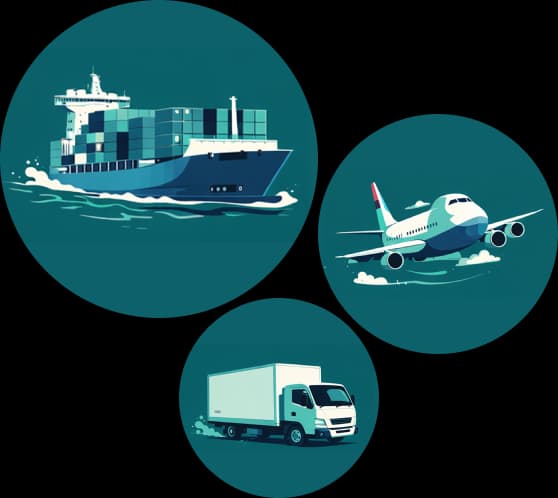
The crossings we use
- Channel Tunnel shuttle, Folkestone to Calais
About 35 minutes, several departures an hour, and the vehicle stays sealed with the crew alongside it. The default for most loads because it is fast, frequent and least affected by weather. - Short ferry, Dover to Calais or Dunkirk
Roughly 90 minutes. Often the better value on a shared load and a sensible fallback when the shuttle is full, which on a July Saturday it will be. - Western sailings, Portsmouth or Poole to Caen, Cherbourg or St Malo
Longer at sea, sometimes overnight, but they land the vehicle hundreds of miles further west. For Normandy, Brittany and much of the Atlantic coast this is the shorter journey overall, not the longer one. - Air freight, for the small and urgent
Rarely worth it on a corridor this short, but occasionally the right answer for a few boxes needed before the lorry arrives. We will tell you when it is not worth the money.
- Dedicated vehicle
Your load, your dates, your delivery window. The crossing is booked once and the lorry goes straight there. Best for full houses and for anyone working to a completion date. - Shared load
Your things travel with other consignments on a vehicle already running the route. Meaningfully cheaper, and the trade-off is that it leaves when it is full, so add a week or two. - Storage at either end
Arranged as part of the same job rather than as a separate contract, because a British sale and a French purchase almost never complete on the same day. - Part loads and the awkward extras
The piano, the garden furniture, the motorbike, the contents of the shed. Raise them at the survey and they are a line on a quote rather than a problem on loading day.
UK-to-France route timings
| From | To | Est. door to door |
|---|---|---|
| London and the South East, UK | Paris and Île-de-France, France | 2-3 days |
| South East England, UK | Normandy, France | 2-4 days |
| Birmingham and the Midlands, UK | The Loire and Centre-Val de Loire, France | 3-5 days |
| South West England, UK | Dordogne and Nouvelle-Aquitaine, France | 3-6 days |
| Manchester and the North West, UK | Lyon and Auvergne-Rhône-Alpes, France | 4-6 days |
| Leeds and Yorkshire, UK | Toulouse and Occitanie, France | 4-7 days |
| Glasgow and Scotland, UK | Provence and the Côte d'Azur, France | 5-8 days |
Door to door, Britain to France
The service covers everything between your British front door and your French one. Packing, the export side, the crossing, the French declaration and the delivery. Because it is one vehicle and one crew, there is no handover in the middle and nothing to go missing between two companies.
In practice it looks like this:
- Survey and quote
In person across most of Britain, or by video walkthrough if that is easier. We measure the volume, ask about the drinks cupboard and the car early, and give you a fixed price with the crossing built in. - The inventory and the franchise paperwork
Before packing day. Your Move Manager goes through the list, separates anything that sits outside the franchise, and makes sure your residence evidence is assembled while you can still lay hands on it. - Packing at your address
Our crew wraps and cartons everything, and the itemised list they produce is the same list French customs sees. Owner-packed boxes are allowed but are usually the ones insurers exclude, so we will say so rather than let you find out later. - Load and cross
Everything goes into the vehicle that will deliver it. The crossing is booked, the declaration travels with the load, and you get a delivery window rather than a vague estimate.
The French end
Our customs broker presents the Cerfa 10070, the inventory and your residence evidence, and handles any query or examination directly. On a short crossing that usually means hours rather than days.
Delivery to your French door
The same vehicle arrives at your address, the crew carries in, places items where you want them, reassembles what they dismantled, and the packing materials leave with them rather than living in your hallway for a month.
If the dates don't line up
They often do not, because a British sale and a French purchase rarely complete on the same day, and a French notaire works to a different rhythm than a British conveyancer. Storage at either end is arranged as part of the same job rather than as a separate contract, and we would rather quote it up front than surprise you with it.
Throughout, one person answers the phone. Not a queue, not a case reference.
One person on your side the whole way
Our Britain-to-France support is built around a single contact: a dedicated Move Manager who owns your file from the first survey through packing, the crossing, French clearance and delivery. You are not handed between a British crew and a French broker, and you are not re-explaining your own move to somebody new halfway across.
On this route that continuity earns its keep in two specific places. The first is sequencing, because the journey is short and the administration is not: a load can be in France within a day of leaving Kent, and the visa, the French address and the residence evidence all have to exist before it gets there. The second is the short list of things that sit outside the franchise, chiefly the drinks cupboard and the car, which are far cheaper to plan for at the survey than to argue about at Calais.
From collection in Britain through the crossing, French clearance and the final delivery, your Move Manager stays in touch and keeps you posted at every stage.
Talk to a real person now
Bringing a car from Britain
The economics of this one are unusually good and the practicalities are unusually awkward, which is the opposite of most routes on this site. A car you have genuinely owned and used for at least six months, bought tax paid in Britain, can come under the same franchise as the furniture, which means no 10% duty and no 20% TVA. The catch is not the money. It is that your car is right-hand drive and France drives on the right, and no amount of paperwork fixes the view at a blind junction.
What the French registration process wants
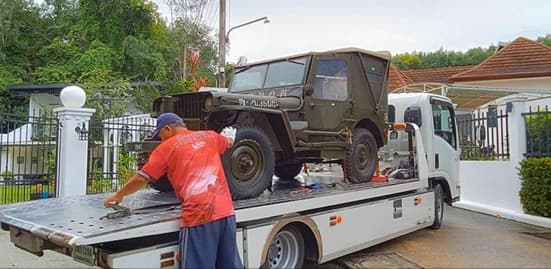
What the French registration process wants
- Certificate 846 A
The customs clearance certificate, obtained from the French customs office covering your new address. You present the vehicle's V5C, proof it was bought tax paid in Britain, and your residence evidence. Under the franchise the certificate is issued with nothing to pay; outside it, you pay first. - A certificate of conformity, or a DREAL inspection
Most mainstream models have a European certificate of conformity available from the manufacturer. If yours does not, the car goes to a DREAL conformity check instead, which is slower and costs more. - A contrôle technique, if the car is over four years old
The French roadworthiness test, carried out in France and dated within six months of registration. A valid British MOT does not substitute for it.
What it actually costs
- Under the franchise: no duty and no TVA
Provided the six-month ownership and tax-paid conditions are met and the car arrives within the 12-month window. Remember the 12-month no-disposal rule applies to the car as much as to the furniture, so you cannot bring it in relieved and sell it in the spring. - Outside the franchise: 10% duty plus 20% TVA
Charged on the value of the vehicle. On anything newer than a runabout this is usually the point at which selling in Britain and buying in France becomes the cheaper answer. - The making-it-legal costs
Headlight beam adjustment for driving on the right, the contrôle technique if the car is over four, the DREAL check if there is no certificate of conformity, the registration fee itself, and French plates. Individually small, collectively worth budgeting for.
The question we would actually ask you is not what it costs but how long you plan to keep it. If the car is nearly new, unusual, or something you love, bring it. If it is an ordinary five-year-old hatchback, the honest answer on this corridor is usually to sell it at home: you avoid the paperwork entirely, and you stop overtaking on French roads from the wrong seat.
Bringing your dog or cat
This is one of the two easiest pet moves on the whole site, and after the customs section you have earned some good news. Great Britain is a listed country for entry into the EU, which means no rabies blood test, no three-month waiting period and no quarantine. Your dog or cat travels in the car or the van with you, on the same crossing, and walks into the French house on the same day you do.
The one detail worth knowing is that the paperwork is directional, and it catches people out on the way back rather than on the way out. Coming into France there is no tapeworm requirement. Going back to Great Britain for Christmas, a dog needs tapeworm treatment by a vet between 24 hours and 5 days before arrival. Same animal, same route, different rule depending on which way the car is pointing.

The sequence, and why the order matters
- 1. Microchip first
An ISO-standard microchip, or a tattoo applied before 3 July 2011. It has to come before the rabies vaccination, because a vaccination given to an unidentified animal does not count and has to be repeated. - 2. Rabies vaccination
From 12 weeks of age. A first vaccination becomes valid 21 days later, so this is the appointment that sets your earliest travel date. A booster given while the previous one is still in date is valid immediately. - 3. Animal health certificate
Issued by an official vet within 10 days of the crossing, and valid for four months of onward travel in the EU. This replaced the old EU pet passport for pets travelling from Great Britain. - 4. No blood test, no quarantine
Neither applies on this route. If a form or a forum tells you otherwise, they are describing a move from an unlisted country. - 5. Up to five animals, travelling with you
The non-commercial movement rules cover up to five pets accompanying their owner. More than five, or animals travelling separately for sale or rehoming, is a different and much heavier process.
What people who've made this move say
The UK to France
Life in France after Britain
The move is short. The adjustment is not, and it is a strange kind of adjustment because so much is familiar. You can drive home for a weekend. The television is in a language you half-learned at school. And yet almost every system you deal with, from the bank to the doctor to the tax office, works on a logic you have to learn from scratch.
What surprises most British arrivals is that the friction is front-loaded. The first six months are a paper chase: the visa validation, the numéro de sécurité sociale, the bank account, the carte Vitale, the tax number, the utility contracts, each of which wants a document produced by one of the others. Then, quite suddenly, it all works, and it works rather well. The people who struggle are almost always the ones who expected month one to feel like month twelve.
Three numbers worth knowing
12 months
how long you must have lived outside the EU before the French customs franchise applies to your belongings
20%
the French TVA that lands on your household goods if the franchise does not apply, before any customs duty
5 years
how long a new French resident's property outside France stays outside the French real estate wealth tax
What things cost
Housing is where the difference shows, and it shows most for anyone leaving the South East of England. A 45 square metre flat rents for around 1,485 euros a month in Paris against roughly the equivalent of 1,620 euros in London, which sounds marginal until you look outside the capitals: the same flat is about 765 euros in Lyon and closer to 630 euros as a national average. Space that is unimaginable in Surrey is ordinary in the Lot.
Buying is cheaper per square metre in most of France and more expensive to transact. Notaire fees, most of which are actually transfer taxes rather than the notaire's own fee, run to roughly 7 to 8% on an existing property and 2 to 3% on a new build. Budget for them from the start, because unlike British stamp duty they apply at almost every price point. On the other side, taxe d'habitation has been abolished on main homes, so the recurring bill is taxe foncière alone, which averaged around 1,117 euros nationally on the last full year of figures and varies enormously by commune.
Day to day the picture is mixed rather than uniformly cheaper. Food shopping and eating out are generally better value, particularly outside Paris and particularly if you buy what is in season. Energy has historically been cheaper thanks to nuclear generation. Cars, fuel and anything imported tend to cost more than they did in Britain, and a household that runs two cars in rural France can find that the housing saving has quietly moved into the driveway.
Safety, and what changes

Safety, and what changes
Both countries are safe by international standards, and the honest answer is that daily safety will feel much the same. What differs is the texture. Rural France is very quiet indeed, quieter than most British countryside, and the isolation is more of an adjustment than the risk. City centres have the same opportunistic theft you would find in Manchester or Birmingham, concentrated in the same places: stations, tourist streets, crowded transport.
The practical differences are administrative. You are required to be able to prove your identity, so carrying your titre de séjour or passport matters more than a British habit of carrying nothing. Home insurance is compulsory for tenants and is checked, not assumed. And the emergency number is 112 across Europe, with 15 for medical, 17 for police and 18 for the fire service, which in rural France are also the people who arrive first at most incidents.
The thing nobody warns British arrivals about is not crime, it is bureaucracy anxiety. The system is document-driven rather than discretionary, and a missing piece of paper stops a process dead in a way it usually would not at home. It is not hostility. It is simply that the rules are the rules, and the fix is always to bring the document rather than to explain why you do not have it.
What people earn
The SMIC, France's statutory minimum wage, is 1,823.03 euros gross a month at 12.02 euros an hour as of 1 January 2026. The average net salary sits at roughly 2,733 euros a month, on gross pay of around 42,000 euros a year. Those are national figures and Paris runs well above them, but so does Paris housing.
The gap between gross and net is bigger than British arrivals expect, and it is the single most common shock on a first French payslip. Employee social contributions take a meaningful slice before income tax is even considered, with CSG and CRDS alone at around 9.7% of gross salary. What you are buying with it is a health system that reimburses most of your costs, a state pension, unemployment cover and family benefits, and the trade is genuinely a trade rather than simply a deduction.
Worth knowing if you are negotiating: French offers are usually quoted as an annual gross figure over 12 months, but many employers pay a thirteenth month, and the 'cadre' status attached to a role changes pension contributions, notice periods and sometimes the working-time rules. Ask which one you are being offered rather than assuming the headline number is comparable to a British one.
Tax, and the British wrapper that stops working
For income declared in 2026, the French scale runs at 0% up to 11,600 euros, 11% to 29,579 euros, 30% to 84,577 euros, 41% to 181,917 euros and 45% above that. Crucially those bands apply per share of the family quotient, so a married couple with children is assessed very differently from a single person on the same household income, and comparing the headline rates with British ones without adjusting for that will mislead you. Income tax is deducted at source, but you still file an annual declaration, and the first one after you arrive is the important one.
The item to deal with before you move is the ISA. France does not recognise the wrapper at all, so the tax-free status you have built up stops the day you become French tax resident. Interest, dividends and gains inside it become taxable in France on an arising basis, meaning in the year they are generated whether or not you take the money out, and a fund that quietly reinvests is still generating them. You can keep the account, but you cannot subscribe to an ISA for a tax year in which you are not UK resident, so it stops growing as a shelter and starts creating an annual reporting job. The French equivalent people move towards is assurance-vie, which does the sheltering job under French rules. Whether that swap is right for you is genuinely a question for a cross-border adviser, and the useful options are much wider before you land than after.
Two other things worth flagging. France has a wealth tax on real estate, the IFI, which bites above 1.3 million euros of net taxable property, but a new arrival who was not French tax resident in the previous five years is assessed only on French property for their first five years, which is a real and underused window for anyone keeping a British house. And the UK and France have a double tax treaty, so the same income is not taxed twice, though it is very often declared twice. Getting the first French declaration right is worth paying someone for.
Finding work
The obvious point first: unless you hold an EU passport or a family route, you need a visa that permits work before an employer can hire you, and that is now a real constraint on how British candidates are received. A salarié visa needs the employer to obtain a work authorisation, which smaller French companies are often unfamiliar with. The Passeport Talent routes, where you qualify, are easier for an employer to say yes to precisely because they carry less paperwork for them.
Demand has held up in technology, healthcare, engineering, aerospace around Toulouse, and anywhere a genuinely bilingual professional is scarce. English is a real asset in international companies and in the Paris, Lyon and Sophia Antipolis tech scenes. It is much less of one in a regional SME, where working French is not a nice-to-have but the actual condition of doing the job, and where a B2 level is roughly the point at which interviews start going well.
If you are self-employed, look hard at the structures before you arrive. The micro-entrepreneur regime is simple and has turnover ceilings; beyond them you are into a different and heavier set of obligations, and the social contributions of a French independent are substantially higher than a British sole trader is used to. Qualifications are the other thing to check early: regulated professions from medicine to accountancy to estate agency require French recognition, and post-Brexit that recognition is no longer automatic.
Healthcare, schools and getting around
French healthcare is excellent and it is not free at the point of use in the British sense. You pay and are reimbursed, typically around 70% of a standard consultation, with a top-up insurance called a mutuelle covering most of the rest. Nearly everyone has one. Once you have been legally resident for three months you can apply to your local CPAM for cover under PUMA and, in time, a carte Vitale. If you draw a UK State Pension, ask the NHS Business Services Authority whether the UK is responsible for your healthcare and whether you qualify for an S1, which you can apply for up to 90 days before moving. Eligibility depends on your full pension and contribution record: receiving a French pension, or pensions from more than one country, can change which country is responsible. If the NHSBSA issues an S1, register it with CPAM so the responsible UK scheme can fund your cover in the French system.
State schools are free, secular and academically demanding, and children under about ten generally arrive at fluency faster than their parents believe possible. Older teenagers moving mid-lycée have a harder time, and it is worth talking to the school about support before you commit to a start date. International and British-curriculum schools exist in Paris, Lyon, Toulouse and on the Côte d'Azur, at private-school prices. If your child is aiming at the French baccalauréat, the earlier the move the easier it is.
Getting around is the part Britain does not prepare you for. The TGV network makes Paris to Lyon or Bordeaux a two-hour proposition, city public transport is cheap and heavily used, and the autoroutes are excellent and tolled. Rural France is the other side of that coin: outside the towns, life assumes a car, buses are sparse, and the nearest supermarket may be a fifteen-minute drive. Somewhere between the TGV and the tractor is the practical question of where you actually want to live.
Banking, and the paper chase
The currency is the euro and the exchange rate is a live cost rather than a background detail, particularly if a British pension or salary is funding a French life. Moving money through a specialist currency service rather than a high-street bank is usually worth several percent on a house purchase, and worth setting up before you need it rather than in the week of completion.
You will need a French bank account, and not only for convenience. A French RIB, the bank details slip, is what utilities, insurers, landlords and the tax office all want in order to set up a direct debit, and a foreign account is frequently refused even when it is technically an IBAN in the same payment area. Opening one usually needs proof of address and, for non-EU citizens, your visa or residence permit, which is another reason the paperwork has an order. Online banks are often faster to open than a branch, though a branch relationship helps considerably with a mortgage.
Keep your British account open, and keep it open longer than you think you need to. A UK State Pension, a British rental income, a tax refund or a share sale all land more easily in a British account, and closing it early is a decision people regularly regret. Do tell your British bank you have moved: their compliance rules on non-resident customers vary, and finding out at a distance is much worse than asking in advance.
The weather, honestly

The weather, honestly
If you are moving to Lille or the Normandy coast, the weather is essentially the weather you left, with slightly better summers and the same grey Februaries. Nobody moves to Hauts-de-France for the sunshine, and anyone who tells you the whole country is warm has only visited in August.
The change is real from the Loire southwards. Summers are hot and genuinely dry, and in the south they have been getting hotter: 35 degrees for a week is now an ordinary July rather than a heatwave, and shutters, thick walls and a siesta habit turn out to be practical technology rather than local colour. The British instinct to sit in full sun at midday wears off within one summer.
Two things to plan for rather than discover. Winter inland can be properly cold, and a stone house in the Dordogne without decent heating is a miserable January, so ask about insulation and heating costs before you fall in love with the beams. And the south has a wind: the Mistral in Provence and the Tramontane in Languedoc can blow for three days at a stretch, which is glorious for the light and less glorious for the garden furniture.
Questions people actually ask
Days, not weeks, which makes this the fastest route we run. From London or the South East plan on 2 to 3 days door to door, from the Midlands 3 to 5, from the North West 4 to 6, and from Scotland to Provence 5 to 8. The crossing itself is about 35 minutes on the Channel Tunnel shuttle or roughly 90 on the short ferry.
The two things that stretch it are a shared load, which leaves when the vehicle is full and can add a week or two, and the summer peak, when Dover and Folkestone are working through queues rather than schedules. Neither is a customs problem. On this corridor the paperwork almost never delays the journey, because the journey is over before a container from anywhere else would have sailed.
Yes, and it is the single biggest change most people have not absorbed. Since 2021 your household goods leaving Great Britain are a third-country import into the European Union. France wants a declaration whether the load comes from Dover or from Dubai, and a lorry that crosses without one is not a shortcut, it is a problem.
The good news is that the declaration is routine and your remover handles it. What you provide is the honest inventory, the Cerfa 10070 franchise declaration, and evidence that you are genuinely moving. Get those three right and the customs stage is administrative rather than dramatic.
It is the relief that lets you bring used household effects into France free of customs duty and free of the 20% TVA when you transfer your normal residence there from outside the EU. It is a defined entitlement rather than a favour, and it is declared on form Cerfa 10070 with an itemised inventory.
There are four tests. You must have lived outside the EU for at least 12 months. You must have owned and used the goods privately for at least 6 months before the transfer. The goods must arrive in France within 12 months of you transferring your residence. And you must not sell, lend, hire out or pledge them for 12 months after they arrive.
Most people moving for real pass all four without doing anything special. The two groups who trip are people furnishing a holiday home, because the residence has not actually moved, and people who bought a lot of new furniture just before the move. Alcohol and tobacco are excluded outright.
You can bring them, but not under the franchise. Alcohol and tobacco are excluded by name, so a drinks cupboard is a duty and TVA matter however long you have owned it. For a few bottles nobody's move turns on this. For a serious collection it is worth a real conversation before packing day.
The three sensible options are to bring it and pay the duty and TVA on that part of the load, to sell or drink it in Britain, or to leave it in bonded storage. What you should not do is put it in a box marked kitchen. Undeclared alcohol found in a household load is the fastest way to turn a routine crossing into an examination of everything else you own.
Yes, all of them, and this is one of the corridor's genuine wins. Britain and France both run 230V at 50Hz, so the kettle, the washing machine, the television and the power tools all work exactly as they did. Nothing needs a transformer and nothing runs at the wrong speed.
The only change is the plug. British three-pin plugs do not fit French sockets, so you either fit French plugs, which for anything with a moulded plug means a rewire by someone competent, or you use good-quality adapters. Buy proper fused ones rather than the travel kind, and buy more than you think you need, because the first evening in a new house is not the time to be sharing a single adapter between a lamp and a router.
To move there, yes. Free movement ended for British citizens on 31 December 2020. If you were already resident in France before that date you have rights under the Withdrawal Agreement and a carte de séjour that goes with them, and nothing here changes for you. If you are moving now, you are a third-country national.
Visiting stays easy: 90 days in any rolling 180 with no visa, though since April 2026 the EU's Entry/Exit System records crossings biometrically, so the count is automatic. Living there means a long-stay visa applied for from Britain before you go, most commonly the VLS-TS visiteur for retirees and non-workers, or a work or Passeport Talent route if a French entity is paying you. Once you land, validate the visa online within three months. Missing that window is one of the few genuinely unforgiving deadlines in the process.
It depends on when your licence was issued, and this catches people out. A UK licence issued before 1 January 2021 can be used in France until the date it expires, but it cannot be renewed or replaced while you are resident in France, so when it runs out you exchange it. A licence issued on or after 1 January 2021 must be exchanged within 12 months of arriving.
Either way, the exchange is done online through ANTS, now France Titres, and there is no test to retake. Apply well before you need to, because processing runs to several weeks and a licence that expires while the application is sitting there leaves you off the road. If you hold an EU licence instead, it stays valid in France indefinitely and needs no exchange at all.
Financially, often yes. A car bought tax paid in Britain that you have owned and used for at least six months can come under the same franchise as the furniture, which means no 10% duty and no 20% TVA. Outside the franchise those two together are usually the moment people change their minds.
Practically, think harder. Your car is right-hand drive and France drives on the right, which is fine on a motorway and much less fine overtaking on a two-lane road or paying at a péage. You will also need certificate 846 A from French customs, a European certificate of conformity or a DREAL inspection instead, a headlight beam adjustment, and a contrôle technique if the car is over four years old. Our honest advice for an ordinary family hatchback is to sell it in Britain. For something newer, rarer or loved, bring it.
Easily. Great Britain is a listed country for entry into the EU, so there is no rabies blood test, no three-month wait and no quarantine. Your pet travels with you on the same crossing and walks into the French house the same day.
The sequence is microchip first, then rabies vaccination from 12 weeks of age, which becomes valid 21 days later, then an animal health certificate issued by an official vet within 10 days of the crossing. The certificate covers up to five animals travelling with their owner and stays valid for four months of onward travel in the EU. One directional detail people miss: coming into France there is no tapeworm requirement, but a dog going back to Great Britain needs tapeworm treatment between 24 hours and 5 days before arrival.
It stops doing the job you bought it for, and this is the most expensive thing on this page to get wrong. France does not recognise the ISA wrapper, so from the day you become French tax resident the interest, dividends and gains inside it are taxable in France. Worse, France taxes them on an arising basis, meaning in the year they are generated, whether or not you withdraw anything. A fund quietly reinvesting its dividends is still generating a French tax liability.
You can keep the account open, but you cannot subscribe to an ISA for any tax year in which you are not UK resident, so it stops growing as a shelter and starts creating an annual reporting job. The French product that does the equivalent work is assurance-vie. Whether to move, hold or restructure is genuinely case-specific, so take cross-border advice, and take it before you land: the useful options are much wider while you are still UK resident.
No, and this is one of the best pieces of news on the corridor. France is covered by the UK-EU social security coordination arrangements, so your UK State Pension is uprated every April exactly as it would be if you had stayed in Britain. That is a genuine difference from countries like Australia, Canada and Thailand, where a pension is frozen at the rate it was first paid at and stays there for life.
It is paid gross from the UK and, as a French resident, it is generally declared and taxed in France under the double tax treaty rather than in Britain. Government service pensions are treated differently and usually stay taxable in the UK, so if you have one of those, check where yours sits before you make assumptions about your net income.
There are two routes in, and which one applies to you matters a lot. If you receive a UK State Pension, ask the NHS Business Services Authority whether you are entitled to an S1, which you can apply for up to 90 days before moving. Eligibility depends on your full pension and contribution record: receiving a French pension, or pensions from more than one country, can change which country is responsible. If the NHSBSA issues an S1, register it with your local CPAM so the responsible UK scheme can fund your cover within the French system.
If you are not entitled to an S1, you apply to CPAM under PUMA once you have been legally resident for three months, and your visa will have required private health cover for that gap. Either way, French healthcare reimburses rather than being free at the point of use, typically around 70% of a standard consultation, so almost everyone also takes out a top-up mutuelle. One extra benefit worth checking: holders of a valid UK-issued S1 who are not covered by a compulsory French health scheme may be exempt from CSG and CRDS on investment income and instead pay the 7.5% prélèvement de solidarité.
Yes, and keep it open longer than you think you need to. A State Pension, a British rental income, a tax refund, a share sale or an ISA that you have not yet unwound all land more easily in a British account, and people who close theirs on the way out regularly regret it within the year.
Do tell the bank you have moved rather than leaving a British address on the file. Policies on non-resident customers vary between banks and finding out that yours has closed your account is much harder to fix from Bordeaux than from Bristol. You will still need a French account: the RIB is what French utilities, insurers, landlords and the tax office all ask for, and a foreign account is frequently refused for direct debits even within the same payment area.
Not for the first five years, in most cases. France's wealth tax, the IFI, applies to net taxable real estate above 1.3 million euros. Someone who transfers their tax residence to France and was not French tax resident in the previous five years is assessed only on property located in France for the five years that follow.
After that window, worldwide property comes into scope under the normal rules, so a retained British house counts from year six. It is a genuinely useful planning window and it is underused, largely because people do not know it exists. Values, debts and how a property is held all affect the calculation, so treat this as the reason to ask a French tax adviser a specific question rather than as the answer itself.
Four to six weeks is comfortable for a dedicated vehicle outside the summer, and eight to ten weeks is realistic for July and August, when British school holidays and the French summer exodus are competing for the same crossings. A shared load needs more flexibility than notice, because it leaves when it is full.
The real lead time on this route is not the lorry. It is the visa, which unless you hold an EU passport has to be applied for from Britain and approved before you go, and the residence evidence French customs will want to see. Start those the moment you have a date in mind. The move itself is the quick part.
Your next steps
Your next steps
Start the visa before anything else. Unless you hold an EU passport, a long-stay visa has to be applied for from Britain, and French customs want evidence that your residence has genuinely transferred before the franchise applies. On this corridor the paperwork takes longer than the journey.
Gather your residence evidence while it is still easy. Twelve months of proof that you lived outside the EU, and proof of the new French address. Council tax bills, a tenancy agreement, HMRC letters and the French lease are the usual set, and all of them are easier to collect before you hand back the keys.
Deal with the drinks cupboard honestly and early. Decide what you are bringing and paying duty on, what you are drinking, and what you are giving away. Do not let it travel as kitchen contents.
Speak to a cross-border adviser about the ISA before you become French tax resident, not after. It stops being a shelter the day you land, and the useful options are wider while you are still UK resident.
Book the vet and measure the stairs. A microchip, a rabies vaccination at least 21 days before travel and an animal health certificate within 10 days of the crossing. And measure the French stairwell before deciding the wardrobe is coming, because an old immeuble rarely forgives an optimist.