Your new life in Australia starts here, straight from Thailand
Join the movers who let us wrangle the boxes while they planned the adventure. Free estimate in about a minute.
Thinking about the move from Thailand to Australia?
Thailand to Australia: the short version
This is one of the shorter major sea routes we run: Laem Chabang to Fremantle in roughly 12–20 days, with Melbourne, Sydney, Brisbane and Adelaide typically in the 14–26 day range port to port. Door-to-door, with Thai collection at the start and Australian biosecurity clearance at the end, most households plan on 6–10 weeks — noticeably quicker than a Europe or US move.
Australia checks what you're bringing, not just where you're from — and a Thai household is exactly what its inspectors are trained to look hard at. Wooden, bamboo and rattan furniture, plant-fibre pieces, garden pots, dried foods and spices all sit squarely on DAFF's risk list. None of that means they can't travel; it means honest cleaning, treatment where needed, and declaring properly decide whether your shipment glides through or sits in inspection.
The genuinely good news: Thailand runs on 220V/50Hz and Australia on 230–240V/50Hz, so most appliances that served you in Thailand will work there with nothing more than a plug adapter. Weight and freight cost, more than voltage, decide what's worth bringing.
Visas depend on your passport, and for Thai nationals there's no shortcut ETA — a visit needs a Visitor visa (subclass 600), and a real move runs through the Work and Holiday visa (subclass 462, ages 18–30, with education and support-letter requirements and an annual cap), the points-tested skilled visas, student visas, or partner visas — the last being one of the biggest lanes on this corridor.
One more genuinely useful quirk: Thailand and Australia both drive on the left, so a Thai right-hand-drive vehicle is at least the correct configuration for Australian roads — though import approval and compliance costs still make selling and re-buying the better plan for most. And if a dog or cat is part of your family, read the pet section first: there's no direct route from Thailand, and the workaround takes the better part of a year.
A move from Thailand to Australia has three real stages: preparing and exporting your things from Thailand, the sea crossing south, and Australian biosecurity and customs at the receiving port. Most of the outcome is settled before the container is loaded — by how thoroughly wooden and outdoor items are cleaned, how the personal effects statement is completed, and whether your inventory clearly separates genuine used belongings from anything that needs its own declaration, treatment, or permit.
We run the whole chain: collection and export packing at your Thai address, sea or air freight on confirmed schedules, the Thai export paperwork, the DAFF and Australian Border Force (ABF) clearance at Sydney, Melbourne, Brisbane, Fremantle or Adelaide, and delivery to your Australian door. One Move Manager owns your file from the first quote to the last box carried in — no being passed between departments.
Below we walk through what actually matters on this corridor: how DAFF biosecurity treats a Thai household's furniture, the Thai-side export rules including Fine Arts Department permits for Buddha images and antiques, realistic transit times, which Australian visa routes people on this lane actually use, and honest, on-the-ground detail about settling into Australian life after Thailand.
How we get you there
We plan your Thailand-to-Australia move around the things that actually trip people up — biosecurity cleaning for wooden and rattan furniture, the personal effects statement, Thai export permits for antiques, and the pet timeline — with a plan built for your exact shipment. Three simple steps, one specialist on your side, and the right routing for your part of Thailand.
Tell us about your move
Your Thai collection address, where you're headed in Australia, and roughly what's coming. You get a clear plan, a timeline, and a price up front — no guessing.
Meet your Move Manager
One person builds your shipment plan, flags anything that needs a biosecurity clean, treatment, or a Thai export permit, and checks the inventory before anything leaves Thailand.
We handle the rest
Collection, export, the crossing, DAFF and ABF clearance, and delivery to your Australian door. You get on with settling in; we keep it all running to plan.
Times of year that shape this route
Thailand-to-Australia household moves follow a rhythm set by Australia's import seasons, the Thai holiday calendar, and the school year:
- September to November
The run-up to Australian summer and Christmas is the busiest commercial import period — ports congest and container space tightens, and household shipments share that squeeze. Book 8–10 weeks ahead if your goods need to land before the new year. - December to January
Australian public holidays slow port and depot operations, and biosecurity inspection queues lengthen. Shipments arriving in this window should budget extra clearance time. Mid-April's Songkran holiday briefly slows the Thai side too. - February to August
Generally the steadiest stretch once the holiday peak clears — better vessel availability, shorter inspection queues, and for families, a shipment booked here lands comfortably inside the Australian school year.
Australian biosecurity and customs, minus the headache
Australia runs two separate checks on an incoming household shipment: an Australian Border Force (ABF) customs assessment for duty and GST, and a Department of Agriculture, Fisheries and Forestry (DAFF) biosecurity inspection. For a household leaving Thailand, the biosecurity side deserves most of your attention — the wooden, bamboo, and rattan furniture that fills Thai homes is precisely the category Australian inspectors examine hardest, because untreated timber and plant fibres can carry the pests Australia works hardest to keep out.
There's also a Thai export leg to sort before anything sails — including Fine Arts Department export permits if Buddha images, antiques, or certain artefacts are travelling. We take care of the Thai export documentation for you; the key is that the inventory and values on it line up with what's declared to ABF and DAFF on the Australian side.
The documents Australian customs and biosecurity usually want to see
Exactly what's needed varies with your shipment and immigration status, but these are the ones officers tend to check first:
- Your passport and your Australian visa or immigration documents (visa grant notice, confirmation of permanent residence, or whatever your basis for entry is)
- B534 (Unaccompanied Personal Effects Statement) — lists everything in your shipment and is completed with Australian Border Force before your goods arrive
- A detailed packing list in English — room by room, with item descriptions, quantities, and rough values in AUD
- Bill of Lading (sea freight) or Air Waybill from your freight forwarder
- Thai export documentation — we handle this at the Thai port, including any Fine Arts Department permits
- Proof of residence in Thailand (a lease, utility bills, or employment records from your Thai address)
- Your Australian delivery address and consignee details — a residential address, not a business one
- Original receipts or valuations for anything high-value
- Evidence of ownership and use for goods you're claiming the duty/GST concession on — dated photos, receipts, or insurance records all help
DAFF biosecurity: what a Thai household needs to know
DAFF's Biosecurity Import Conditions system (BICON) sets what's permitted, what needs treatment, and what's refused outright — it's worth checking specific items before you pack. The things that catch an inspector's eye most often on a shipment from Thailand:
- Wooden, bamboo, and rattan furniture — the heart of many Thai households and the heart of DAFF's risk list. Solid, sealed, insect-free pieces travel well; anything with borer holes, bark, or untreated timber can be ordered for treatment at your cost. Inspect honestly before packing and treat where needed
- Soil, mud, or plant matter on outdoor gear — garden tools, pots and planters, bikes, golf clubs, camping equipment — everything needs a proper clean with a stiff brush and soapy water before it's packed
- Dried foods, spices, herbs, rice, seeds, and traditional remedies — some are permitted with declaration, many are not; check BICON rather than guessing, and when in doubt leave it out
- DAFF applies seasonal Brown Marmorated Stink Bug (BMSB) measures over the Southern Hemisphere warmer months to goods from listed risk countries. The rules depend on the goods, the countries in your shipping route, and the shipped-on-board date, and the lists are reviewed before each season — check the current official measures before you book or load
- Alcohol, tobacco, and anything weapons-related — these sit outside the ordinary duty/GST concession no matter how long you've owned them
When your things arrive after you do
On a Thailand-to-Australia sea move, your belongings usually land a few weeks after you've already flown over. That's completely normal — DAFF and ABF process unaccompanied personal effects on their own timeline once the shipment and your B534 statement are both in the system, and biosecurity examination can take up to around 14 working days after arrival. The inventory has to match what's actually travelling; a gap between what's declared and what turns up at the Australian port is far slower and pricier to untangle later than it is to get right at the start.
What Australia restricts

Illicit drugs & drug paraphernalia

Explosives & fireworks

Firearms & weapon parts

Hazardous chemicals

Corrosive substances

Counterfeit & pirated goods

Ivory & protected wildlife products

Lithium batteries & certain power equipment

Flammable liquids & gases

Biosecurity risk items (soil, plants, untreated wood)

Prescription & non-prescription medicines

Counterfeit currency

Poisons & pesticides

Objectionable & prohibited publications

Knives & certain bladed items

Tobacco products

Unlicensed gambling devices

Other hazardous or dangerous goods
How much can you bring?
We're built for household relocations from Thailand to Australia, not parcel forwarding, so there's a sensible minimum:
- Minimum: 6 boxes
Roughly a studio's worth of belongings once the furniture stays behind. Below that, a courier or parcel service will usually serve you better and cost less.
- No upper limit
From a condo's worth of boxes to a full family home across several containers — we've shipped it all to Australia before.
For a full household, most families ship a 20ft or 40ft container. A single room or a condo's contents usually travels as LCL (Less than Container Load) groupage, consolidated with other Thailand-to-Australia shipments at Laem Chabang.
The forms and official guidance, in one place
- DAFF — moving to Australia or importing personal effects: official DAFF guidance for migrants
- DAFF — preparing your personal effects for shipment: personal effects preparation guide
- DAFF's Biosecurity Import Conditions system (BICON) for checking specific items: BICON item search
- Australian Border Force — duty-free concessions on entering Australia: ABF duty-free guidance
Where to check Australian biosecurity guidance

Department of Agriculture, Fisheries and Forestry biosecurity guidance for people moving to Australia, straight from the source.
Taxes and duties, in plain English
For a mover leaving Thailand, the main question is whether your shipment qualifies for the duty and GST concession on unaccompanied personal effects. This is an Australian Border Force concession, separate from the DAFF biosecurity check — you can clear one and still need to satisfy the other.
The general rules
- Unaccompanied personal effects you've owned and used overseas for 12 months or more before you leave for Australia can generally enter duty and GST free, once properly declared on the B534 statement.
- New goods, replacement purchases, items owned for less than 12 months, and goods of a commercial nature can attract duty, GST, or other charges — whether or not they were bought in Thailand. Furniture made to order just before departure is a classic trap on this route: a teak dining set commissioned two months before you sail fails the 12-month test, however traditional it looks.
Who the 12-month rule applies to
- The 12-month owned-and-used concession is for migrants taking up permanent residence in Australia for the first time, and for Australian residents returning after living overseas — which covers many movers on this corridor coming home after years in Thailand. It isn't automatically available on every visa type, so confirm your own basis for entry qualifies before you build your shipment plan around it.
- If you're moving as a permanent resident, one thing works in your favour: personal clothing, footwear, and grooming items (excluding fur apparel and perfume concentrates) don't need the 12-month ownership test — only the rest of your household effects do.
The categories that need a bit more care
Even where the concession applies, these are best kept separate rather than buried in a generic household list:
- Alcohol and tobacco
- Buddha images, antiques, and artefacts — these need Thai Fine Arts Department export permits on the way out, and honest declaration on the way in; we arrange the permit process as part of your move
- New goods, made-to-order furniture, or things bought just before you ship
- Motor vehicles and vehicle parts, which are excluded from this particular concession and assessed on their own basis
- Anything owned for less than 12 months, unless it's covered by the clothing and grooming exception above
A Thailand-to-Australia file is nearly always cleaner when your qualifying used belongings are clearly separated from everything else. The things that blur the line — new electronics, unopened purchases, that commissioned furniture set — are worth flagging before the container is packed, not after it's sitting at an Australian port awaiting inspection.
If you're not sure whether something qualifies for the concession or needs declaring on its own, ask us before it ships. Sorting a category question at origin is quick; sorting it after arrival, with the shipment held for reassessment, is not.
Insuring your shipment
The Thailand-to-Australia crossing is shorter than most international moves, but it's still a multi-week ocean transit through tropical waters — so cargo insurance is well worth having, especially on anything that matters to you or carries real value.
Why it's worth having
A Thailand-to-Australia sea voyage puts your belongings through an international transit with a few genuine risks:
- Open-ocean weather and tropical humidity across a multi-week route
- Handling or storage at the Thai departure port or the Australian receiving port
- Biosecurity inspection, container unpacking, or treatment at the Australian end
- Accidental loss, breakage, or damage during loading, transit, or the final Australian delivery leg
What's usually covered
It depends on your policy, but cargo cover for a Thailand-to-Australia household move typically includes:
- Protection during the sea or air leg between Thai and Australian ports
- Cover for specific named risks such as fire, theft, or water damage
- Limits, exclusions, and conditions based on your declared shipment value
Always go through the policy terms, exclusions, and declared values with your broker or insurer before you commit to cover.
How to get insured through us
You can arrange cargo insurance for your Thailand-to-Australia shipment through:
- A general insurer offering marine or cargo cover
- A specialist cargo or relocation insurance broker
- Your bank or financial provider, where they offer it
- Our own cargo insurance, arranged as part of your move.
Note: our cover is charged at 3% of your declared shipment value.
Visa and immigration routes for moving to Australia from Thailand
Which door into Australia is open to you depends on your passport, not just your departure city. Thai nationals have no shortcut electronic authority — every entry starts with a proper visa application — while movers on this corridor holding other passports may have easier visitor entry but the same substantive routes for an actual move. Requirements and points thresholds change often, so always confirm the current rules with the Department of Home Affairs before you lock in any relocation or shipping decisions.
The main routes on this corridor
The pathways people moving from Thailand to Australia most commonly use:
Visitor visa (subclass 600)
Thai passport holders aren't eligible for Australia's ETA or eVisitor shortcuts — a visit means a full Visitor visa (subclass 600) application with supporting documents. It's fine for a scouting trip or family visit, but it isn't a route to living, working, or shipping household goods in under the personal-effects concession.
Work and Holiday and employer-sponsored work
Thailand participates in the Work and Holiday visa (subclass 462) for ages 18 to 30 inclusive — with conditions that include tertiary qualifications, English ability, a support letter arranged through Thailand's Ministry of Foreign Affairs, and an annual cap that can fill early in the program year. Employer-sponsored work visas cover skilled roles where an Australian business nominates you directly.
Skilled migration (subclasses 189, 190, 491)
Australia's points-tested skilled visas: the Skilled Independent visa (189) needs no state or employer sponsorship; the Skilled Nominated visa (190) adds state or territory nomination and a residency commitment to that state; the Skilled Work Regional visa (491) is a provisional visa for regional areas with a pathway to permanent residence. All three use the same points test, and competitive invitations usually score well above the 65-point minimum.
Partner, family, and student visas
Partner visas (onshore subclass 820/801 or offshore 309/100) are one of the biggest lanes on this corridor, joining an Australian citizen or permanent resident partner. Student visas are the other major route — Australia is one of the most popular study destinations for Thai students, and a degree there can lead onward to skilled visas. Other family-sponsored routes exist for parents and relatives, generally with longer processing times.
Worth knowing: for a long-term move and shipping goods under the personal-effects concession, you generally need a substantive visa or permanent residence — a Visitor visa isn't enough. Your visa's conditions decide what's genuinely available to you.
For the accurate, current requirements, always check the Department of Home Affairs' official website before you apply or finalise your plans.
Thai departure ports and Australian arrival ports
Household shipments from Thailand leave overwhelmingly through Laem Chabang — the country's main deep-sea container port, about 130 km southeast of Bangkok — with Bangkok Port (Khlong Toei) handling some smaller and consolidated traffic. On the Australian side, your shipment clears biosecurity and customs at one of the main container gateways before onward delivery. It's a comparatively direct southbound lane, which is why this corridor's transit times beat most other routes to Australia.
The main Thai departure and Australian arrival ports
The main Thai departure and Australian arrival ports
- Laem Chabang (Chonburi) – Thailand's largest deep-sea container port and the workhorse for household shipments to Australia; collections from Bangkok, Pattaya, and most of the country route through here.
- Bangkok Port (Khlong Toei) – the river port serving central Bangkok, used for some consolidated and smaller shipments.
- Songkhla – the southern port option for collections from the far south, though most traffic still consolidates via Laem Chabang.
- Port Botany (Sydney) – New South Wales' main container port and the usual choice for Sydney and surrounding deliveries.
- Port of Melbourne – Australia's largest container port, handling plenty of household and groupage traffic from Thailand.
- Port of Brisbane – the Queensland gateway, and often the shortest eastern-seaboard run from Thai ports.
- Fremantle (Perth) – Western Australia's main port and typically the quickest Australian arrival point from Thailand.
- Port Adelaide – the South Australian arrival port for Adelaide and surrounding areas.
Thailand-to-Australia route timings
| From | To | Est. transit time |
|---|---|---|
| Laem Chabang, Thailand | Sydney, Australia | 15-24 days |
| Laem Chabang, Thailand | Melbourne, Australia | 14-23 days |
| Laem Chabang, Thailand | Brisbane, Australia | 14-22 days |
| Laem Chabang, Thailand | Fremantle, Australia | 12-20 days |
| Laem Chabang, Thailand | Adelaide, Australia | 16-25 days |
| Bangkok, Thailand | Sydney, Australia | 17-26 days |
| Bangkok, Thailand | Melbourne, Australia | 16-25 days |
| Bangkok, Thailand | Brisbane, Australia | 16-24 days |
Our door-to-door service, from Thailand to Australia
Since 1999 we've been moving people from Thailand to Australia — from collection at your Thai address through export, the sea crossing, Australian biosecurity and customs clearance, and delivery to your new home. We handle every step, so you can put your energy into the move itself rather than the logistics.
1. Collection and packing at your Thai address
Our Thai team collects and packs your things for the crossing, and flags anything that needs a biosecurity clean, treatment, or an export permit before it goes near a box. Professional materials include:
- Packing boxes
In a range of sizes and rated for international sea freight. - Bubble wrap
For the fragile things — glassware, ceramics, electronics — to keep breakages down over the ocean transit. - Wooden crates
For large, valuable, or awkward items that need proper reinforcement, built from treated timber that meets Australian biosecurity standards.
2. Thai export and port handling
We sort the Thai export documentation — including Fine Arts Department permits where antiques or Buddha images are travelling — load the container at Laem Chabang or Bangkok Port, and hand it safely to the vessel.
3. The crossing and Australian biosecurity and customs clearance
We book the sea or air freight as agreed, track the container on its way south, and manage the DAFF biosecurity check and ABF customs clearance at Sydney, Melbourne, Brisbane, Fremantle or Adelaide on arrival. The customs and biosecurity sections above cover exactly what's needed.
4. Delivery to your new Australian home
Once your shipment clears biosecurity and customs, we arrange the final leg and the drop at your Australian address.
5. Unpacking and setting up
Our local delivery team places the furniture and boxes where you actually want them, so you can start settling in rather than facing a mountain of unpacking on your own.
One person on your side the whole way
Our Thailand-to-Australia support is built around a single contact: a dedicated Move Manager who owns your file from the first quote through Thai collection, export, the crossing, DAFF and ABF clearance, and Australian delivery. You're not handed off between teams at each stage.
On an Australia move, that continuity really matters, because your B534 personal effects statement and your biosecurity preparation have to stay consistent across every document in the file — and on this corridor, the furniture inspection notes and any export permits have to stay consistent too. A gap between what's declared and what actually turns up at the Australian port causes friction that's slow and costly to fix afterwards. One accountable person who knows the whole file is how that gets spotted before it becomes a problem.
From collection anywhere in Thailand through loading at Laem Chabang, the crossing, DAFF and ABF clearance, port release, and the final delivery to your Australian door — your Move Manager stays in touch and keeps you posted at every stage.
Talk to a real person now
Bringing a vehicle from Thailand to Australia
Here's the rare good news on this corridor: Thailand and Australia both drive on the left, so a Thai right-hand-drive vehicle is at least the correct configuration for Australian roads — genuinely uncommon among our routes. That doesn't make it simple, though. You must obtain the appropriate import approval before shipping: the personal-effects pathway is a concessional Register of Approved Vehicles (RAV) entry approval applied for through ROVER, with strict eligibility rules including continuous ownership and use overseas for at least 12 months immediately before first arriving in Australia with the intention to remain indefinitely. An approved vehicle must then satisfy its approval conditions, meet Australian Design Rules (ADR) compliance, and pass state or territory registration — and it's the compliance bill that usually decides whether the trip is worth it.
The vehicle-import essentials
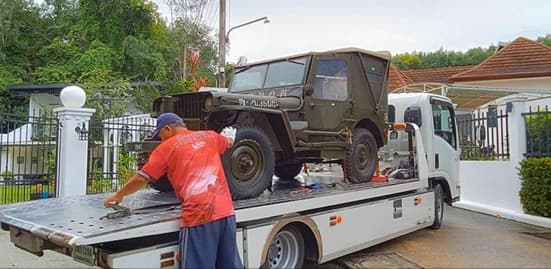
The vehicle-import essentials
- Concessional RAV entry approval through ROVER
Apply and obtain approval before you ship. For the personal-effects pathway, you must own the vehicle when you apply, have acquired it while living permanently overseas, and have owned and used it overseas continuously for at least 12 months immediately before first arriving in Australia with the intention to remain indefinitely. Further eligibility limits apply, so confirm the current official criteria before booking freight. The application fee is non-refundable even if the application is declined. - Ownership and transport documents
Your Thai registration book (blue book), proof of ownership and personal use, passport, and transport paperwork all need to line up. - Compliance and registration after arrival
An approved vehicle still needs to meet its approval conditions and ADR requirements, be entered on the RAV, and pass state or territory registration and inspection before you can drive it. Thai-market vehicles weren't built to Australian Design Rules, so compliance work — and its cost — is the make-or-break question to answer before shipping.
Costs to expect
- Freight, handling, and destination charges at the Thai departure port and the Australian arrival port
- The concessional RAV entry approval application fee, plus any applicable duty, GST, or luxury car tax depending on the vehicle's value and your import basis
- ADR compliance work where required — the cost that most often sinks the plan for a Thai-market vehicle
- State or territory registration, inspection, and compliance costs after arrival
Even with the right-hand-drive advantage, shipping, approval, and compliance costs add up quickly — for most movers on this route, selling in Thailand and buying in Australia works out cheaper than importing. The exceptions are vehicles with genuine value or meaning that justifies the cost. It's worth costing both options properly before you commit either way.
Moving from Thailand to Australia with your pet
This is the section to read first if a dog or cat is part of your family, because the honest answer changes your whole timeline: Thailand is not on Australia's approved-country list for pet imports, so there is no direct route from Bangkok to an Australian quarantine facility. A pet leaving Thailand must first move to an approved country — Singapore is the most practical choice for this corridor — live there for at least 180 days while completing the preparation steps, and only then travel to Australia for its quarantine stay.
That makes the realistic pet timeline nine to twelve months, and it needs to start before almost everything else in your move. We handle the freight and logistics side of your household shipment; your pet's pathway runs through DAFF's own process and needs specialist planning from the start. Our dedicated moving to Australia with your pet guide covers the full pathway in detail.
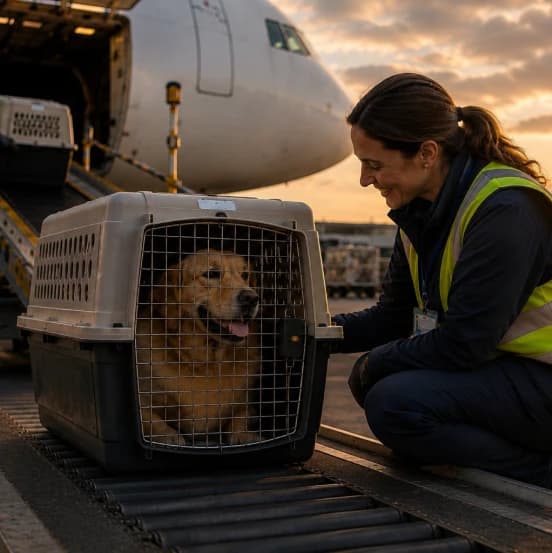
The key pet-import realities from Thailand
- No direct import
Thailand isn't an approved country, so a dog or cat can't fly straight to Australia — plan the approved-country stage from day one, not as a fallback. - The 180-day approved-country stage
Your pet lives in an approved country (commonly Singapore) for at least 180 days. It's residency, not quarantine — your pet can live with you or a trusted carer there while the preparation steps run. - Microchip, identity verification, and country-specific checks
An ISO-compliant microchip must be verified by the approved country's competent authority. Singapore is Group 2, so the Group 3 rabies-vaccination and titre-test sequence does not apply; follow the current DAFF guide for the country of export. - Import permit and quarantine
The Australian import permit is applied for from the approved country, and your pet completes a mandatory stay at Australia's government quarantine facility on arrival — no cabin option, no home quarantine. - Full detail on our pet transport page
The sequencing genuinely matters — a step done out of order can invalidate the ones before it. See our Australia pet import guide for the complete, current process.
Loved by movers settling into Australia
Real stories from people who unpacked their new Australian lives with Expats Direct:
Getting ready for life in Australia
The Thailand-Australia corridor runs deep in both directions: tens of thousands of Thai-born residents call Australia home, partner and student visas keep the lane busy year-round, and a large community of Australians and other expats in Thailand eventually makes this exact move — some returning home, some starting fresh. Whichever group you're in, the adjustments are real: costs that reset upward, a colder winter than Thailand ever showed you, and a services culture that runs on appointments and online portals rather than someone who knows someone.
From a shipping point of view, Australia is predictable for movers who prepare their DAFF and ABF file properly. The real challenges on this corridor aren't customs mystery — they're the biosecurity scrutiny that Thai wooden and rattan furniture attracts, the Thai-side export permits for antiques and Buddha images, and the pet timeline that has to start months before anything else.
180,000+
People granted permanent Australian visas each recent program year
80,000+
Thai-born residents recorded as living in Australia at the latest census
AUD $3,000+
Typical monthly cost of living for one person in Sydney or Melbourne
Cost of living: Thailand vs Australia
Let's not sugar-coat this one: almost everything costs more in Australia than in Thailand, and housing leads the way. A one-bedroom apartment in central Sydney commonly runs AUD 2,500–3,200 a month — several times a comparable Bangkok condo — with Melbourne, Brisbane, and Perth a little gentler and Adelaide noticeably kinder. Eating out flips completely: the THB 60 street-food meal has no Australian equivalent, and casual restaurant dinners routinely cost what a special occasion cost in Thailand.
The other side of the ledger is just as real. Australian salaries are among the world's highest, with a strong minimum wage, and the things that quietly drain an expat budget in Thailand — international school fees, private hospital cover, visa runs — largely disappear or shrink. Utilities and internet cost more in absolute terms but are reliable everywhere, and there's no tipping culture: the listed price, tax included, is the price.
For planning your shipment, the thing that matters most is housing: whether you've got a confirmed Australian address before the container leaves Thailand decides whether you'll need temporary storage on arrival. With this corridor's short transit — sometimes barely three weeks — that decision comes at you faster than movers from Europe or America ever experience.
Safety and everyday stability
Safety and everyday stability
Australia consistently ranks among the safer developed countries, with strong rule-of-law institutions, reliable property rights, and administrative processes that behave predictably. Violent crime is low by international standards; property offences like theft and burglary are the more common concern, and basic precautions cover most of it — much as anywhere.
What changes most from Thailand is the texture of officialdom. Australian processes are rule-bound and paper-trailed: the published requirement is the actual requirement, there's no discretionary flexibility to negotiate, and no facilitation culture. Movers used to Thai administrative warmth sometimes read Australian bureaucracy as cold; movers tired of ambiguity usually find it a relief. Either way, what's written on the government website is what happens at the counter.
From a shipping-planning angle, DAFF and ABF work exactly that systematically. A well-prepared B534 statement, a clean inventory, and furniture that's genuinely been inspected and treated before packing produce predictable outcomes — which is reassuring when you're coordinating a move from another country.
Income and salary expectations
Australian salaries are the biggest single upgrade this corridor offers. The average full-time salary sits around AUD 80,000–90,000, mid-career tech roles in Sydney or Melbourne commonly pay AUD 110,000–150,000+, and healthcare, engineering, and the skilled trades all pay multiples of Bangkok equivalents. The minimum wage is among the world's highest, which changes the economics of hospitality and casual work — including for Work and Holiday visa holders and students working part-time.
The paycheck also carries less weight than a Thai one had to. Employers pay superannuation — Australia's compulsory retirement contribution, currently 12% of ordinary earnings — on top of the stated salary, four weeks of annual leave is standard, and once you're Medicare-eligible, healthcare stops being a major private expense. Compare total packages, not headline numbers.
One thing to check early: Australian regulators assess many professional qualifications through occupation-specific licensing or registration bodies, and Thai degrees and experience go through skills assessment for the points-tested visas. Confirm your specific credential-recognition path before you build a job-offer timeline around it — it's often the slowest step in the whole migration plan.
Tax: leaving the Thai system, joining the Australian one
Australia taxes residents on worldwide income, assessed against tests covering where you reside, your domicile, and time spent in the country — not a simple day count. Rates are progressive, from 0% up to 45% plus the Medicare levy, and the tax year runs 1 July to 30 June with returns generally due by 31 October. If you keep Thai income after the move — rental income from a Bangkok condo, Thai dividends — it's generally taxable in Australia once you're a resident, with the Thailand-Australia double tax agreement preventing the same income being taxed twice.
On the Thai side, your tax residency there generally ends as your life does — Thailand taxes by presence, so once you're no longer spending 180+ days a year there, its claim on your worldwide income falls away. Tidy up before you leave: final employer filings, any refund due, and paperwork for property you're keeping. If your affairs span both countries — a condo kept as a rental, a Thai business interest — a cross-border adviser who knows both systems is worth engaging for the first year's returns.
Superannuation is the piece with no Thai equivalent: a compulsory employer-funded retirement system at 12% of earnings, in your own name, portable between jobs. There's no social security agreement between Thailand and Australia, so periods worked in Thailand don't count toward Australian pension eligibility — your Australian retirement position starts building from your first payslip, which makes starting it early matter more.
The job market
Australia remains a major destination for skilled workers leaving Thailand — Thai professionals, and expats in Thailand moving on or home. The points-tested skilled visas run federal and state-nominated permanent residence pathways, and each state and territory targets specific in-demand occupations through its own nomination streams. Healthcare, engineering, IT, education, and the skilled trades appear consistently on recent skilled-occupation lists.
The study-to-work lane matters more on this corridor than almost any other: Australia is one of the most popular study destinations for Thai students, and a degree there — with the post-study work rights that can follow — is a well-trodden path toward skilled visas and permanent residence. For those 18 to 30, Thailand's Work and Holiday visa (subclass 462) offers a lower-commitment first step, though the education, English, support-letter and annual-cap requirements mean it needs planning rather than spontaneity.
Regional Australia runs its own logic worth knowing about: the Skilled Work Regional visa (491) and various state nomination streams specifically target occupations and locations outside the major capital cities, often with a faster or less competitive points threshold than the capital-city routes. If you're open to living outside Sydney or Melbourne, it's genuinely worth comparing the regional pathway.
Infrastructure and services
Healthcare needs an honest explanation. Once Medicare-eligible, treatment as a public patient in a public hospital is generally covered, but doctors may charge gaps and Medicare does not cover every service, including most dental care and ambulance costs. Private cover can help with those gaps and private-hospital choice.
Banking is straightforward. The big Australian banks (Commonwealth Bank, Westpac, NAB, ANZ) all run accounts designed for newcomers arriving without an Australian credit history, and you can usually open one online before you land. Daily life is nearly cashless — cards and phone payments everywhere — which will feel familiar to anyone leaving PromptPay-era Thailand, minus the cash-only noodle stalls.
Driving continues on the left, in the same right-hand-drive configuration you're used to — one adjustment this corridor simply doesn't have. Overseas licences are generally recognised for a limited period after arrival, but the exact rules, and when you'll need a local knowledge or practical test, are set separately by each state and territory. Check your destination state's transport authority as soon as you know where you're headed, and expect Australian enforcement — speed cameras, RBT alcohol checkpoints, phone-detection cameras — to be far stricter than Thai roads prepared you for.
Banking, currency, and THB-to-AUD transfers
Australia uses the Australian dollar (AUD). THB/AUD has moved around meaningfully over recent years, so the rate on the day you transfer can make a real difference over a large sum. If you're converting baht savings — for a rental bond, first-month costs, or an Australian property purchase — the timing and the method of the transfer both matter.
Moving money out of Thailand is more procedural than moving it between Western countries: Thai banks ask for documentation of the purpose and source of larger outward transfers under Bank of Thailand rules, so gather your paperwork — sale contracts, bank statements, proof of the move — before you need the money on the other side. Wise supports THB-to-AUD transfers at near-market rates and is widely used on this corridor; the traditional Thai bank wire works but usually costs more in spread. Start the transfer process earlier than feels necessary, and don't leave large sums to move in the final week.
Your shipment is priced in AUD too — freight, Australian port charges, biosecurity treatment fees where they apply, and any temporary storage all sit in a currency that may drift against the baht between booking and paying. On a large move where the final delivery cost is substantial, it's worth confirming the AUD total at the time you book.
Climate: what to pack, what to buy once you land

Climate: what to pack, what to buy once you land
Here's the packing surprise for anyone leaving Thailand: you're going to need winter clothes — real ones. Brisbane stays warm and humid enough to feel familiar, but Sydney winters drop to single digits at night, and Melbourne, Adelaide, and Canberra have genuinely cold, grey winters that no amount of Chiang Mai cool season prepares you for. Homes are often poorly insulated by cold-country standards, so heating, blankets, and proper jumpers matter more than the latitude suggests. Buy the serious winter gear in Australia rather than shipping guesses.
The other adjustment is the sun. Australian UV is fiercer than Thailand's — the slip-slop-slap sunscreen culture exists for a reason — and summer (December to February) brings bushfire season and, in the north, cyclones, which can occasionally disrupt inland transport in affected regions. Seasons run opposite to the northern hemisphere, though after Thailand's hot-hotter-wet calendar, four real seasons are their own novelty.
The genuinely good news is electrical: Thailand's 220V/50Hz sits comfortably inside Australia's 230–240V/50Hz range, so appliances that served you in Thailand work there with nothing more than a plug adapter for the Australian Type I socket. Check the rating label on anything you're unsure about, and let weight and freight cost — not voltage — decide what earns a place in the container. Air conditioners are the exception worth naming: Australian homes in the south need heating more than cooling, so the wall units stay behind.
Frequently asked questions
Quite possibly, if your shipment qualifies for the personal-effects concession and you declare it correctly on the B534 form. The concession is for migrants taking up permanent residence in Australia for the first time, and for returning Australian residents — which covers many movers on this corridor; it isn't automatic on every visa type. The key steps: make sure the goods were owned and used overseas for at least 12 months before you leave (personal clothing, footwear, and grooming items are exempt from that test for permanent residents), and keep the excluded categories — alcohol, tobacco, new goods, made-to-order furniture, vehicles — separate from your main personal-effects inventory.
This is one of the quicker major routes to Australia. Port to port, Laem Chabang to Fremantle typically runs 12–20 days, with Melbourne, Sydney, Brisbane, and Adelaide in the 14–26 day range. Door-to-door, with Thai collection at the start and DAFF biosecurity and ABF customs clearance in Australia at the end, most households plan on 6–10 weeks — and biosecurity examination alone can take up to around 14 working days after arrival, so the clearance stage deserves its share of the budget.
Usually yes — with preparation. Wooden, bamboo, and rattan furniture is permitted, but it's exactly the category DAFF inspects hardest: officers look for borer holes, bark, live insects, and untreated timber. Solid, sealed, insect-free pieces travel well; anything questionable can be ordered for treatment (fumigation or heat) at your cost, which is slower and pricier in Australia than treating proactively in Thailand. We inspect furniture at packing time, flag risk pieces, and arrange pre-shipment treatment where it's the smarter call — it's the single biggest thing that decides how smoothly a Thai household clears the border.
Generally, yes — this corridor gets the reassuring answer. Thailand runs on 220V/50Hz and Australia on 230–240V/50Hz, comfortably close enough for most appliances, so the rice cooker, the blender, and the TV work there with nothing more than a plug adapter for Australia's Type I socket. Check the rating label to be sure, and let weight and freight cost decide what's actually worth shipping — bulky, cheap-to-replace items often aren't. Air conditioners are the practical exception: southern Australian homes need heating more than cooling, so wall units usually stay behind.
Thai passport holders aren't eligible for Australia's ETA or eVisitor shortcuts — even a holiday needs a Visitor visa (subclass 600) application. For a genuine move, the routes people actually use are the Work and Holiday visa (subclass 462, ages 18 to 30, with tertiary-education, English, and support-letter requirements plus an annual cap), student visas — one of the biggest lanes on this corridor — employer-sponsored work visas, the points-tested skilled visas (subclasses 189, 190, 491), and partner visas. Shipping goods under the personal-effects concession generally needs a qualifying migration basis behind it. Always confirm the current requirements with the Department of Home Affairs.
Almost certainly Laem Chabang — Thailand's main deep-sea container port, about 130 km southeast of Bangkok, which handles the overwhelming majority of household shipments to Australia. Collections from Bangkok, Pattaya, Chiang Mai, Phuket, and most of the country consolidate there. Bangkok Port (Khlong Toei) handles some smaller and consolidated traffic, and Songkhla serves the far south. We'll route your collection to whichever gateway makes most sense for your address and the sailing schedule to your Australian destination.
More plausible than on most routes, since Thailand and Australia both drive on the left — a Thai right-hand-drive vehicle is at least the correct configuration for Australian roads. You still need a concessional RAV entry approval through ROVER before shipping, with strict eligibility rules including 12 months of continuous ownership and use overseas, and the vehicle must then meet Australian Design Rules (ADR) compliance and state registration after arrival. That compliance bill is the honest deal-breaker: Thai-market vehicles weren't built to ADRs, and the work often costs more than the vehicle. For most movers, selling in Thailand and buying in Australia wins — cost both options properly before you commit.
Yes, but not directly. Thailand is not approved, so a pet must first relocate to an approved country such as Singapore and live there for at least 180 days while meeting that country's conditions. Singapore is Group 2, so follow DAFF's Group 2 guide rather than assuming the Group 3 rabies-vaccination and titre-testing sequence. A mandatory Australian government quarantine stay follows. See our moving to Australia with your pet guide for the full pathway.
The classic Thai-household categories: wooden, bamboo, and rattan furniture with any sign of borers, bark, or untreated timber; garden pots and tools carrying soil; dried foods, spices, herbs, rice, and seeds; and traditional remedies with plant or animal ingredients. Buddha images and antiques also need Thai Fine Arts Department export permits on the way out. Clean outdoor items with a stiff brush and soapy water, have furniture honestly inspected and treated where needed before packing, check questionable food items against BICON rather than guessing — and when in doubt, leave it out.
February to August is generally the steadiest stretch — better vessel availability and shorter biosecurity queues once the holiday peak clears. September to November is Australia's busiest import season in the run-up to summer and Christmas, so ports congest and container space tightens; book 8–10 weeks ahead if your goods need to land before the new year. December to January brings Australian public holidays that slow ports and lengthen inspection queues, and mid-April's Songkran briefly slows the Thai side. Families usually aim to land before the Australian school year starts in late January or early February.
Thailand taxes by presence, so once you're no longer spending 180 or more days a year there, Thai tax residency generally falls away — tidy up final filings and any refund before you leave. On the Australian side, residents are taxed on worldwide income at progressive rates (0% to 45% plus the Medicare levy), which includes Thai income you keep after the move, such as rent from a Bangkok condo; the Thailand-Australia double tax agreement prevents the same income being taxed twice. The tax year runs 1 July to 30 June. If your affairs span both countries, a cross-border adviser for the first year's returns is money well spent.
Yes. Thailand's Fine Arts Department controls the export of Buddha images, antiques, and certain artefacts, and shipping them without the proper permit risks seizure at the Thai border — however personal or family-owned the piece is. The permit process involves inspection and documentation and takes time, so tell us early if religious items, antiques, or artefacts are travelling. We arrange the Fine Arts Department process as part of your move, and the items then need honest declaration on the Australian side like everything else in the container.
For a limited period, generally yes — overseas licences are recognised for an initial window after arrival, but the exact rules, and when you need a local knowledge or practical test, are set by each state and territory rather than nationally. Check your destination state's transport authority as soon as you know where you're settling. The good news is you'll be driving on the same side of the road in the same right-hand-drive configuration; the adjustment is enforcement, not orientation — speed cameras, random breath testing, and phone-detection cameras are far stricter than Thai roads prepared you for.
Detailed enough that an Australian officer can understand the shipment without guessing — and it must be in English. A room-by-room inventory naming furniture (with materials — "teak coffee table" beats "table"), clothing, kitchenware, and electronics is far stronger than a vague "household effects" line, and it needs to match what's declared on your B534 statement. For high-value items, include rough AUD values and keep receipts or dated photos handy — they're useful evidence for the ownership-and-use test on the duty and GST concession, especially for furniture where the 12-month question comes up.
Plan it earlier than feels necessary, because outward transfers from Thailand are procedural: Thai banks ask for documentation of the purpose and source of larger transfers under Bank of Thailand rules, so gather sale contracts, statements, and proof of the move before you need the money in Australia. Wise supports THB-to-AUD at near-market rates and is widely used on this corridor; traditional Thai bank wires work but usually cost more in spread. Once you're in Australia, the big banks all offer newcomer accounts you can often open online before you land — and daily life is nearly cashless, so don't plan around carrying baht-converted cash.
Your next steps
Your next steps
If a dog or cat is coming, start the pet pathway first — the approved-country stage means nine to twelve months end to end, longer than every other part of the move.
Confirm your Australian visa route — the personal-effects duty and GST concession needs a qualifying migration or returning-resident basis, and Thai passports need a full visa application for any entry.
Have your wooden, bamboo, and rattan furniture honestly inspected early — pre-shipment treatment in Thailand is faster and cheaper than a DAFF-ordered treatment in Australia, and tell us about any Buddha images or antiques so the Fine Arts Department permit can start.
Start the money plan early: Thai banks need purpose-and-source documentation for larger outward transfers, so gather the paperwork well before the final week.
Build a detailed, room-by-room packing list in English that separates your used belongings from new purchases and made-to-order furniture, with rough AUD values for anything high-value.