Move your home to Canada from France
Request a free estimate in under a minute.
Guide for French expats relocating to Canada
This is one of the shortest ocean legs in the whole relocation world. Le Havre to Montreal is a direct North Atlantic run of roughly 10–14 days port to port, with sailings most weeks. Dunkerque and Montoir are similar; Marseille-Fos has to come out through Gibraltar, so add a week or so. Door to door, collection in France and the inland Canadian leg still put the realistic total at five to eight weeks.
Here is the one that catches French movers out: Canada sets the customs treatment of your belongings on the day you first arrive, not the day the container docks. Listing your shipment as goods to follow on the BSF186 at that first border crossing is the step the whole file hangs on.
French sockets run 230V/50Hz. Canada runs 120V/60Hz. Your washing machine, oven, fridge and dishwasher will not run on Canadian power without a large, expensive transformer, and most people conclude it is not worth the crossing. The Nespresso machine can come; the lave-linge really should not.
If you speak French to CLB 7, you are in an unusually strong position. Canada runs category-based Express Entry rounds specifically for French-language proficiency, and in 2026 those rounds have drawn at cut-offs of 382 to 420 while Canadian Experience Class rounds sit around 507 to 523. For French nationals, French is not a hurdle to clear — it is the advantage.
One hard truth worth knowing before you plan anything: a French-market car generally cannot be imported into Canada. Vehicles under 15 years old have to meet Canadian Motor Vehicle Safety Standards, and most European models simply cannot be brought into compliance. Nearly everyone sells before leaving.
A move from France to Canada has three real stages: getting your things out of France, a short and well-served North Atlantic crossing, and Canadian customs at the receiving port. Most of the customs outcome is settled long before the vessel arrives — by what you declare on your first day in Canada, what goes on the goods-to-follow list, and whether your inventory cleanly separates genuine used belongings from the things that do not qualify.
We handle the whole chain: collection and export packing at your French address, sea or air freight on confirmed schedules, the CBSA paperwork, clearance at Montreal, Halifax or Saint John, and delivery to your Canadian door. One Move Manager stays with your file from the first estimate to the last box carried in — nobody passes you around.
Below we go through what actually matters on this corridor: how CBSA and goods to follow work, realistic transit times from each French port, the immigration routes French nationals genuinely use, what Canada restricts, and honest detail about settling into Canadian life after France.
How we get you there
We build your France-to-Canada move around the parts that trip people up — the BSF186, goods to follow, and CBSA clearance — with a plan matched to your actual shipment. Three straightforward steps, one specialist on your side, and the right routing for your timeline.
Tell us about your move
Your French collection address, where you are headed in Canada, and roughly what is coming. You get a clear plan, a timeline, and a price up front — no guessing.
Meet your Move Manager
One person builds your shipment plan, prepares the BSF186 paperwork with you, and checks the inventory before anything leaves France.
We handle the rest
Collection, export, the crossing, CBSA clearance, and delivery to your Canadian door. You get on with settling in; we keep it running to plan.
Times of year that shape this route
France-to-Canada household moves follow a rhythm set by the French summer, the Canadian school calendar, and North Atlantic winter weather:
- June to August
The busiest window by a wide margin. French families move over the grandes vacances and aim to land before the Canadian school year starts in late August or early September. Space out of Le Havre tightens through this stretch — booking six to eight weeks ahead is the sensible move. - September to November
A second, calmer peak driven by employer postings and by movers who wanted to avoid the summer rush. Transit is still comfortable, and you arrive with time to find housing before the first real cold. - January to March
The quietest stretch, and often the best value. The trade-off is winter: the Port of Montreal works year round, but snow and ice can slow the rail and road legs once your container is released.
Canadian customs, minus the headache
When your things reach Canada they clear through CBSA, the Canada Border Services Agency. The point to hold onto: your customs treatment is fixed at your first entry into Canada, not when the container turns up at the port. Even on a short crossing like this one you will normally fly in ahead of your shipment, so the goods-to-follow declaration you make on arrival is the foundation of the whole customs file.
There is a French export leg to settle first. Goods leaving France for a country outside the EU clear French export formalities on the way out, and because Canada sits outside the single market this is a genuine customs export rather than an intra-EU move. Ordinary personal effects need no customs declaration, but a stamped inventory and any licence for controlled goods are worth sorting out early (the steps below set them out). What matters most is that the inventory and values match exactly what is declared on the Canadian side.
Canada's settlers' effects relief lets you bring your used personal and household things in free of duty and tax, provided you are moving to Canada to set up a home for at least 12 months for the first time. Students, and people working in Canada for 36 months or less, are not settlers: they bring their belongings in temporarily instead. Only goods you already owned and used abroad count, so things you have bought but not yet used are out, and duty and taxes become payable if you sell or give anything away within a year. Small allowances of alcohol, tobacco and vaping products are accepted, but only when they travel with you.
- In France · before you pack
Draw up a stamped inventory
Write a detailed, estimated, dated and signed inventory in two copies (three if you export from a customs office inside France), add proof of your change of residence, and have customs stamp it page by page. That stamp can smooth things if you ever bring the goods back.
- In France · if the load includes controlled goods
Declare or license controlled goods
Customs wants an export declaration for certain goods, such as arms and ammunition, gold, dual-use items, wild species and cultural goods, and cultural goods may also need an EU export licence. Everyday personal effects don't have to be declared to customs.
- For Canada · before you leave
Write up your goods list
Write out two copies of everything you are bringing, with its value and, where it applies, make, model and serial number, split into what travels with you and what follows later.
- At the Canadian border · when you arrive
Report at your first border crossing
Whether or not any goods travel with you, the border services officer needs your list, and any weapons, food, plants or animals must be declared. Hold on to your copy of the BSF186 for the goods that follow.
- In Canada · when the goods to follow arrive
Show the original BSF186
When the goods are released, the original BSF186 has to be shown by you or by an agent you have authorised in writing. CBSA checks it against the carrier's manifest, and anything not on your list may be charged regular duty and taxes. Your carrier may act for you only if it holds a customs broker licence. If your goods arrive ahead of you, CBSA holds them for 40 days and then treats them as unclaimed, unless it extends the period.
- For Canada · before you pack
Mind soil and wood packaging
Canada will not admit goods contaminated with soil, so clean garden and outdoor items before they are packed. Wooden packaging must be ISPM 15-treated and marked, with one exception: material that travels directly from the continental US and is made wholly of US or Canadian wood. Any cleaning, treatment or disposal is at the importer's expense.
The documents Canadian customs usually wants to see
What is needed varies with your shipment and your immigration status, but these are the ones officers check first:
- French passport and your Canadian immigration documents (confirmation of permanent residence, work permit, PVT, study permit, or whatever your basis for entry is)
- BSF186 (Personal Effects Accounting Document) — completed at your first arrival in Canada, with your goods to follow listed on it
- BSF186A (continuation sheet) if the goods-to-follow list runs to extra pages
- A detailed packing list — room by room, with descriptions, quantities, and rough values in CAD
- Bill of Lading (sea freight) or Air Waybill from your freight forwarder
- Your customs-stamped inventory and, for any controlled goods, the export declaration or licence
- Proof of your French residence (a bail, quittances de loyer, utility bills, or employment records)
- Your Canadian delivery address and consignee details
- Original receipts or valuations for anything of real value
Inspection, biosecurity, and the excluded categories
The CFIA, the Canadian Food Inspection Agency, applies biosecurity rules to shipments from every origin, France included. The things that catch an officer's eye:
- Soil on outdoor kit — garden tools, bicycles, camping gear, boots from a walking holiday. Clean them properly before they are packed.
- Food, seeds, plant material, untreated wood packaging, and anything of animal origin. That includes the charcuterie and the cheese, however tempting it is to try.
- Alcohol, tobacco, and firearms — alcohol and tobacco only count as settler's effects within small limits and only if they travel with you, and firearms must be declared and meet Canada's firearms requirements (settlers cannot import prohibited firearms)
- New goods, commercial quantities, or anything that reads more like stock than personal belongings
When your things arrive after you do
Even on a fast North Atlantic route, your belongings will usually land after you have already flown over. That is completely normal and causes no problem at all, provided it is declared properly at your first Canadian entry. The goods-to-follow list has to match what is actually travelling by sea. A gap between what you declared on arrival and what turns up at the quay is far slower and more expensive to untangle later than it is to get right at the start.
What you can import to Canada

Personal belongings

Used clothing

Household appliances

Fragile items

High-value items

Large items & furniture

Excess luggage

Pets
Rabies certificate unless from a rabies-free country

Vehicles
Non-US/Mexico cars must be 15+ years old
What Canada restricts

Plants, seeds & soil-related items

Food, supplements & consumables

Alcohol & tobacco products

Prescription & non-prescription medicines

Weapons, firearms & controlled items

Cannabis & CBD products
Banned even with medical authorisation

Used mattresses
No certificate needed for settlers' effects or for former residents back after a year or more; others, ask CBSA
How much can you bring?
We are set up for household relocations from France to Canada, not parcel forwarding, so there is a sensible minimum:
- Minimum: 6 boxes
Roughly a studio's worth of belongings once the furniture stays behind. Below that, a courier or parcel service will usually serve you better and cost less.
- No upper limit
From a T2 in Lyon to a full family house across several containers — we have shipped all of it to Canada before.
For a full household, most families ship a 20ft or 40ft container. A single room or a studio's contents usually travels as LCL (Less than Container Load) groupage, consolidated with other France-to-Canada shipments at the French port.
The forms and official guidance, in one place
- CBSA Form BSF186 — Personal Effects Accounting Document: official BSF186 form and notes
- CBSA Form BSF186A — continuation sheet for longer inventories: official BSF186A continuation sheet
- CBSA Memorandum D2-2-1, the rules for settlers' effects (a 2010 text: it still calls the form B4, which is now BSF186, and it predates the 2022 vaping limits in tariff item 9807.00.00): Memorandum D2-2-1 on settlers' effects
- CBSA's guide for moving or returning to Canada: CBSA guide to moving to Canada
Where to check Canadian border guidance

Canada Border Services Agency traveller and import guidance, straight from the source.
Taxes and duties, in plain language
For a French mover one question really matters: does your shipment qualify as settlers' effects under CBSA rules? If it does, your used household belongings generally come in free of duty and taxes. CETA, the trade agreement between Canada and the EU, matters mainly for goods you buy commercially rather than for a household move, but it is worth your customs broker confirming the origin and commodity codes for anything that might otherwise attract duty.
The general rules
- Used household and personal effects you already own may qualify for relief from the usual duties and taxes when they are properly declared as settlers' effects on the BSF186, under tariff item 9807.00.00.
- New goods, replacement purchases, alcohol, tobacco, and other excluded categories can attract duty, GST/HST, excise, or other charges — regardless of where they were made.
Settlers' effects relief, and who it applies to
- CBSA treats you as a settler if you are entering Canada to establish a residence for the first time, for at least twelve months. Your goods have to have been owned, in your possession, and actually used before you arrive — but there is no minimum ownership period for a first-time settler. The six-month rule people often quote applies to former residents returning to Canada under a different tariff item, not to settlers.
- The idea to hold onto is goods to follow: if your French shipment arrives after you land in Canada, it must appear on the BSF186 goods-to-follow list at your very first Canadian entry point. There is no deadline for the listed goods to arrive — but there is no second chance to list them.
The categories that need a bit more care
Even where settlers' effects relief applies, keep these separate rather than buried in a generic household list:
- Alcohol — the settler allowance is small: 1.14 litres of spirits or 1.5 litres of wine, free of duty. A French cellar is not household effects, and anything above that allowance is assessed on arrival.
- Tobacco, within the standard allowance of 200 cigarettes, 50 cigars, 200 tobacco sticks and 200 grams of manufactured tobacco
- Firearms and anything weapons-related
- New goods, or things bought shortly before you ship
- Commercial quantities, or items that do not read as ordinary household effects
- French-spec large appliances that will not run on Canada's 120V/60Hz supply in any case
A France-to-Canada file is nearly always cleaner when your qualifying used belongings are clearly separated from everything else. The things that blur the line — new electronics, an unopened purchase, a duplicate appliance, the case of Bordeaux — are worth flagging before the container is packed rather than after it is standing at Montreal.
If you are unsure whether something belongs on the goods-to-follow list or needs declaring on its own, ask us before it ships. Settling a category question at origin takes minutes; settling it after arrival does not.
Insuring your shipment
The North Atlantic crossing is short by international standards, but it is still the North Atlantic, and your shipment passes through two port operations and an inland leg on the way. Cargo insurance is well worth having on any household move, particularly for anything that matters to you or carries real value.
Why it's worth having
A France-to-Canada sea move puts your belongings through a short but genuinely exposed international transit:
- North Atlantic weather, which is at its roughest in exactly the months when moving is cheapest
- Handling or storage at the French departure port or the Canadian receiving port
- Customs inspection or container stripping at the Canadian end
- Accidental loss, breakage, or damage during loading, transit, or the inland Canadian leg
What's usually covered
It depends on your policy, but cargo cover for a France-to-Canada household move typically includes:
- Protection during the sea or air leg between the French and Canadian ports
- Cover for specific named risks such as fire, theft, or water damage
- Limits, exclusions, and conditions based on your declared shipment value
Always go through the policy terms, exclusions, and declared values with your broker or insurer before you commit to cover.
How to get insured through us
You can arrange cargo insurance for your France-to-Canada shipment through:
- A general insurer offering marine or cargo cover
- A specialist cargo or relocation insurance broker
- Your bank or financial provider, where they offer it
- Our own cargo insurance, arranged as part of your move.
Note: our cover is charged at 3% of your declared shipment value.
Visa and immigration routes for French nationals moving to Canada
French nationals have an unusually good hand here, and it is worth understanding why before you choose a route. Canada has an explicit policy commitment to francophone immigration, and it shows up in two concrete places: category-based Express Entry rounds for French-language proficiency, and an LMIA-exempt work permit stream for French speakers. Programs and quotas change often, so always confirm the current rules with Immigration, Refugees and Citizenship Canada (IRCC) before you lock in any relocation or shipping decisions.
The main routes for French nationals
The pathways French nationals most commonly use to relocate to Canada:

eTA and visitor entry
French nationals do not need a visa for short visits of up to six months, but you do need an Electronic Travel Authorization (eTA) to fly to Canada. An eTA will not let you ship household goods as settlers' effects or settle long-term.
PVT and Francophone Mobility
The Permis Vacances-Travail, Canada's Working Holiday under International Experience Canada, is open to French citizens aged 18 to 35 for up to 24 months, with a yearly quota (5,861 places for France in 2026) filled by invitation from a pool. Francophone Mobility is the other one to know: an LMIA-exempt work permit for French speakers with a job offer outside Quebec, requiring French at NCLC 5 in speaking and listening.
Study permits
For formal study at a Canadian designated learning institution. Study-permit holders can often work part-time during their course and may move on to a post-graduation work permit. Quebec adds its own CAQ certificate on top of the federal permit.
Express Entry, Quebec, and family sponsorship
Express Entry runs federal skilled-worker permanent residence through a points system, with category-based rounds reserved for French-language proficiency. Quebec selects its own skilled workers through its Programme de sélection des travailleurs qualifiés, which starts with an expression of interest in the Arrima portal, under the Canada-Quebec Accord. Family sponsorship lets Canadian citizens and permanent residents sponsor eligible French relatives.
Worth knowing: for a long-term move and for shipping goods as settlers' effects you need a qualifying permit or permanent residence, not just an eTA. Confirmed immigration status is what unlocks the settlers'-effects route.
For accurate, current requirements, always check IRCC's official website — and Quebec's own immigration site if you are heading there — before you apply or finalise your plans.
French departure ports and Canadian arrival ports
French household shipments to Canada leave through the major container ports on the Channel, the Atlantic coast, or the Mediterranean, then arrive at one of Canada's eastern gateways before heading inland by rail or truck. The port you leave from makes a real difference on this corridor: the Channel and Atlantic ports run direct North Atlantic services, while Marseille-Fos has to come out through Gibraltar and adds roughly a week.
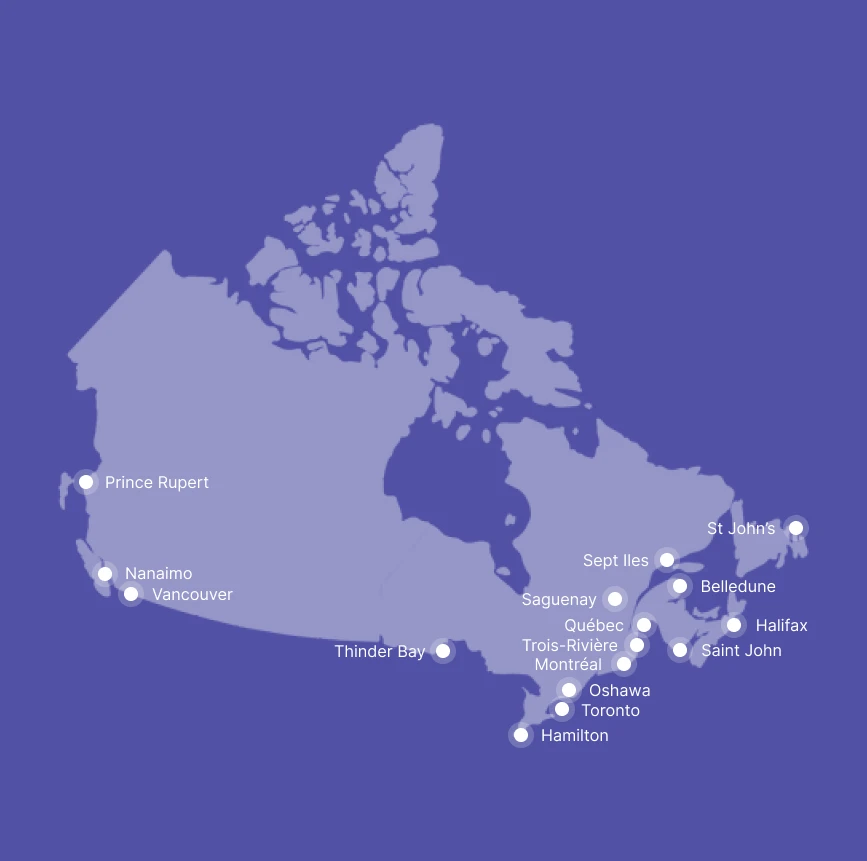
The main French departure and Canadian arrival ports
Le Havre
France's largest container port and the standard departure point for Canada, with the most frequent direct North Atlantic sailings.
Dunkerque
The northern gateway, convenient for collections in Hauts-de-France and the Paris region.
Montoir-de-Bretagne (Nantes Saint-Nazaire)
The Atlantic-coast option for western France.
Marseille-Fos
The Mediterranean gateway, the practical choice for the south, with a longer routing to Canada.
Paris Charles de Gaulle (CDG)
The main airfreight gateway for time-sensitive personal-effects shipments.
Port of Montreal
The natural arrival point for most French movers, and the obvious gateway for Quebec and Ontario destinations. It operates year round.
Port of Halifax
The ice-free Atlantic gateway, often the fastest port-to-port option and a good choice for the Maritimes.
Port of Saint John
A New Brunswick alternative on the Atlantic, used for some eastern Canadian destinations.
Port of Vancouver
Reached from France via the Panama Canal; only worth it for a British Columbia destination, and considerably slower.
Montréal-Trudeau International Airport (YUL)
The usual airfreight arrival point for urgent personal effects from France.
France-to-Canada route timings
| From | To | Est. transit time |
|---|---|---|
| Le Havre, France | Montreal, Canada | 10-14 days |
| Le Havre, France | Halifax, Canada | 8-12 days |
| Le Havre, France | Saint John, Canada | 10-14 days |
| Dunkerque, France | Montreal, Canada | 12-16 days |
| Montoir-de-Bretagne, France | Montreal, Canada | 12-17 days |
| Marseille-Fos, France | Montreal, Canada | 16-22 days |
| Marseille-Fos, France | Halifax, Canada | 15-20 days |
| Le Havre, France | Vancouver, Canada | 28-36 days |
Our door-to-door service, from France to Canada
Since 1999 we have been moving people from France to Canada — from collection at your French address through export customs, the Atlantic crossing, Canadian port clearance, and delivery to your new home. We handle every step, so your energy goes into the move itself rather than the logistics behind it.
1. Collection and packing at your French address
Our French team collects and packs your things for the crossing. Professional materials include:
- Packing boxes
In a range of sizes and rated for international sea freight. - Bubble wrap
For the fragile things — glassware, ceramics, electronics — so they survive a winter Atlantic in one piece. - Wooden crates
For large, valuable, or awkward items that need proper reinforcement, including artwork and mirrors.
2. French export and port handling
We help you prepare the French export inventory and any licences for controlled goods, load the container at your departure port (Le Havre, Dunkerque, Montoir-de-Bretagne, or Marseille-Fos), and hand it safely to the vessel.
3. The crossing and Canadian customs clearance
We book the sea or air freight as agreed, track the container across the Atlantic, and manage CBSA clearance at Montreal, Halifax, or Saint John on arrival. The customs sections above set out exactly what is needed.
4. Delivery to your new Canadian home
Once your shipment clears CBSA, we arrange the inland leg and the final drop at your Canadian address.
5. Unpacking and setting up
Our local delivery team puts the furniture and boxes where you actually want them, so you can start settling in rather than facing a mountain of unpacking alone.
One person on your side the whole way
Our France-to-Canada support is built around a single contact: a dedicated Move Manager who owns your file from the first estimate through French collection, export, the crossing, CBSA clearance, and Canadian delivery. You are not handed between teams at each stage.
On a Canadian move that continuity genuinely matters, because your BSF186 and goods-to-follow paperwork has to stay consistent across every document in the file. Any gap between what you declared on your first day in Canada and what actually arrives at Montreal creates friction that is slow and costly to fix afterwards. One accountable person who knows the whole file is how that gets caught before it becomes a problem.
From collection in France through loading at Le Havre or Dunkerque, the Atlantic crossing, CBSA clearance, port release, and the final delivery to your Canadian door — your Move Manager stays in touch and keeps you posted at every stage.
Talk to a real person now
Bringing a vehicle from France to Canada
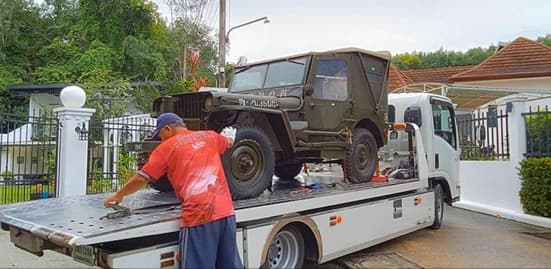
This is the section where we would rather disappoint you early than expensively late. A car built for the French market generally cannot be imported into Canada. Transport Canada requires vehicles less than fifteen years old to comply with Canada Motor Vehicle Safety Standards, and most European-market models cannot be brought into compliance at all — the manufacturer simply never certified them for Canada. A vehicle that arrives and turns out to be inadmissible has to be exported again or destroyed. Check admissibility with Transport Canada before you arrange anything: 1-800-333-0371 or mvs-sa@tc.gc.ca.
The vehicle-import essentials
The vehicle-import essentials
- Admissibility check first, always
Confirm the exact model with Transport Canada before you ship. This is not a formality on this corridor — most French-market cars fail it. - The fifteen-year rule
Vehicles fifteen or more years old, measured by month and year of manufacture, are no longer federally regulated and may be importable. This is the route that occasionally works for a classic. - Ownership and transport documents
Your carte grise, proof of ownership, passport, and transport paperwork all need to agree with each other. - Compliance after arrival
A vehicle admitted under the fifteen-year exemption does not enter the Registrar of Imported Vehicles (RIV) program. It still needs CBSA release and must satisfy the destination province's inspection and registration rules.
Costs to expect
- Freight, handling, and destination charges at the French departure port and the Canadian arrival port
- Any applicable duty, GST/HST, or regulatory fees, depending on the vehicle and your import basis
- CBSA release, provincial inspection, and registration after arrival, where they apply
- The cost of getting it wrong — an inadmissible vehicle has to be exported or destroyed under customs supervision, which is why the admissibility check comes first
Moving from France to Canada with your pet
Bringing a cat or a dog from France to Canada is one of the more manageable parts of this move. France is not a rabies-free country in Canadian terms, so a valid rabies vaccination is the centrepiece of the paperwork rather than something you can skip. The routing and the airline rules are what need planning ahead, particularly for travel in the hold.

The key pet-import requirements from France
- Rabies vaccination certificate
A current rabies vaccination certificate in English or French, identifying the animal and signed by a licensed veterinarian, is the core requirement for dogs and cats arriving from France, and a rabies antibody titre test result of at least 0.5 IU/ml is an accepted alternative. Confirm the current CFIA wording before you book. - Microchip and EU pet passport
Your animal will already carry an ISO 15-digit chip and a passeport européen pour animal de compagnie. Bring both — the passport is not a Canadian document, but it holds the vaccination history an officer will want to see. - Health certificate
A health certificate issued shortly before travel is usually required by the airline or carrier; check the exact window with them. - Airline and routing rules
Breed restrictions, seasonal hold embargoes, and in-cabin size limits differ by carrier. Summer heat embargoes and winter cold embargoes both apply on this route. Confirm the CFIA requirements and the airline's rules before you book the flight.
Loved by French movers settling into Canada
Real stories from French movers who unpacked their new lives with Expats Direct:
Getting ready for life in Canada
Canada is one of the most popular destinations for French movers — for work, for study, for family, and to settle permanently. Quebec makes it unusual: a French-speaking province of about nine million people, with its own immigration system and a genuinely different relationship to France than the rest of the country has. But French movers land everywhere, from Toronto to Vancouver, and the day-to-day realities differ from France in ways that genuinely affect how you plan and pack.
From a shipping point of view, Canada is predictable for French movers who prepare their CBSA file properly. The real challenges are not customs mystery. They are the electrical difference, which quietly decides half of what is worth bringing, and the winter, which is a serious adjustment even coming from the Massif Central.
100,000+
New arrivals settling in Canada every year
6,000,000+
People in Quebec who speak French as their first language
10-14 days
Typical port-to-port sailing time, Le Havre to Montreal
Cost of living: France vs Canada
Toronto and Vancouver are expensive by any measure — a one-bedroom in the centre regularly runs CAD 2,000–2,500 a month, which will feel steep to anyone arriving from anywhere in France except central Paris. Montreal is the outlier and the reason so many French movers land there: rents are markedly lower than in Toronto, and lower than in Paris, Lyon or Bordeaux for comparable space.
Groceries run higher than in France for the things you will miss most. Cheese, wine, charcuterie and good bread are all available in Montreal and Toronto, and all cost noticeably more than at home — the provincial liquor monopolies, the SAQ in Quebec and the LCBO in Ontario, put a real premium on wine in particular. Everyday staples are broadly comparable. Utilities vary by province, though Quebec's hydroelectric power makes electricity cheap by both Canadian and French standards.
For planning your shipment, the decision that matters most is housing. Whether you have a confirmed Canadian address before the container leaves France decides whether you will need temporary storage on arrival — and on a ten-day crossing, that question arrives much sooner than French movers expect.
Safety and everyday stability

Safety and everyday stability
Canada consistently ranks among the safest developed countries, with strong institutions, reliable property rights, and administration that behaves predictably. French movers usually describe Canadian bureaucracy as lighter than what they left behind, though it has its own logic: fewer forms, more waiting, and far more done online than by counter visit.
From a customs-planning angle, CBSA works systematically. A well-prepared BSF186, a clean inventory, and a consistent goods-to-follow list produce predictable outcomes.
One structural thing to know: Quebec runs on civil law, descended from the same Napoleonic tradition as the Code civil, while the rest of Canada runs on common law. If you are moving to Montreal, contracts and property will feel more familiar than they would in Toronto. If you are moving to Toronto, expect a legal culture that works differently from anything in France.
Income and salary expectations
French professionals moving to Canada usually find salaries competitive in tech, engineering, finance, healthcare, and the skilled trades. Mid-career software developers or data engineers in Toronto or Montreal commonly earn CAD 90,000–130,000 or more, with Toronto paying above Montreal for the same role and charging considerably more in rent for the privilege.
Credential recognition is the piece to sort early, and it is not uniform. Regulated professions — medicine, engineering, law, architecture, accountancy — are licensed provincially, and each ordre or college sets its own requirements. Quebec and France have a longstanding arrangement on the mutual recognition of professional qualifications covering a list of specific professions, which can shorten the path considerably if yours is on it. Check whether it covers your profession before you build a job-offer timeline around it.
Canada's 2026–2028 immigration levels plan holds permanent-resident admissions at 380,000 a year and sets new temporary-resident arrivals at 385,000 in 2026, then 370,000 a year in 2027 and 2028, which keeps permanent residence competitive overall — though French speakers are insulated from a good deal of that by the category-based rounds. IRCC is due to confirm or adjust the 2027 and 2028 targets by 1 November. Tying your container's arrival to confirmed status, rather than to a hoped-for approval date, keeps your shipment from landing before you have an address to deliver it to.
Tax: your French and Canadian obligations
Canada layers federal and provincial income tax, and each province sets its own rates and brackets. Quebec collects its own provincial return separately, so Quebec residents file twice — once federally, once to Revenu Québec. France and Canada have a double-taxation convention that prevents the same income being taxed twice, and a social security agreement that coordinates pension rights between the two systems, with a separate France-Quebec arrangement covering Quebec.
If you keep French assets — property, bank accounts, an assurance-vie, or securities — with a combined cost amount over CAD 100,000 after becoming a Canadian tax resident, you are required to file Form T1135 (Foreign Income Verification Statement) each year. It is a disclosure requirement rather than an extra tax, but the penalties for not filing are serious. For property you already owned when you became resident, the cost amount is its fair market value on that date; for property acquired later, it is generally the adjusted cost base, not simply today's market value. Property you hold mainly for your own use does not count towards it, and interests in foreign pension or retirement plans are generally excluded. You are also exempt for the first tax year in which you become a Canadian resident, so the obligation starts the year after.
Two French products deserve specific advice before your first Canadian return: the assurance-vie, whose French tax treatment does not carry over and which Canada may treat quite differently, and any PEA or livret savings. Neither is a disaster, but neither behaves the way it does at home. If you own French property or hold either of these, get cross-border tax advice before you file.
The job market
Here is the fact worth building your plans around. Canada runs category-based Express Entry rounds specifically for candidates with French-language proficiency at CLB 7 or above. From January to mid-October 2026 those rounds issued invitations at CRS cut-offs of 382 to 420, while Canadian Experience Class rounds sat between 507 and 523. For a French national, that is a structural advantage nobody else on this website's other route pages has.
Francophone Mobility is the other route to know about. It is an LMIA-exempt work permit for French speakers with a job offer outside Quebec, requiring French at NCLC 5 in speaking and listening. The job itself does not have to be in French — your French is the justification for the exemption. For an employer, that removes the labour market impact assessment entirely, which makes you a materially easier hire than an equivalent candidate from a non-francophone country.
Quebec is a separate system rather than an easier one. Under the Canada-Quebec Accord the province selects its own skilled workers through its Programme de sélection des travailleurs qualifiés (PSTQ), which starts with an expression of interest in the Arrima portal, and a federal Express Entry profile does not carry over. If Montreal or Quebec City is the destination, plan for the Quebec route from the start rather than discovering the difference halfway through.
Infrastructure and services
Provincial healthcare is free at the point of use for registered residents, which will feel broadly familiar after the French system, with two real differences. Some provinces, British Columbia and Quebec among them, impose a waiting period of up to three months before new residents are enrolled, although Quebec's social security agreement with France can spare you the wait if you bring a certificate of coverage from your French social security body. Check your destination province's rules — eligibility also depends on your immigration status — and arrange private interim cover if you face that gap. And dental, vision and prescriptions are not universally covered — the role your mutuelle plays in France is filled by private top-up insurance, often through your employer.
Banking is straightforward. The large Canadian banks — RBC, TD, Scotiabank, BMO, CIBC — and Quebec's Desjardins all run newcomer packages designed for people arriving with no Canadian credit history. Building a Canadian credit file from zero takes longer than French movers expect and matters more than it does at home; it affects renting as well as borrowing.
On driving: Quebec has a licence-exchange agreement with France, so a French licence can generally be exchanged for a Quebec one without a road test, and you may drive on your French licence for your first six months, so start the exchange before that window closes. Other provinces differ: Ontario, Alberta and British Columbia also list France among the places whose licences they exchange, with deadlines of 60 days in Ontario and 90 days in Alberta and BC. Check the rules for your specific destination rather than assuming Quebec's terms apply nationally.
Banking, currency, and EUR-to-CAD transfers
Canada uses the Canadian dollar. So far in 2026 one euro has bought between about 1.57 and 1.63 Canadian dollars (about 1.59 in mid-October, on European Central Bank reference rates), which works in your favour when converting French savings, though the rate can still move meaningfully across a multi-month relocation. If you are converting for a rental deposit, first-month costs, or a property purchase, both the timing and the method make a real difference to what lands in the Canadian account.
Wise is widely used by French movers for EUR-to-CAD transfers and gives mid-market rates with transparent fees. A traditional French bank virement to a Canadian account is slower and usually less cost-efficient for a personal transfer. If you will have ongoing euro income — rental income from a French property, dividends, or a pension — set up a multi-currency account or a regular-conversion service before you leave rather than after.
Your shipment is priced in CAD as well: freight, Canadian port charges, inland delivery, and any temporary storage all sit in a currency that may drift against the euro between booking and paying. On a large move it is worth confirming the CAD total at the time you book.
Climate: what to pack, what to buy once you land

Climate: what to pack, what to buy once you land
The Canadian winter is the single biggest lifestyle change for most French movers, and it is not a matter of degree — it is a different category of weather. Montreal sits at −10 to −20°C through January and February with heavy snow, and summers that reach 30°C with real humidity. Toronto is similar with less snow. Vancouver is mild and rainy from October to April and the gentlest landing of the three. Calgary is cold and dry, broken up by Chinook warm spells. Buy the serious winter coat and boots in Canada: what is sold in France for a French winter is not built for this, and the local product is both better and cheaper.
The season affects your shipment too. Winter deliveries in eastern Canada carry a higher chance of weather delays at ports, rail ramps, and on the final road leg. The Port of Montreal operates year round, but snow and ice can slow the inland journey once your container is released, so build a little slack into a January or February arrival.
The most practical decision is about appliances, and it is a clean one. French white goods run on 230V/50Hz; Canada runs on 120V/60Hz. Your lave-linge, four, réfrigérateur and lave-vaisselle will not run on Canadian power without a large, expensive and inefficient transformer. For nearly every French mover the answer is to leave the white goods behind and buy Canadian-spec on arrival — which cuts both the volume and the cost of the shipment considerably. Small dual-voltage electronics travel fine with a plug adapter.
Frequently asked questions
Very often, yes — if your shipment qualifies as settlers' effects and you declare it correctly on your first day in Canada. The requirements are that you are entering Canada to establish a residence for the first time for at least twelve months, and that the goods were owned, in your possession, and actually used before you arrive. There is no minimum ownership period for a first-time settler. Declare your goods to follow on the BSF186 at first entry, and keep alcohol, tobacco, firearms and new goods separate from the main inventory (alcohol and tobacco only count within small limits, and only if they travel with you).
Port to port, Le Havre to Montreal is typically 10–14 days, and Le Havre to Halifax can be faster still. Dunkerque and Montoir-de-Bretagne run similar timings; Marseille-Fos has to route out through Gibraltar and adds roughly a week. Door to door, add French collection at the start and the inland Canadian leg after clearance — most moves land in the five-to-eight-week range overall, depending on your destination city and the season.
BSF186 is CBSA's Personal Effects Accounting Document. When you first enter Canada you declare your personal effects on it, including the things arriving later as goods to follow. Because your sea freight will almost always arrive after you do, listing the shipment as goods to follow on the BSF186 at first entry sets the customs basis for the entire move. There is no deadline for the listed goods to arrive, but there is no second opportunity to list them — which is why this is the single most common cause of avoidable customs trouble.
Not the large ones. France runs on 230V/50Hz; Canada uses 120V/60Hz. Washing machines, ovens, fridges and dishwashers will not run on Canadian power without a high-wattage transformer, which is expensive, bulky and inefficient. Most French movers leave the white goods behind and buy Canadian-spec after arrival. Small dual-voltage electronics — laptops, phone chargers, most modern camera and audio kit — are fine with a plug adapter.
For a long stay you need a qualifying permit or permanent residence, not just an eTA. The routes French nationals use most are the PVT Working Holiday under International Experience Canada (aged 18 to 35, up to 24 months, with a yearly quota of 5,861 places for France in 2026), Francophone Mobility work permits, federal Express Entry — including the category-based rounds for French-language proficiency — Quebec's own selection (the PSTQ, which starts in Arrima), study permits, and family sponsorship. Always confirm current requirements with IRCC, and with Quebec's immigration ministry if you are heading there.
Le Havre handles the largest volume of France-to-Canada household shipments and offers the most frequent direct sailings. Dunkerque suits collections in the north and the Paris region, Montoir-de-Bretagne serves western France, and Marseille-Fos is the practical choice for the south — though its routing through Gibraltar adds around a week. We route the collection vehicle to whichever port makes the most sense for your address and the service frequency to your Canadian destination.
Usually not, and this is worth checking before you plan anything around it. Transport Canada requires vehicles under fifteen years old to comply with Canada Motor Vehicle Safety Standards, and most European-market models were never certified for Canada and cannot be modified to comply. Vehicles fifteen or more years old, measured from the month and year of manufacture, are no longer federally regulated and may be importable. A vehicle that arrives and proves inadmissible must be exported again or destroyed under customs supervision. Confirm the specific model with Transport Canada on 1-800-333-0371 or at mvs-sa@tc.gc.ca before shipping.
Far less than most French movers hope. The settler allowance is 1.14 litres of spirits or 1.5 litres of wine, free of duty — that is roughly two bottles. Only that allowance gets settlers'-effects treatment, however long you have owned the bottles, and only if it travels with you, so a cellar does not travel as household goods. Anything above the allowance is assessed on arrival and can attract duty, excise and provincial charges, which in a monopoly province adds up quickly. Tell us in advance if you plan to bring more than the allowance so it can be declared properly rather than discovered at the port.
Food is the big one on this corridor. Cheese, charcuterie, and anything of animal origin are the items French movers most often try to bring and most often lose. Beyond that: seeds and plant material, soil on garden tools or walking boots, alcohol above the allowance, tobacco, firearms, new goods, and duplicate appliances. Your inventory and values also need to match what you declare to CBSA — a mismatch between what left France and what appears on the BSF186 creates friction that a little preparation avoids entirely.
June to August is the peak, as French families move over the grandes vacances to land before the Canadian school year starts. Space out of Le Havre tightens through that window, so book six to eight weeks ahead. September to November is a calmer second peak driven by employer postings. January to March is quietest and often best value, with the trade-off that winter weather can slow the inland leg after your container is released.
France and Canada have a social security agreement that coordinates pension rights between the two systems, with a separate arrangement covering Quebec. In broad terms it lets periods of contribution in each country be taken into account so that moving does not simply erase what you have built up, and it allows French pensions to be paid to residents of Canada. The detail depends heavily on your own contribution record and which French schemes you belong to. Confirm your position with your French caisse de retraite and with the Canadian or Quebec authority before you build it into your planning.
We handle the freight and logistics side of your move; pet entry requirements are governed by the CFIA and need arranging separately. For dogs and cats from France the core requirement is a current rabies vaccination certificate, in English or French, identifying the animal and signed by a licensed veterinarian. Bring the EU pet passport as well — it is not a Canadian document, but it holds the vaccination history an officer will want. Airlines usually want a health certificate issued shortly before travel, and both summer heat and winter cold embargoes apply on this route. Confirm the CFIA requirements and the carrier's rules before you book.
In Quebec, yes, and straightforwardly: Quebec has a reciprocal exchange agreement with France, so a French licence can generally be exchanged for a Quebec one without a road test and you may drive on the French licence for your first six months, so start the exchange before that window closes. Ontario, Alberta and British Columbia also list France among the places whose licences they exchange, with deadlines of 60 days in Ontario and 90 days in Alberta and BC, so check the rules for your specific destination rather than assuming. Whichever province you land in, you will be driving on the right as at home — the adjustment is winter driving, not the side of the road.
Detailed enough that a CBSA officer can understand the shipment without guessing. A room-by-room inventory naming furniture, clothing, kitchenware and electronics is far stronger than a vague "effets personnels" line. For anything of real value, include rough CAD figures and keep the receipts to hand. The list also has to match your customs-stamped inventory — a mismatch between what left France and what appears on the BSF186 causes exactly the kind of friction that preparation avoids.
Wise is widely used by French movers for EUR-to-CAD transfers and offers mid-market rates with transparent fees. A traditional French bank virement is slower and usually less cost-efficient for a personal transfer. For large amounts — proceeds from a property sale, savings, deposit funds — compare rates at the time you transfer rather than assuming. If you will keep euro income such as rent from a French property, set up a multi-currency account or a regular-conversion service before you leave.
Your next steps
Your next steps
Confirm your Canadian immigration status — settlers'-effects relief needs a qualifying permit or permanent residence, not just an eTA.
Decide which French appliances are actually worth bringing given the 230V/50Hz to 120V/60Hz difference, and trim the inventory to match.
Build a detailed, room-by-room packing list that separates used belongings from new purchases and excluded categories.
Declare your goods to follow on the BSF186 at your first Canadian entry point — that is what sets the customs basis for your sea shipment.
Check your vehicle's admissibility with Transport Canada before you plan around bringing it, and choose your French departure port to suit your collection address.