Move your home to Canada from the USA
Request a free estimate in under a minute.
Guide for Americans relocating to Canada
Most US-to-Canada household moves travel overland by road, not by sea — so the timeline is days rather than weeks. A cross-border line-haul from Seattle to Vancouver or Detroit to Toronto typically runs 3–7 days; a coast-to-coast run like Los Angeles to Vancouver is more like 7–12. Door-to-door adds collection at your US address and the final drop once your shipment clears the border.
Here's the one worth marking down early: Canada treats your used belongings based on the day you first arrive as a settler, not the day your truck rolls up. Listing anything arriving later as goods to follow on the BSF186 at your first border crossing is the step the rest of the file rests on.
Good news Britons and Australians don't get: US and Canadian homes use compatible 120/240V, 60Hz electrical systems, so many appliances can make the move. Check each appliance's rating and the destination outlet before shipping it, though — dryers, ranges, and some other high-power appliances use dedicated 240V circuits and may need a different cord or professional installation.
A US passport gets you visitor entry, not the right to settle, work, or study. Visitors who want to stay beyond their authorized period can apply for a visitor record, while working, studying, or settling long-term requires the appropriate permit or permanent-resident status. If your job is on the CUSMA professionals list, you may be able to apply for an LMIA-exempt work permit at a port of entry.
Used household effects that qualify as settler's effects (tariff item 9807) come in free of duty and tax, and sit outside the surtax of 15%, 25% or 50% that Canada has charged on many US-origin goods since 8 September 2026. The catch is CBSA's own definition of a settler: students and people entering for employment of 36 months or less do not qualify. Our door-to-door quote covers cross-border handling, careful packing, and delivery to your door, with no storage charges hiding in the small print.
A move from the US to Canada really has three parts: getting your things out of your American home, the cross-border transport itself, and CBSA clearance at the border or inland terminal. Most of the customs outcome is actually settled before the truck even leaves — by how you declare on your first day as a settler in Canada, what lands on the goods-to-follow list, and whether your inventory cleanly separates your genuine used belongings from anything that doesn't qualify.
We handle the whole chain: collection and packing at your US address, cross-border road transport (or sea and air where that fits the route better), the CBSA paperwork, clearance at the crossing, and delivery to your Canadian door. One Move Manager stays on your file from the first quote to the last box carried in — you won't be passed around.
Below we walk through what actually matters for an American mover: how CBSA and goods to follow work, realistic transit times from each US region, which immigration routes Americans lean on, what's restricted, and honest, on-the-ground detail about settling into life in Canada after the States.
How we get you there
We build your US-to-Canada move around the bits that trip people up — BSF186, goods to follow, and CBSA clearance — with a plan shaped for your exact shipment. Three simple steps, one specialist on your side, and the right route picked for your timeline.
Tell us about your move
Your US collection address, where you're headed in Canada, and roughly what's coming. You get a clear plan, a timeline, and a price up front — no guessing.
Meet your Move Manager
One person builds your shipment plan, sorts the BSF186 paperwork, and checks the inventory before anything leaves the States.
We handle the rest
Collection, the border crossing, CBSA clearance, and delivery to your Canadian door. You get on with settling in; we keep it running to plan.
Times of year that shape this route
US-to-Canada household moves follow a rhythm set by the American school calendar, corporate transfers, and winter road conditions:
- May to August
The busiest stretch for American families. US school years wrap up in May or June, and lots of families aim to land before Canadian classes start in late August or September. Van capacity and cross-border slots tighten right through here — booking 6–8 weeks ahead is the smart move. - January to March
A second, smaller peak driven by corporate transfers timed to the new year and fresh-start moves. Cold-weather driving can make delivery timing on northern routes a little less predictable. - October to November
Quieter for household moves, and often the sweet spot — better availability and shorter lead times before the winter weather sets in.
Canadian customs, minus the headache
When your things reach Canada, they clear through CBSA (the Canada Border Services Agency). The part to hold onto: your customs treatment is fixed at your first entry as a settler, not when the truck arrives. Because your shipment often crosses separately from you, the goods-to-follow declaration you make on arrival becomes the anchor for the whole customs file.
The US side is refreshingly light by comparison. Used personal and household effects leaving the States for Canada generally don't need an Electronic Export Information (EEI) filing. The US exempts shipments bound for Canada from EEI, commercial cargo included, apart from licensed goods, used vehicles and goods heading on to a third country, so there's no heavy paperwork at the American end. The one thing that matters is that your inventory and declared values line up cleanly with what CBSA sees on the Canadian side.
Canada's settlers' effects relief lets you bring your used personal and household things in free of duty and tax, provided you are moving to Canada to set up a home for at least 12 months for the first time. Students, and people working in Canada for 36 months or less, are not settlers: they bring their belongings in temporarily instead. Only goods you already owned and used abroad count, so things you have bought but not yet used are out, and duty and taxes become payable if you sell or give anything away within a year. Small allowances of alcohol, tobacco and vaping products are accepted, but only when they travel with you.
- In the United States · when you book
Find out whether you need an EEI
A move to Canada is the easy case: most shipments need no Electronic Export Information (EEI) filing. For other destinations, household goods need one when their total value is over $2,500, and a mandatory-filing category applies at any value.
- In the United States · before loading
File the EEI, or have your agent file it
Where an EEI is needed (a used vehicle or licensed goods, for instance), give your mover accurate details and a power of attorney or written authorisation to file in the Automated Export System. Both the filing and the hand-over of the filing reference to the carrier are due 24 hours before loading by sea or 2 hours before departure by air. Anything made from protected species falls under CITES rules, and on departure you must report to CBP any currency or monetary instruments worth more than $10,000.
- For Canada · before you leave
Write up your goods list
Write out two copies of everything you are bringing, with its value and, where it applies, make, model and serial number, split into what travels with you and what follows later.
- At the Canadian border · when you arrive
Report at your first border crossing
Whether or not any goods travel with you, the border services officer needs your list, and any weapons, food, plants or animals must be declared. Hold on to your copy of the BSF186 for the goods that follow.
- In Canada · when the goods to follow arrive
Show the original BSF186
When the goods are released, the original BSF186 has to be shown by you or by an agent you have authorised in writing. CBSA checks it against the carrier's manifest, and anything not on your list may be charged regular duty and taxes. Your carrier may act for you only if it holds a customs broker licence. If your goods arrive ahead of you, CBSA holds them for 40 days and then treats them as unclaimed, unless it extends the period.
- For Canada · before you pack
Mind soil and wood packaging
Canada will not admit goods contaminated with soil, so clean garden and outdoor items before they are packed. Wooden packaging must be ISPM 15-treated and marked, with one exception: material that travels directly from the continental US and is made wholly of US or Canadian wood. Any cleaning, treatment or disposal is at the importer's expense.
The documents Canadian customs usually wants to see
Exactly what's needed shifts with your shipment and immigration status, but these are the ones officers tend to check first:
- US passport and your Canadian immigration documents (confirmation of permanent residence, work permit, CUSMA approval, study permit, or whatever your basis for entry is)
- BSF186 (Personal Effects Accounting Document) — completed at your first arrival in Canada; your goods to follow are listed here
- BSF186A (continuation sheet) if your goods-to-follow list runs onto extra pages
- A detailed packing list — room by room, with item descriptions, quantities, and rough values in CAD
- Carrier's inventory or waybill from your mover (or the Bill of Lading / Air Waybill for a sea or air leg)
- Proof of US residence (a lease, utility bills, or employment records from your American address)
- Your Canadian delivery address and consignee details
- Original receipts or valuations for anything high-value
Inspection, biosecurity, and the excluded categories
The CFIA (Canadian Food Inspection Agency) applies biosecurity rules to anything crossing the border, the US included. The usual things that catch an officer's eye:
- Soil on outdoor kit — garden tools, bikes, camping gear, the lawnmower. Give these a proper clean before they're packed.
- Food, seeds, plant material, untreated wood, and anything of animal origin
- Alcohol, tobacco, and firearms — alcohol and tobacco only count as settler's effects within small limits and only if they travel with you, and firearms must be declared at the border and meet Canada's firearms requirements (settlers cannot import prohibited firearms)
- New goods, commercial quantities, or anything that reads more like inventory than personal belongings
When your shipment and you arrive separately
On a cross-border road move you'll often reach Canada around the same time as your things — but plenty of people fly up first and let the truck follow, or drive ahead of a consolidated load. Either way is fine; it just needs declaring properly at your first Canadian entry. The goods-to-follow list has to match what's actually still travelling. A gap between what you declared on arrival and what turns up at delivery is far slower and pricier to untangle later than it is to get right at the start.
What you can import to Canada

Personal belongings

Used clothing

Household appliances

Fragile items

High-value items

Large items & furniture

Excess luggage

Pets
Rabies certificate unless from a rabies-free country

Vehicles
Non-US/Mexico cars must be 15+ years old
What Canada restricts

Plants, seeds & soil-related items

Food, supplements & consumables

Alcohol & tobacco products

Prescription & non-prescription medicines

Weapons, firearms & controlled items

Cannabis & CBD products
Banned even with medical authorisation

Used mattresses
No certificate needed for settlers' effects or for former residents back after a year or more; others, ask CBSA
How much can you bring?
We're set up for household relocations from the US to Canada, not parcel forwarding, so there's a sensible minimum:
- Minimum: 6 boxes
Roughly a studio's worth of belongings once the furniture stays behind. Below that, a courier or parcel service will usually serve you better and cost less.
- No upper limit
From a one-bed apartment to a full family home across a dedicated truck, we've moved it all to Canada before.
For a full household, most families take a dedicated truck or a 20ft or 40ft container. A single room or a studio's contents usually travels as a shared load (LTL groupage), consolidated with other US-to-Canada shipments heading the same way.
The forms and official guidance, in one place
- CBSA Form BSF186 — Personal Effects Accounting Document: official BSF186 form and notes
- CBSA Form BSF186A — continuation sheet for longer inventories: official BSF186A continuation sheet
- CBSA's guide for moving or returning to Canada: CBSA guide to moving to Canada
Where to check Canadian border guidance

Canada Border Services Agency traveller and import guidance, straight from the source.
Taxes and duties, in plain English
For an American mover, two questions really matter: does your shipment qualify as settler's personal effects under CBSA rules, and what happens to anything that doesn't? Used effects that qualify clear free of duty and tax, and sit outside the surtax Canada has charged on many US-origin goods since 8 September 2026 (15%, 25% or 50%). For everything else, customs duty on genuinely US-origin goods is generally 0% under CUSMA (the Canada-United States-Mexico Agreement that replaced NAFTA in 2020), but that 0% rate does not switch the surtax off. A customs broker can confirm the tariff classification, and whether the surtax applies, for anything you're unsure about.
The general rules
- Used household and personal effects you already own may qualify for relief from the usual duties and taxes when they're properly declared as settler's effects on the BSF186.
- New goods, recent purchases, alcohol, tobacco, and other excluded categories can attract duty, GST/HST, excise, or other charges — and, on US-origin goods, the 2026 surtax. CUSMA origin doesn't change how those categories are treated.
Settler's-effects relief
- Settler's-effects relief applies to things you've owned, possessed, and used before you arrive in Canada — there's no minimum ownership period for first-time settlers (the six-month rule applies only to returning former residents). Everyday household kit you've been using at home clears that bar without a second thought.
- The idea to hold onto is goods to follow: if part of your shipment is arriving after you land in Canada, it needs to appear on the BSF186 goods-to-follow list at your very first Canadian entry point.
The categories that need a bit more care
Even where settler's-effects relief applies, these are best kept separate rather than buried in a generic household list:
- Alcohol and tobacco
- Firearms and anything weapons-related
- New goods, or things bought just before you move
- Commercial quantities, or items that don't read as ordinary household effects
- Multiples of a single new item — a stack of unopened electronics reads as stock, not settler's effects
A US-to-Canada file is nearly always cleaner when your qualifying used belongings are clearly separated from everything else. The things that blur the line — new electronics, unopened purchases, a spare appliance still in the box — are worth flagging before the truck is loaded, not after it's sitting at the border.
If you're not sure whether something belongs on the goods-to-follow list or should be declared on its own, ask us before it ships. Sorting a category question at origin is quick; sorting it after arrival is not.
Insuring your shipment
Even a cross-border road move puts your things through loading, a long highway haul, and a border inspection, so transit insurance is well worth having on any household move — especially anything that matters to you or carries real value.
Why it's worth having
A US-to-Canada move puts your belongings through a long transit with a few genuine risks:
- Highway conditions on long hauls, particularly winter driving on northern routes
- Handling or storage at a consolidation depot, or during transfer between vehicles
- Customs inspection, unloading for examination, or CFIA treatment at the border
- Accidental loss, breakage, or damage during loading, transit, or the final delivery leg
What's usually covered
It depends on your policy, but transit cover for a US-to-Canada household move typically includes:
- Protection during the road, sea, or air leg between the US and your Canadian destination
- Cover for specific named risks such as fire, theft, or water damage
- Limits, exclusions, and conditions based on your declared shipment value
Always go through the policy terms, exclusions, and declared values with your broker or insurer before you commit to cover.
How to get insured through us
You can arrange transit insurance for your US-to-Canada shipment through:
- A general insurer offering marine or cargo cover
- A specialist cargo or relocation insurance broker
- Your bank or financial provider, where they offer it
- Our own cargo insurance, arranged as part of your move.
Note: our cover is charged at 3% of your declared shipment value.
Visa and immigration routes for Americans moving to Canada
Americans have some of the smoothest routes into Canada of any nationality. The right one comes down to whether you've got a job offer, your profession, and how long you're planning to stay. A US passport already gets you across the border for visits without a visa or eTA — but visiting and settling are two different things. Programs and quotas shift often, so always confirm the current rules with Immigration, Refugees and Citizenship Canada (IRCC) before you lock in any relocation or shipping decisions.
The main routes for US citizens
The pathways Americans most commonly use to relocate to Canada:

Visitor entry (visa-exempt)
US citizens don't need a visa or an eTA to enter Canada, and can usually stay up to six months as a visitor. Handy for house-hunting — but visitor status won't let you bring household goods as settler's effects or settle long-term.
CUSMA work permits
If your job is one of the 60-plus CUSMA professions (engineers, accountants, scientists, IT analysts and more), you can apply for an LMIA-exempt work permit — often approved right at the port of entry. Intra-company transfers and employer-sponsored LMIA permits are the other common work routes.
Study permits
For formal study at a Canadian designated learning institution. Study-permit holders can often work part-time during their course and may move on to a post-graduation work permit.
Express Entry and family sponsorship
Express Entry runs federal skilled-worker permanent residence through a points system; since 25 March 2025 a job offer no longer earns points, though some programs and provincial streams still ask for one. Family sponsorship lets Canadian citizens or permanent residents sponsor an eligible American spouse, partner, or relative for PR.
Worth knowing: visitor entry alone will not do it, and immigration status by itself is not the whole test. CBSA settler's-effects relief usually means permanent residence or another route that truly counts as settling in Canada; students and people entering for employment of 36 months or less are not treated as settlers for tariff item 9807.
For the accurate, current requirements, always check IRCC's official website before you apply or finalise your plans.
US departure regions and Canadian entry points
Unlike an overseas move, most US-to-Canada household shipments never see a ship — they cross a land border by road. The crossing you use and the Canadian city you're headed to both shape your transit time, your cost, and how simple that final delivery leg is. For coastal or long-distance moves, sea or air can still make sense, and we'll route whichever way suits your address and timeline.
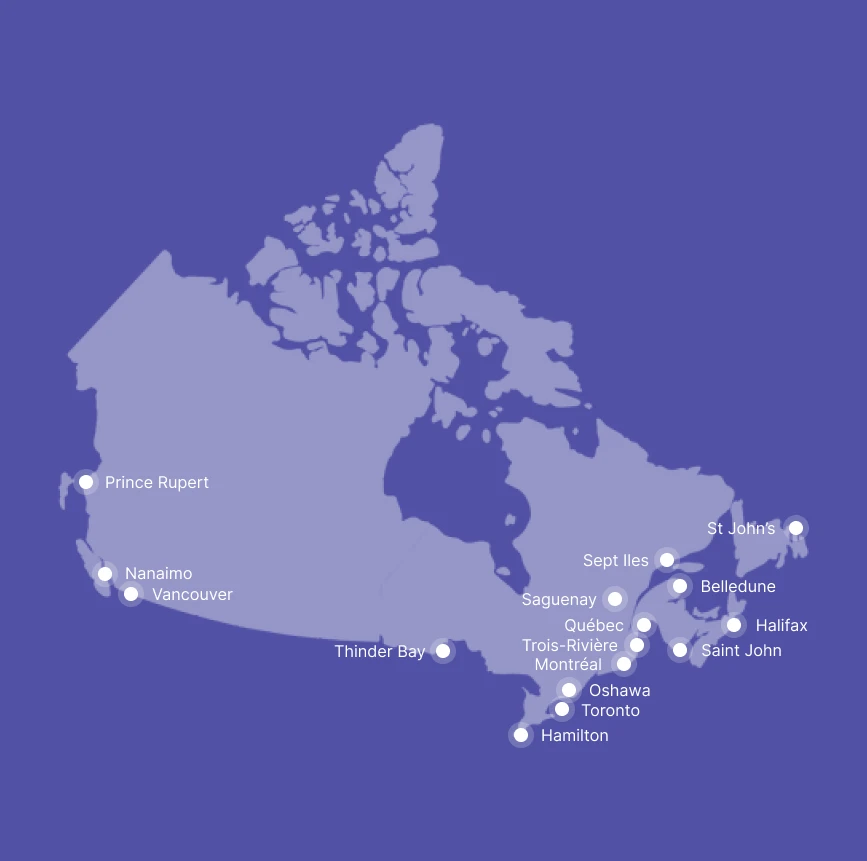
The main crossings and Canadian gateways
Pacific Highway / Peace Arch (Blaine, WA)
The main west-coast crossing for moves from Seattle and the Pacific Northwest into Vancouver and British Columbia.
Detroit–Windsor (Ambassador Bridge, the tunnel or the new Gordie Howe International Bridge)
The busiest commercial crossing on the continent and the natural gateway from the Midwest into southern Ontario. The Gordie Howe bridge opened in July 2026 as a third, high-capacity crossing for cars and trucks.
Peace Bridge / Buffalo–Fort Erie
The practical route from the Northeast and New York into the Toronto–Golden Horseshoe region.
Champlain–Lacolle (I-87 into Quebec)
The crossing for moves from Boston, New York, and New England into Montreal.
Pembina–Emerson (I-29 into Manitoba)
The central-corridor crossing for moves heading to Winnipeg and the Prairies.
Toronto (GTA)
The most common Canadian destination for US household moves, served by the Ontario crossings.
Vancouver
The west-coast destination, reached overland from the Pacific Northwest or by sea for California moves.
Montreal
The main Quebec destination, reached via the New England and New York crossings.
Port of Halifax / Port of Montreal
The Atlantic sea gateways used when a coastal US move travels by ocean rather than road.
Toronto Pearson (YYZ) / Vancouver International (YVR)
The air gateways for time-sensitive personal-effects shipments.
USA-to-Canada route timings
| From | To | Est. transit time |
|---|---|---|
| Seattle, USA | Vancouver, Canada | 3-7 days |
| Buffalo, USA | Toronto, Canada | 2-5 days |
| Detroit, USA | Toronto, Canada | 3-7 days |
| Boston, USA | Montreal, Canada | 3-7 days |
| New York, USA | Toronto, Canada | 4-8 days |
| Chicago, USA | Toronto, Canada | 4-8 days |
| Los Angeles, USA | Vancouver, Canada | 7-12 days |
| Miami, USA | Toronto, Canada | 6-11 days |
Our door-to-door service, from the USA to Canada
Since 1999 we've been moving people from the US to Canada — from collection at your American address through the border crossing, CBSA clearance, and delivery to your new home. We handle every step, so you can put your energy into the move itself rather than the logistics.
1. Collection and packing at your US address
Our team collects and packs your things for the road. Professional materials include:
- Packing boxes
In a range of sizes and rated for long-haul transport. - Bubble wrap
For the fragile things — glassware, ceramics, electronics — to keep breakages down over a long highway run. - Wooden crates
For large, valuable, or awkward items that need proper reinforcement over distance.
2. Cross-border transport and CBSA clearance
We plan the route to the crossing that suits your destination, prepare the paperwork, and manage CBSA clearance at the border — sea or air freight where that fits the move better. The customs sections above cover exactly what's needed.
3. Tracking and updates on the way
We keep you posted from pickup through the crossing to delivery, so you always know where your things are and when they'll land.
4. Delivery to your new Canadian home
Once your shipment clears CBSA, we arrange the final leg and the drop at your Canadian address.
5. Unpacking and setting up
Our local delivery team places the furniture and boxes where you actually want them, so you can start settling in rather than facing a mountain of unpacking on your own.
One person on your side the whole way
Our US-to-Canada support is built around a single contact: a dedicated Move Manager who owns your file from the first quote through US collection, the border crossing, CBSA clearance, and Canadian delivery. You're not handed off between teams at each stage.
On a Canada move, that continuity really matters, because your BSF186 and goods-to-follow paperwork has to stay consistent across every document in the file. Any gap between what you declared on your first day in Canada and what actually arrives causes friction that's slow and costly to fix afterwards. One accountable person who knows the whole file is how that gets spotted before it becomes a problem.
From collection in the States through the border crossing, CBSA clearance, and the final delivery to your Canadian door — your Move Manager stays in touch and keeps you posted at every stage.
Talk to a real person now
Bringing a vehicle from the USA to Canada
Here's where American movers have it easy: US vehicles are left-hand drive and built to standards Canada recognises, so many can be imported and registered for everyday road use. Most passenger vehicles run through the Registrar of Imported Vehicles (RIV) program, which confirms the car meets Canadian Motor Vehicle Safety Standards. Before you commit, check your exact make, model, and year against Transport Canada's list of admissible vehicles — a small number aren't eligible.
The vehicle-import essentials
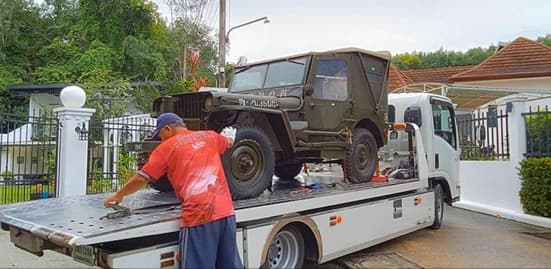
The vehicle-import essentials
- Admissibility check
Confirm your make, model, and year appear on Transport Canada's admissible list before you move the car. - Recall clearance, title, and US export formalities
You'll need a recall-clearance letter from the manufacturer confirming no outstanding recalls, plus the US title and your ID. Before export, the chosen US port normally needs the vehicle's EEI/AES filing and title documents at least 72 hours in advance, and you'll need to present the vehicle and title at export as that port instructs. CBSA then checks the Canadian import side at the border. - RIV processing and inspection
After you cross, the vehicle goes through RIV and a federal inspection, then provincial registration and insurance.
Costs to expect
- RIV program fee of around CAD 325 plus tax, covering compliance verification and registration notification
- Duty and taxes — genuinely US-origin vehicles are usually duty-free under CUSMA, but since April 2025 a 25% surtax can apply to US-origin vehicles imported for personal use even at a 0% CUSMA rate (a vehicle is only exempt if it genuinely qualifies under tariff item 9807, which is narrower than simply holding a work or study permit); a vehicle built outside North America can attract 6.1% duty, and GST/HST plus any provincial tax applies at registration
- Federal air-conditioning excise tax (CAD 100) on vehicles with A/C, plus a possible Green Levy on fuel-inefficient models, and the provincial inspection fee after arrival
Moving from the USA to Canada with your pet
Bringing a dog or cat across from the States is one of the more straightforward pet moves there is — and if you're driving, your pet simply rides along in the car. Canada's entry rules are specific but reasonable, and because there's no long-haul flight in the hold to plan around, most of the usual pet-move stress just isn't there.
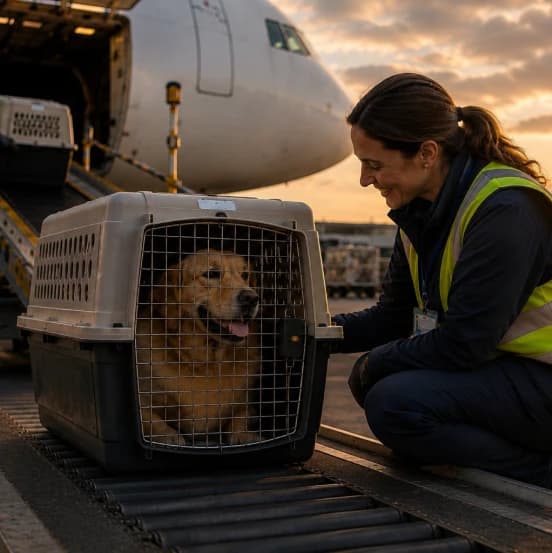
The key pet-import requirements from the US
- Rabies vaccination certificate
Cats aged three months or more and dogs aged three months or more need the relevant rabies paperwork from the US, signed by a licensed veterinarian and showing the vaccine details and validity dates. Cats under three months are unrestricted, and dogs under three months do not need rabies vaccination or certification. - Health check
A recent vet health check is wise, and required by the airline if any leg of the trip is by air. - Microchip
An ISO 15-digit microchip is strongly recommended for identification and required by some airlines for travel in the hold. - If you're flying rather than driving
Breed restrictions, seasonal hold embargoes, and in-cabin size limits differ by carrier. Confirm both the CFIA and the airline requirements before you book.
Loved by Americans settling into Canada
Real stories from Americans who unpacked their new lives with Expats Direct:
Getting ready for life in Canada
Canada is one of the most popular places for Americans to put down roots abroad — for work, family, study, and a change of pace. The two countries share a border, a language, and a lot of daily-life common ground, but Canada isn't just the US with different money. The differences that catch newcomers out are worth knowing before you pack.
From a shipping point of view, an American move is about as predictable as they come — same power supply, same plugs, a land border, and a CBSA process that behaves consistently when your file is clean. The real things to plan for are the distance on cross-country moves, winter disruption on northern routes, and lining up your Canadian address before the truck leaves.
100,000+
Americans estimated to move to Canada across recent years
8,000,000+
Foreign-born residents who now call Canada home
CAD $3,000+
Typical monthly cost of living for one person in Toronto or Vancouver
Cost of living: US vs Canada
Toronto and Vancouver are Canada's expensive cities, but the sticker shock depends on where you're coming from. A one-bedroom in the centre of either regularly runs CAD 2,200–2,800 a month — steep, but often gentler than Manhattan, San Francisco, or Boston, and comparable to a mid-tier US metro. Montreal, Calgary, and Halifax are noticeably kinder on the wallet than any of them.
Groceries land close to US prices, though dairy runs higher thanks to supply management, and alcohol costs more because the provinces control the liquor stores. Healthcare is the flip side of the ledger: once you're covered, you're not budgeting for US-style premiums, deductibles, and surprise bills. Transport depends on the city — Toronto, Montreal, and Vancouver have real transit; a lot of Canada still expects you to drive.
Salaries in skilled roles read lower in raw dollar terms than US equivalents, but that gap narrows once healthcare and paid leave are counted in. For planning your shipment, the thing that matters most is housing: whether you've got a confirmed Canadian address before the truck leaves decides whether you'll need temporary storage on arrival. Lining up the delivery with a confirmed address is the single most important call in the whole move.
Safety and everyday stability

Safety and everyday stability
Canada consistently ranks among the safest developed countries, with strong rule-of-law institutions, reliable property rights, and administrative processes that behave predictably. For an American mover, the texture of daily life in Canadian cities feels familiar — but violent crime rates run markedly lower, and that difference is one of the reasons a lot of people make the move in the first place.
From a customs-planning angle, CBSA works systematically. A well-prepared BSF186, a clean inventory, and a consistent goods-to-follow list produce predictable outcomes — which is reassuring when you're crossing an international border with everything you own for the first time.
Property rights and contracts sit under common-law frameworks (Quebec runs on civil law), so signing a lease or buying a place will feel largely recognisable to an American. That said, tenant protections are generally stronger than in much of the US, and the specifics vary province to province.
Income and salary expectations
Americans moving to Canada usually find salaries lower in raw dollar terms — but that's not the whole story. Mid-career software developers or data engineers in Toronto or Vancouver commonly earn CAD 95,000–140,000+, and once you factor in that healthcare isn't tied to your paycheck, the comparison tightens. Tech, finance, healthcare, and the skilled trades are the sectors behind most employer-sponsored US-to-Canada moves.
US professionals are well placed for Canada's Express Entry system, which rewards age, education, language, and work experience. If your occupation is on the CUSMA professionals list, an employer offer can turn into a work permit remarkably fast — sometimes issued at the border. One thing to check early: Canadian regulators assess qualifications through provincial licensing bodies, so confirm your specific credential-recognition path before you build a job-offer timeline around it.
Canada's 2026–2028 immigration levels plan holds permanent-resident admissions at 380,000 a year and sets new temporary-resident arrivals at 385,000 in 2026, then 370,000 a year in 2027 and 2028, so permanent-residence places stay limited and competitive. IRCC is due to confirm or adjust the 2027 and 2028 targets by 1 November. Tying your shipment's arrival to confirmed status — rather than betting on approval by a target date — keeps your things from landing before you have a confirmed Canadian address to deliver to.
Tax: your US and Canadian obligations
Here's the one Americans can't sidestep: the US taxes its citizens on worldwide income no matter where they live, so moving to Canada does not switch off your IRS filing. You'll file a US Form 1040 every year alongside your Canadian T1 return. The US-Canada tax treaty and the foreign tax credit are there to stop the same income being taxed twice — but they don't remove either filing obligation: you file in both countries even when the credit leaves little or nothing to pay.
Two disclosure rules catch people out. On the US side, if your Canadian accounts total more than USD 10,000 at any point in the year, you file an FBAR (FinCEN Form 114), and larger balances may also trigger Form 8938 (FATCA), depending on filing status and residence. On the Canadian side, Form T1135 generally applies when the total cost amount of specified foreign property exceeds CAD 100,000; personal-use property and property held in registered plans are excluded, and an individual does not file T1135 for the tax year in which they first become resident in Canada. And watch the TFSA: it's tax-free to Canada but the IRS doesn't recognise it, so a Tax-Free Savings Account can create US reporting headaches. An RRSP, by contrast, is generally eligible for treaty-based US tax deferral.
Retirement accounts and Social Security are governed by the treaty and the US-Canada totalization agreement. Your 401(k) and IRA can generally stay put and keep their deferral. US Social Security paid to a Canadian resident falls under the treaty (Canada includes 85% of it in income), but the treaty has its own rules for US citizens, so check how they apply to you before you rely on it. Because citizenship-based taxation makes cross-border returns genuinely complex, it's worth lining up an accountant who handles both sides before your first Canadian tax year.
The job market
Canada remains a major destination for American skilled workers, corporate transfers, and career changes. Express Entry runs federal skilled-worker permanent residence; provincial nomination programs let provinces target specific occupations. From January to mid-October 2026 IRCC held no round open to all programs: its invitations went to the Canadian Experience Class, to provincial nominees and to set categories (French-language proficiency, healthcare and social services, trades, transport, and physicians and senior managers with Canadian work experience).
The route that sets Americans apart is CUSMA. If your profession is on the list, an employer offer can become an LMIA-exempt work permit issued at the port of entry — no months-long wait. It's a low-commitment way to try Canadian working life, build Canadian experience, and use that to strengthen an Express Entry profile if you decide to stay for good.
Quebec's labour market runs on its own logic: French is the working language under the Charter of the French Language, and immigration goes through the Quebec-Canada Accord rather than federal Express Entry. If you're heading to Montreal, factor in French-language requirements for certain sectors and the different provincial nomination route.
Infrastructure and services
Canada's provincial healthcare (Medicare) is free at the point of use for registered residents — a big shift from the US insurance model. But some provinces have a waiting period of up to three months before new residents are enrolled, so check your destination province's rules and arrange private interim health cover if you face that gap. Dental, vision, and prescriptions aren't universally covered by provincial plans and usually need private top-up insurance, often through an employer.
Banking is easy. The big Canadian banks (RBC, TD, Scotiabank, BMO, CIBC) all run newcomer packages for people arriving without a Canadian credit history — worth knowing, because your US credit score doesn't cross the border and you'll be building a Canadian one from scratch. For a large USD-to-CAD transfer — savings or a home deposit — a specialist service like Wise usually beats a traditional bank wire by a meaningful margin.
US driving licences can generally be exchanged for a provincial one, but the rules and deadlines differ by province. Ontario lets you drive on a licence from another province, state or country for 60 days after you move, accepts licences from US states, and may still ask for a knowledge or road test. Alberta exchanges a US class 5, 6 or 7 licence without additional testing if you do it within 90 days of becoming a resident. Check your destination province's rules before you assume a straight swap. The good news: you already drive on the right, so unlike movers from the UK or Australia, there's no side-of-the-road adjustment at all.
Banking, currency, and USD-to-CAD transfers
Canada uses the Canadian dollar (CAD). So far in 2026 one US dollar has bought between about 1.35 and 1.43 CAD, and about 1.42 in mid-October, according to the Bank of Canada — so your dollars stretch further on arrival, though the rate can move over a multi-month relocation. If you're converting US savings to dollars for a rental deposit, first-month costs, or a Canadian home purchase, the timing and the method of the transfer can make a real difference to what you end up with.
Wise (formerly TransferWise) gives mid-market rates with transparent fees and is widely used for USD-to-CAD transfers. A traditional US bank wire to a Canadian account is slower and usually less cost-efficient for a personal transfer. If you'll have ongoing US income — rental income, a salary paid in dollars, investment distributions — set up a regular-conversion service or a multi-currency account before you leave the States.
Your shipment is priced in CAD too — cross-border handling, Canadian delivery, and any temporary storage all sit in a currency that may drift against the dollar between booking and paying. On a large move where the final delivery cost is substantial, it's worth confirming the CAD total at the time you book.
Climate: what to pack, what to buy once you land

Climate: what to pack, what to buy once you land
Canada's climate swings hugely by city. Vancouver is mild and rainy from October to April, with summers around 25–28°C — a lot like the Pacific Northwest, which it borders. Toronto has proper winters (−10 to −20°C in January and February) and warm, humid summers, much like the US Great Lakes cities. Montreal is similar to Toronto but snowier. Calgary gets cold, dry winters broken by the occasional Chinook warm spell. If you're coming from the Sun Belt, budget for a serious winter coat you've never needed before.
The season directly affects your shipment. Winter moves on northern routes (November to February) carry a higher chance of weather delays on the highway and at the crossing. If you're arriving in the cold months, plan for the fact that a long haul into Ontario, Quebec, or the Prairies in January or February may run slower than the estimate when a storm rolls through.
The US and Canada use compatible 120/240V, 60Hz electrical systems, so many US appliances can work in a Canadian home. Check the rating plate and the outlet at your destination before shipping each one: electric dryers, ranges, and some other high-power appliances use dedicated 240V circuits, and the receptacle, cord, gas connection, certification, or installation requirements may differ. That compatibility still makes many American moves simpler than moves from regions with different electrical systems.
Frequently asked questions
Quite possibly, but there are two separate tests. Settler's-effects relief is the one that matters most: it requires you to meet CBSA's customs definition of a settler, and students and people entering for employment of 36 months or less do not qualify under tariff item 9807, regardless of their immigration permit. Goods that qualify come in free of duty and tax, and outside Canada's 2026 surtax on US-origin goods. For goods that don't qualify, genuinely US-origin items generally face 0% duty under CUSMA, but since 8 September 2026 many carry a surtax of 15%, 25% or 50% that CUSMA origin does not remove. If you qualify, declare anything arriving later as goods to follow on the BSF186 when you first arrive to settle, make sure the goods were owned, possessed, and used before arrival (there's no minimum ownership period for first-time settlers — the six-month rule applies only to returning former residents), and keep alcohol, tobacco, firearms, and new goods separate from your main inventory.
Because most US-to-Canada moves go overland by road, the transit is days rather than weeks. A short cross-border run like Seattle to Vancouver or Detroit to Toronto is typically 3–7 days; a coast-to-coast haul like Los Angeles to Vancouver runs 7–12. Door-to-door adds collection at your US address at the start and the final delivery leg after clearance. Sea or air is an option for coastal or long-distance moves and changes the timing accordingly.
BSF186 is CBSA's Personal Effects Accounting Document. When you first enter Canada as a settler, you declare your personal effects on it — including anything arriving later as goods to follow. If your shipment crosses separately from you, listing it as goods to follow on the BSF186 at first entry sets the customs basis for the whole move. Getting this right is the single most important thing you can do to keep a US-to-Canada move clean.
Often, because the US and Canada use compatible 120/240V, 60Hz electrical systems. Check each appliance's rating plate and the destination outlet before shipping it. Ordinary 120V appliances commonly use the same Type A/B connections, but electric dryers, ranges, and some other high-power appliances use dedicated 240V circuits and may need a different cord, receptacle, gas connection, certification check, or professional installation. Confirm those details before deciding what is worth bringing.
A US passport gets you visitor entry (up to six months, no visa or eTA needed), but not the right to settle or to import goods as settler's effects. For a long-term move you need permanent residence or another status that truly amounts to settling in Canada. Common routes: a CUSMA work permit if your profession is on the list (often issued at the border), an intra-company transfer, an employer-sponsored LMIA permit, Express Entry permanent residence, a study permit, or family sponsorship. But CBSA's tariff-item-9807 definition is narrower than immigration status alone: students and people entering for employment of 36 months or less are not treated as settlers for that relief. Always confirm current requirements with IRCC and CBSA before finalising plans.
It depends on your route. Seattle and the Pacific Northwest cross at the Pacific Highway / Peace Arch into Vancouver. The Midwest goes through Detroit–Windsor into Ontario. The Northeast and New York use the Peace Bridge at Buffalo for Toronto, or Champlain–Lacolle for Montreal. The Prairies come up through Pembina–Emerson. We'll route the collection and the crossing to whatever makes most sense for your address and your Canadian destination.
Usually yes — this is much easier than for movers from right-hand-drive countries. US vehicles are left-hand drive and built to standards Canada recognises, and most run through the Registrar of Imported Vehicles (RIV) program. You'll need to confirm your make, model, and year on Transport Canada's admissible list, get a recall-clearance letter, pay the RIV fee (around CAD 325 plus tax), and complete a federal inspection and provincial registration. Also build in the US export step: the chosen export port normally wants the vehicle's EEI/AES filing and title documents at least 72 hours before export, and you'll need to present the vehicle and title as that port instructs. Genuinely US-origin vehicles are usually duty-free under CUSMA, but a 25% surtax introduced in April 2025 can apply to US-origin vehicles imported for personal use even at a 0% CUSMA rate — and tariff-item-9807 relief only applies if the vehicle truly qualifies as settler's effects under CBSA's narrower definition.
CUSMA (the Canada-United States-Mexico Agreement that replaced NAFTA in 2020) matters to American movers in two ways. For goods, genuinely US-origin items generally face 0% customs duty, but that no longer settles the question on its own: since 8 September 2026 Canada also charges a surtax of 15%, 25% or 50% on many US-origin goods, and CUSMA origin does not exempt goods from it. For a household move, settler's-effects relief is what keeps your used belongings clear of both duty and the surtax. For people, the CUSMA professionals category lets Americans in 60-plus listed occupations get an LMIA-exempt work permit, often right at the port of entry. It's one of the fastest immigration routes into Canada open to US citizens.
The usual suspects: undeclared food, seeds, plant material, soil on outdoor gear, alcohol, tobacco, firearms, new goods, and commercial quantities of anything. For American movers specifically, garden tools and lawn equipment (likely to carry soil), camping gear, and any firearms need particular care — firearms have their own declaration and permit rules at the border. Clean outdoor kit thoroughly, and keep the excluded categories off your general household list.
May to August is peak season for American family moves — capacity and cross-border slots tighten, so book 6–8 weeks ahead. January to March is a second peak for corporate transfers. The quietest windows — better availability, sometimes better rates — are usually October to November and April. Deep winter (December to February) adds weather-related risk to delivery timing on northern and long-haul routes.
Yes. The US taxes citizens on worldwide income wherever they live, so you'll keep filing a US Form 1040 every year alongside your Canadian T1 return. The US-Canada tax treaty and the foreign tax credit are there to prevent double taxation, but the filing obligation remains even when little or no extra US tax is due. Watch two things: FBAR/FATCA reporting of Canadian accounts, and the TFSA, which Canada treats as tax-free but the IRS does not. Get advice from an accountant who handles both sides before your first Canadian tax year.
We handle the freight and logistics side of your move, but pet entry is governed by the CFIA and needs arranging separately. Cats aged three months or more and dogs aged three months or more need the relevant rabies paperwork signed by a licensed vet; cats under three months are unrestricted, and dogs under three months do not need rabies vaccination or certification. If you're driving, your pet simply travels with you, which keeps things simple. If any leg is by air, a recent health certificate and an ISO microchip are usually required, and breed restrictions and seasonal hold embargoes vary by carrier. Confirm the CFIA and, if flying, the airline requirements before you travel.
You can drive on your US licence while you're a visitor, and once you're a resident most provinces let you exchange it for a provincial licence. The details differ by province. Ontario lets you use a licence from another province, state or country for 60 days after you move, accepts licences from US states, and may still ask for a knowledge or road test. Alberta exchanges a US class 5, 6 or 7 licence without additional testing within 90 days of becoming a resident. The easy part: Canada drives on the right, exactly like the US, so there's no side-of-the-road adjustment. Check your destination province's rules before assuming a direct swap.
Detailed enough that a CBSA officer can understand the shipment without guessing. A room-by-room inventory naming furniture, clothing, kitchenware, and electronics is far stronger than a vague "household effects" line. For high-value items, include rough CAD values and keep the receipts handy. The list also needs to match what you declare on the BSF186 — a mismatch between what's on the truck and what's on the form causes friction that a bit of preparation avoids entirely.
Wise (formerly TransferWise) is widely used for USD-to-CAD transfers and offers mid-market rates with transparent fees. Traditional US bank wires are slower and usually less cost-efficient. For large transfers — home-sale proceeds, savings, deposit funds — compare rates at the time you transfer. If you'll have ongoing US income (rental income, a dollar salary, investments), a multi-currency account or a regular-conversion service is worth setting up before you leave. Remember your Canadian accounts may trigger US FBAR reporting once opened.
Your next steps
Your next steps
Confirm your Canadian immigration status early — visitor entry is not enough, and CBSA settler's-effects relief excludes students and people entering for employment of 36 months or less under tariff item 9807.
Check appliance rating plates and your destination outlets before shipping — many US appliances are compatible with Canada's 120/240V, 60Hz system, but dryers, ranges, and other high-power equipment may need a different connection or professional installation.
Build a detailed, room-by-room packing list that separates your used belongings from new purchases and excluded categories.
Declare anything arriving later as goods to follow on the BSF186 at your first Canadian entry point — that's what sets the customs basis for your shipment.
Choose your route and border crossing based on your collection address and your Canadian destination city.