International pet relocation
Request a free pet relocation estimate in under a minute.
Problems with an international pet relocation often start before the flight, not in the air: paperwork, airline approvals, vaccination timing, or customs requirements missed along the way. We plan your pet's journey properly from the beginning, reducing delays, unnecessary stress, and unexpected costs later on.
Expert care
How we move your pets abroad
From documentation and airline approvals to pickup and final delivery, international pet relocation requires careful coordination at every stage. Our team brings more than 50 years of combined experience moving animals around the world, guiding your relocation with a clear plan from start to finish.

Experienced coordination
Your pet's relocation is managed by experienced specialists with decades of international transport and documentation expertise across global routes.
Global airline and customs support
We work with experienced international partners to coordinate airline approvals, customs requirements, and arrival handling across every stage of the move.
Clear communication throughout
From the first quote through to arrival day, you'll have clear updates, structured planning, and a dedicated manager overseeing the relocation from start to finish.
Door-to-door pet relocation
Request an Estimate
Tell us where your pet is travelling from and where they're going. We'll provide a clear relocation estimate, expected timing, and next steps.
Confirm the Details
Your relocation manager coordinates documentation, airline requirements, routing, and pickup planning before travel begins.
Begin the Move
From departure through to arrival, our team manages each stage of the journey with experienced international coordination and ongoing support.
Your pet isn't luggage. Their relocation deserves proper planning.
International pet relocation involves far more than booking a flight. Airline approvals, vaccination timing, customs requirements, breed restrictions, transit routing, and arrival coordination all need to align properly before travel begins. When pets are moving across borders, experience matters. For many families, this is the first time relocating an animal internationally. The process can feel unclear, especially when every country, airline, and route has different requirements. Our role is to bring structure, experienced guidance, and careful coordination to every stage of the move.
Experienced international coordination
Documentation and compliance support
One accountable relocation manager

Stories from relocating families
Families around the world trust Expats Direct to relocate the animals waiting at the centre of everyday life. Here are a few of their stories.
Frequently asked questions about international pet transport
It varies from dog to dog, and nobody can promise how a particular dog will cope. Familiar bedding inside the travel crate, crate familiarisation before departure, a route chosen to keep transit time as short as practical, and experienced handling at each stage all help to reduce travel stress. Highly anxious dogs or animals with existing health conditions may need specific veterinary guidance before travel. IATA recommends against sedating or tranquillising pets for transport, so any medication should be a vet's decision, with the details recorded on the health certificate.
For most families, the hardest part is managing multiple interconnected timelines across different systems simultaneously. Vaccination schedules, titer test waiting periods, airline cargo booking windows, import permit processing, veterinary health certificate timing, and government endorsement appointments all need to align precisely before travel is possible. A single missed deadline — a vaccination administered too early, a health certificate issued too far in advance, or an import permit that expires before arrival — can delay the entire relocation by weeks or months.
Some owners successfully manage international pet relocation independently, particularly on straightforward routes with minimal import restrictions. However, many families underestimate how quickly the process becomes complicated once airline restrictions, destination country regulations, documentation timing requirements, and routing decisions are factored in together. The most common issues arise not from single errors but from small misjudgements across multiple steps — a vaccine administered slightly outside the required window, an incorrect crate measurement, or an airline booking made without checking breed-specific policies.
Sometimes. Depending on the airline, route, and pet size, animals may travel on different aircraft, different schedules, or via approved live animal transport services that operate independently of the passenger journey. This is particularly common on routes where the airline does not accept live animals in the passenger cargo hold on specific aircraft types, or where destination country regulations require a separately coordinated import procedure; Australia, for example, requires pet cats and dogs to arrive as manifested cargo rather than in the cabin. Families should understand their pet's specific travel routing before finalising their own travel arrangements.
Government import regulations change regularly, and online information can lag behind the change, including pages on official government websites. Airlines also update their live animal policies throughout the year in response to seasonal conditions, aircraft changes, and destination rules. What applied to a specific route a few years ago may no longer be accurate today: new EU rules for pets arriving from outside the EU have applied since 22 April 2026, and New Zealand's updated import health standard for cats and dogs came into force on 1 July 2026. Forum posts, blog articles, and social media groups often reflect individual experiences from different years, different breeds, or different airlines, which may not apply to your specific situation.
The quality of live animal handling varies significantly between airlines and is difficult to assess from the outside. Features worth asking about include a dedicated live animal programme, ground handling arrangements at major transfer airports, temperature management for the hold, and a clear breed restriction policy. The best airline for your pet's move depends on the specific route, the breed involved, the time of year, and the aircraft types operating that service. There is no single answer that applies universally.
In many cases yes, but age introduces additional considerations that need careful veterinary assessment before travel is approved. Older animals may have underlying health conditions, reduced heat tolerance, or reduced ability to manage the physical stress of transit. A pre-travel health examination by a qualified veterinarian is essential for senior pets, and some veterinarians may recommend against air travel for animals with specific cardiac, respiratory, or mobility conditions. Routing decisions that minimise transit time become especially important for older animals.
Many airlines set temperature limits for live animals and refuse or rebook a pet when the forecast at the departure, transfer, or arrival airport is outside them. The limits differ by airline and change over time: as at October 2026, Air Canada Cargo, for example, does not accept warm-blooded animals when the ground temperature is 29.5°C or higher anywhere on the route, and Qantas Freight will not carry animals when the temperature is expected to be above 35°C or below 5°C. On many aircraft the hold is temperature-controlled in flight, but ground time during loading, unloading, and tarmac delays can expose animals to dangerous heat. Short-nosed breeds face stricter conditions, and IATA advises against flying snub-nosed dogs in the hot season. Planning your relocation timeline around seasonal temperature restrictions can significantly affect when your pet is able to travel.
Arrival procedures vary significantly by destination. Some countries process pets directly through customs with minimal delay once documentation is verified. Others require dedicated veterinary inspections at the port of entry, additional health checks, import clearance through a government authority, and in some cases transfer to quarantine facilities before release. Your relocation manager coordinates arrival handling in advance, including final delivery from the airport or quarantine facility to your new address, so your pet arrives at your home with as little additional disruption as possible.
In many respects, yes. Pets require documentation that passengers do not, including government-endorsed health certificates with strict validity windows, import permits, vaccination records tied to specific timing requirements, and in some cases mandatory quarantine regardless of preparation. Airlines apply additional restrictions to pets that do not apply to passengers, and routes that are simple for humans can be significantly more complex for animals depending on breed, size, airline policies, and destination regulations. The preparation timeline for a pet can sometimes be longer than the visa processing timeline for the family.
Absolutely, and this is one of the most underestimated aspects of international family moves. In some cases, the pet preparation timeline becomes the controlling factor for the entire household move. If a rabies antibody (titer) test is required, the waiting period runs from the date of the blood sample rather than from a booster vaccination, and it depends on the destination and on the country your pet is leaving. As a guide, it works out at about four months from the first rabies vaccination for the EU (from countries not on its exemption list) and for Singapore (from most countries), and at six months or more for Australia and Japan. Families who discover this requirement late sometimes need to adjust their moving date, arrange temporary housing, or travel ahead of their pet and arrange collection later.
The most common mistakes families make are: starting preparation too late and underestimating timing requirements; relying on outdated online information rather than current official sources; choosing routes or airlines based purely on passenger convenience or price; assuming documentation requirements are the same as a previous move to a different country; and underestimating the specific restrictions that apply to their pet's breed. Working with experienced professionals who maintain current knowledge of airline and country-specific requirements significantly reduces the risk of avoidable delays.
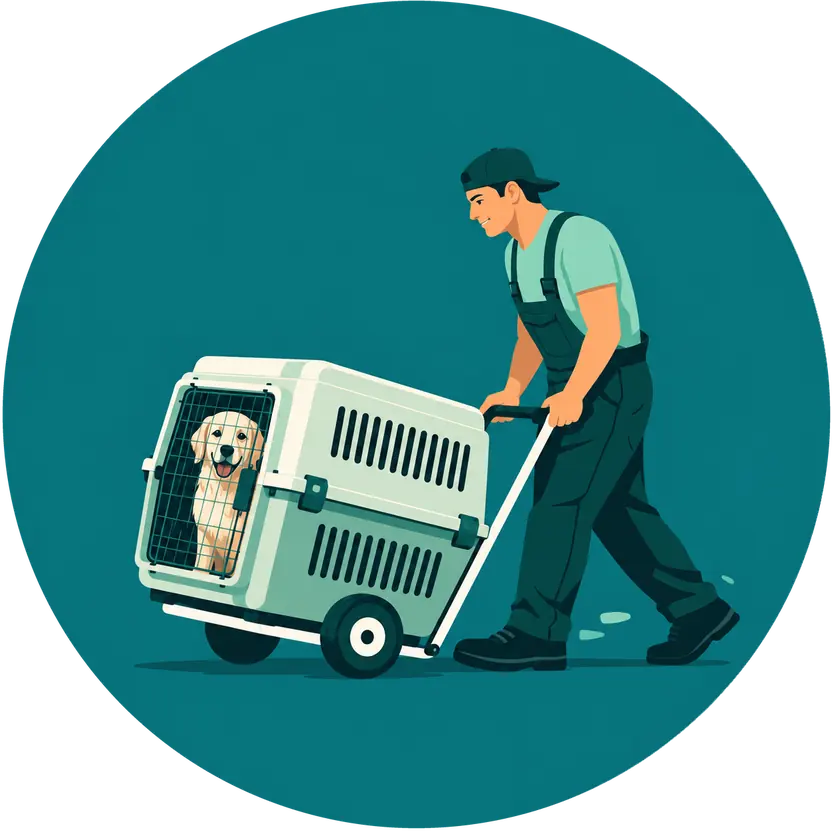
Every stage of the journey, carefully coordinated
International pet relocation involves far more than a single flight. Airline handling, customs clearance, transfer coordination, and final delivery all need to be managed properly. Our team works closely with experienced international partners to keep every stage moving smoothly from pickup through to arrival.