Move your home to France from Thailand
Request a free estimate in under a minute.
Guide to relocating from Thailand to France
Your home travels by sea from Laem Chabang, and right now it goes the long way. Most Asia to Europe services still sail around the Cape of Good Hope instead of through the Suez Canal, and one published June 2026 schedule puts Laem Chabang to Le Havre at 49 days, with stops in Rotterdam and Hamburg first. Fos-sur-Mer, near Marseille, often means a change of ship in Singapore. With packing at one end and delivery at the other, plan on roughly three months door to door. Our minimum is six boxes, and there's no maximum.
For a genuine move, France usually charges nothing on your belongings. The relief for a transfer of normal residence removes customs duty and the 20% TVA if you've lived outside the EU for at least 12 months, owned and used the things for at least 6 months, bring them in within 12 months of moving, and don't sell or lend them for 12 months after they arrive. It works the same whatever your passport. Alcohol and tobacco are never included.
The pleasant surprise: Thailand runs on 220 volts and France on 230, both at 50 hertz, so your rice cooker, fan and kettle keep working with a plug adapter. The less pleasant one is on the Thai side. A Buddha image needs an export licence from the Fine Arts Department, the department's guidance lists heads and fragments as not permitted to leave, and state-owned antiques may not leave at all. You can carry no more than 50,000 baht in cash out of the country to France, and 10,000 euros or more in cash has to be declared when you enter the EU.
If you hold a Thai passport, you need a French long-stay visa arranged in Bangkok before you leave, and the visa has to come before the container, because French customs want to see that your life has really moved. Plan the pet early too. Thailand isn't on the EU's list of countries exempt from the rabies blood test, so your dog or cat faces a three-month wait after that test before it can travel.
One more thing to know now: France doesn't exchange Thai driving licences. Yours works for your first year as a French resident, and after that you need a French licence, which means the theory and the driving test. Book them early.
People make this move for all sorts of reasons. Some are joining a French husband or wife after years of visits. Some are French themselves, heading home after a posting in Bangkok or a long retirement in Hua Hin. Some got a job offer in Paris, or a place at a French university. The paperwork differs a little for each, but the practical shape of the move is the same: Thailand decides what can leave, France decides what arrives tax free, and the visa decides when it can all happen.
None of it is hard once you know the order. The trouble usually starts when someone finds out on packing day that the carved Buddha in the living room needs a licence, or when the container reaches France before the visa does. Both are easy to avoid when you plan them a few weeks ahead.
Below, in the order you'll meet them: French customs and the relief for your belongings, what Thailand restricts on the way out, the visa routes, the sailing and the ports, the car, your pets, and then what daily life, money and tax look like once you've landed.
How we get you there
A move from Thailand to France comes down to three things: a visa granted before the ship arrives, an inventory checked against Thai export rules before anyone packs, and a sailing booked with honest dates. We plan around those, and you pick the timing.
Tell us about your move
Where you live in Thailand, where you're heading in France, and roughly what's coming with you. You get a plan, a realistic arrival window and a price before you commit to anything.
Meet your Move Manager
One person plans the shipment with you and raises the tricky items early: the teak dining table, the Buddha image on the shelf, the cat, and whether that sofa will fit a Paris lift.
We handle the rest
Packing, Thai export, the long sailing, the French customs declaration and delivery to your new home. You say your goodbyes properly; we keep the move on track.
Times of year that shape this route
Three calendars meet on this corridor: the Thai seasons, the French school year and the length of the sailing. Here's how they tend to play out:
- March to June
The window for families aiming at the French school year, which starts in early September. With about three months door to door, a container that leaves Thailand by late May has a realistic chance of arriving before the first day of school. It's also the hot season, so plan packing days for the morning, and remember that Songkran in April closes many Thai offices for several days. - July to October
Rainy season in most of Thailand. Moves go ahead as normal, but crews work around the downpours and wrap wood and fabric with extra care against the humidity. Arriving in France in autumn is gentle: the weather is mild and schools have settled into the year. - November to February
The cool, dry months are the most comfortable time to pack. You'll land in a French winter, though, so keep a warm coat in your suitcase rather than in the container. Couples, retirees and anyone without school-age children have the most freedom in these months.
Leaving Thailand, arriving in France: the customs side
France decides what you pay when your things arrive, and for a real move the answer is normally nothing. The relief for a transfer of normal residence lets used household belongings in without customs duty or the 20% TVA. You claim it on form Cerfa 10070, together with a detailed, signed inventory and proof that your home has moved.
Thailand decides what can leave, and its short list is worth reading before you pack. Buddha images, religious objects, antiques and some artworks need an export licence from the Fine Arts Department, and some pieces won't get one at all. Cash leaving Thailand for France is capped at 50,000 baht per person. Products from protected species, such as ivory, crocodile leather or some rare woods, can need CITES permits at both ends of the journey.
The EU relief for a transfer of normal residence waives customs duty and VAT on your used personal belongings. You must have lived outside the EU for at least 12 months (the UK counts as outside since 2021), have owned and used the goods for at least 6 months before leaving, and bring them within 12 months of settling in France. The goods must have borne duty or tax abroad. Alcohol, tobacco, professional equipment (except portable instruments of a trade or liberal profession) and second-home goods are excluded, and you cannot sell, rent, lend or pledge the goods for 12 months.
- Thailand · before you file
Check for licensed objects
Antiques and art objects need a Fine Arts Department export licence: apply online, bring the objects for examination and pay the fee. State-owned antiques may not leave, and foreigners exporting a Buddha image use the department's English form. Wildlife items may need a National Parks, Wildlife and Plant Conservation Department permit; Customs lists CITES-listed wildlife among its examples of prohibited goods.
- Thailand · before the goods are loaded
File the export declaration
You or your agent send the export declaration (Customs Form กศก. 101/1) and an invoice for every item to Customs electronically, for air freight at least 6 hours before departure, with any export licence. Customs then releases it as Green Line or checks it first as Red Line.
- France · before you pack
Prepare the inventory and proof
Write a detailed, estimated, dated and signed inventory in two copies, with a sworn statement that the items are in use and have been yours for at least 6 months. Gather proof that you lived outside the EU for 12 months and are settling in France.
- France · before clearance
Complete form Cerfa 10070
Fill in Cerfa 10070*03 and hand it to customs with the inventory, your proof of residence and an ID copy for each family member who moves. The relief has to be requested before the goods are cleared.
- France · at customs clearance
Customs stamps the inventory
Customs hands back a stamped copy. Goods can arrive in one or several lots, but the first inventory must list everything you claim relief for. Goods that arrive before you settle need an undertaking to settle within six months and a guarantee. Alcohol, tobacco and other excluded goods pay duty and tax.
The paperwork to have ready
What French customs really want to see is that your life has moved to France, not just a container. Keep these together:
- Your passport, plus your French long-stay visa or residence permit if your nationality needs one
- The Cerfa 10070 declaration, used to bring personal belongings into France duty free from outside the EU
- A detailed inventory of the shipment, dated and signed, in two copies, which our crew prepares as they pack
- Proof you lived outside the EU for at least 12 months, such as your Thai lease, utility bills, a work permit or bank statements
- Proof of your new address in France, like a lease, a property deed or an electricity contract in your name
- Evidence the goods have been yours and in use for at least six months, which for most homes is simply an honest, itemised list
- A Fine Arts Department export licence for any Buddha image, antique or artwork that needs one
- For a car, its Thai registration book and proof of purchase
- For a pet, its microchip record, rabies vaccination, blood test result and EU animal health certificate
Checks, holds, and how long they add
Most household containers from Thailand clear without drama. When something does slow things down, it's usually one of these, and most are sorted in hours or a few days:
- A question about the paperwork
The most common one. A value that looks high, a gap in your proof of residence, or an item that reads like it might be for sale. Usually answered the same day.
- A look inside the container
Less frequent. Officers open it and compare what's there with your inventory, which is why we write 'teak dining table, six chairs' rather than 'furniture, 12 pieces'.
- Religious objects and antiques
A Buddha image or an old carved chest without the Thai licence to match raises questions at both ends. Declared with the paperwork, it's routine.
- Protected wildlife products
Worth checking on this route. A crocodile-leather bag is allowed as a personal item only in small numbers, up to four worked items per person, and ivory or python skin need proper CITES paperwork.
- A residence that hasn't moved yet
The hold that genuinely costs time. If you can't yet show that you live in France, the relief can't be applied and the container waits until you can.
The long way round, and what it means for your dates
Almost every household container for France leaves Thailand through Laem Chabang, south-east of Bangkok. Since 2024 most Asia to Europe ships have been avoiding the Red Sea and sailing around southern Africa instead, which adds a week or two compared with the old Suez route. One direct service's June 2026 schedule shows Laem Chabang to Rotterdam in 38 days, Hamburg in 43 and Le Havre in 49. In 2026 a few carriers began sending some ships back through Suez, but not across whole networks, so we confirm the routing of your actual sailing rather than promising the short one.
If you're heading for the south of France, Fos-sur-Mer near Marseille is the natural port, but containers from Thailand often change ships in Singapore to reach it, and the connection can add days. For Lyon and further north, Le Havre with a truck or train onwards is often just as quick. We look at both for your address and quote the one that makes sense.
What you can import to France

Personal belongings

Used clothing

Household appliances

Fragile items

High-value items

Large items & furniture

Excess luggage

Pets
EU pet rules; attack-type dogs banned

Vehicles
Customs certificate and French type approval required
What France restricts

Illegal drugs & drug paraphernalia

Explosives, fireworks & flares

Biological & contaminated materials

Dangerous chemicals

Corrosive substances

Counterfeit & pirated goods

Ivory & protected wildlife products

Loose or damaged lithium batteries

Flammable liquids, gas bottles & fuel

Firearms, ammunition & weapon parts

Prescription & controlled medicines

Other dangerous goods

Meat & dairy products
Banned from outside the EU

Plants, seeds & anything in soil
Plant-health certificate required

Alcohol & tobacco
No relocation relief; duty and excise payable
How much can you bring?
We move homes of every size from Thailand to France, from a studio condo in Bangkok to a family house in Chiang Mai with a garden full of pots.
- Minimum: 6 boxes
Smaller moves share a container with other households going the same way, which keeps the cost down. A shared container sails once it's full, so allow an extra week or two.
- No maximum
The whole house can travel in a container of your own, on your dates. For a full family home on a sailing this long, that's often the better choice.
The bigger question is whether it fits in France. Thai houses and condos tend to be open and airy; French apartments, especially in older buildings, often have narrow stairs, small lifts and no room for a king-size teak bed. Measure your new place before you decide what makes the trip.
The forms, explained simply
- Cerfa 10070
The French declaration for bringing personal belongings in duty free from outside the EU. It's how you claim the relief that takes duty and TVA off your things. - The inventory
A detailed list of everything you're shipping, dated and signed, in two copies. It's what customs compare the container against, so the more precise the better. - Proof of residence, at both ends
Evidence that you lived outside the EU for at least 12 months, plus evidence of your address in France. Together they show the move is real. - Certificate 846 A
Only if a vehicle is coming. French customs issue it once the car is cleared, and you can't register the car without it. - The Thai export side
The export declaration is filed for you, and a Fine Arts Department licence is added for anything that needs one. You don't have to deal with Thai Customs yourself.
Where to check French customs guidance

The DGDDI, France's customs authority, sets out the conditions for bringing your belongings in duty free when you move your main home to France, including the residence, ownership and timing rules and the Cerfa 10070 form.
Duty, TVA, and the relief that removes both
Without the relief, France treats your belongings like any other import from Thailand: customs duty where it applies, plus TVA at 20%, calculated on the value of the goods including the cost of shipping them. After a sailing this long, freight makes up a real share of that value, so the bill can add up quickly. The relief exists so that people genuinely moving home don't pay it, and its conditions are written down clearly.
What's due without the relief
- TVA at 20%
France's standard VAT rate, charged on the customs value of the shipment. Because it applies to everything, it's the part that makes the total large.
- Customs duty, depending on the item
The rate depends on what each thing is. A car brought in without relief is the expensive case: 10% duty, then 20% TVA on top of that.
The relief, and who it's for
- The four conditions
You've lived outside the EU for at least 12 months. You've owned and used the goods for at least 6 months before moving. They arrive in France within 12 months of your move. And you don't sell, lend, rent out or pledge them for 12 months after they arrive.
- Who can use it
Anyone genuinely moving their main home from Thailand to France, whatever passport they hold, including French citizens coming home. It doesn't cover furniture for a holiday flat in France while your real life stays in Thailand.
Where it goes wrong
The relief is generous, and the cases it doesn't cover are predictable. Almost all of them look like this:
- Alcohol and tobacco
Excluded, however long you've had them. That bottle collection from duty-free trips will be taxed. - Things bought in the last six months
The new air fryer, the laptop from the sale at the mall. They can still come, but on a separate list, not hidden in the main inventory. - Anything that looks like stock
Twenty identical silk scarves or boxes of new Thai handicrafts read as goods for sale, not a household. Keep gifts to sensible, personal quantities. - Work equipment
Professional tools and business assets fall outside the relief, and so do caravans and motorhomes. - A move that isn't finished on paper
The most expensive refusal and the easiest to avoid. Without proof that you now live in France, the relief doesn't apply and the container waits. That's why the visa, the French address and the inventory need to be planned together.
A word about gifts and souvenirs, because this route has a lot of them. Silk, celadon, lacquerware and hand-carved wood make lovely presents for family in France, and a few pieces mixed in with your own things are no problem. Several suitcases' worth of new items looks like trade. If you're planning to sell Thai crafts or open a shop in France, ship that stock separately as a commercial import and keep your household move clean.
The car, covered further down, can use the same relief if you've owned and used it for at least six months and the other conditions are met. It needs certificate 846 A from French customs before it can be registered. Without the relief, a car pays 10% duty and 20% TVA, which is usually enough to make people sell it in Thailand instead.
Insuring your shipment
Your belongings spend weeks at sea, change ships, and go from tropical humidity to a French winter. Most shipments arrive just as they left. Insurance is for the ones that don't, and on a journey with this many handovers it's worth having.
Why it's worth having
The ocean gets the blame, but in practice the risks sit at a few specific moments:
- Heat and humidity
A container sitting in the Thai sun is hard on wood, leather, paintings and anything glued. Good packing helps a lot, and cover helps with the rest.
- Changing ships
A container heading for Fos may be lifted off in Singapore and loaded onto another vessel. Every lift is a chance for the load to shift.
- The last few metres in France
Spiral staircases, tiny lifts and narrow streets are where furniture most often meets a wall.
- Things you can't replace
No policy brings back your grandmother's silk or the photo albums. It can at least stop the loss being a financial one as well.
What's usually covered
Every policy is worded differently, but cover for a Thailand-to-France household move usually includes:
- Loss or damage for the whole journey
From collection at your home in Thailand to delivery in France, treated as one move rather than separate legs.
- Damage during handling
Loading, unloading, port handling and carrying things into your new home, which is where most real claims come from.
- Storage arranged with us
Cover can usually extend over storage at either end, which helps when your dates in Thailand and France don't line up.
Read the exclusions and declared values carefully before you sign. Damage from humidity or slow deterioration is often excluded, and boxes you pack yourself may be covered only against total loss, so ask about both.
How to get insured through us
There are a few ways to insure your move from Thailand to France:
- A broker or insurer of your choice
A good option if you already have one. Ask specifically about international household moves, because ordinary home insurance rarely covers goods at sea.
- A policy you already hold
Some expat or contents policies extend to a move. Check what they say about goods in a mover's care and boxes you packed yourself.
- Our own cargo insurance, arranged as part of your move.
Note: our cover is charged at 3% of your declared shipment value.
- Set the declared value carefully
It isn't what you paid in Bangkok and it isn't sentimental value. It's what each item would cost to replace in France, which is often more, and it's the figure any claim is measured against.
Which French visa route is open to you
This part depends on your passport, not on where you've been living. French citizens coming home need no visa, and neither do citizens of other EU countries. If you hold a Thai passport, you need a Schengen visa even for a short visit, and to live in France you need a long-stay visa, applied for in Thailand before you travel. In Bangkok, applications go through the France-Visas website and the TLScontact visa centre, and the decision is made by the French Embassy. You can't arrive as a visitor and change your status once you're there.
The routes people on this corridor actually use
Four routes cover most people moving from Thailand to France. Which one fits depends on your family, your work and your plans.
Spouse of a French citizen
The most common route on this corridor. If you're married to a French citizen, the long-stay visa can only be refused on narrow grounds, such as fraud or a threat to public order. The consulate may ask you to take a short assessment of your French and of the values of the Republic, with a free course if it shows you need one. A French marriage record, or a Thai marriage transcribed by the French consulate, is the key document, so start that early.
Work and the talent permit
If a French employer is hiring you, you need a work route. A salaried visa runs through your employer and a work authorisation. The multi-year talent permit covers qualified employees, researchers, company founders and several other profiles, lasts up to four years, and gives your partner and children a family permit alongside it.
Student
For a place at a French university or school. In Thailand the application starts with Campus France, which checks your study plan before the visa step, and a student visa lets you work part time alongside your course. Plan for the French academic year, which starts in September.
Long-stay visitor (visiteur)
For people who will live on their own savings, pension or income from abroad, without working in France. You show you have enough to live on and health insurance for your stay. It doesn't allow a job in France, so if you plan to keep working remotely, ask the consulate before you apply.
The timing that matters: you apply no more than three months before you travel, and once in France you validate the visa online and pay its fee within three months of arriving. For a visitor visa that fee has been 300 euros since 1 May 2026. French customs also want to see that your residence has moved before they apply the relief, so the visa isn't the last step of the move. It's the first.
Rules change, so check the current requirements on the official France-Visas website before you commit to dates, and get advice on anything specific to your situation.
Ports, routes and where they land
Your shipment leaves Thailand from Laem Chabang, the country's main deep-sea port, whether you're packing up in Bangkok, Pattaya, Chiang Mai or on Phuket. It arrives at one of France's two big container gateways. Le Havre, in Normandy, has road, rail and river links to Paris and serves the north and west. Fos-sur-Mer, the container port of Marseille, serves the south and connects up the Rhône valley towards Lyon.
The routes we use
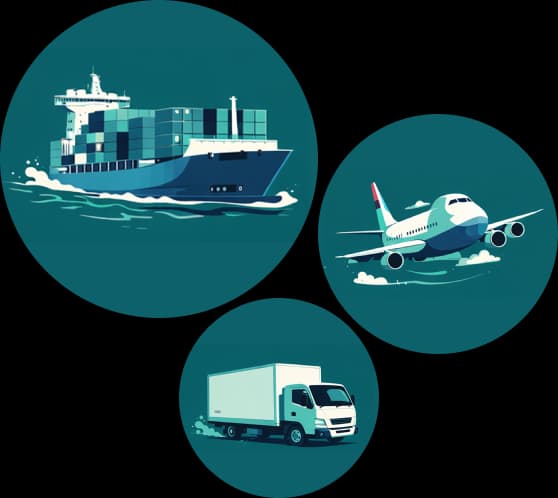
The routes we use
- Laem Chabang to Le Havre
The most direct option: one ship from Thailand to northern Europe, calling at Rotterdam and Hamburg before Le Havre. Around 49 days on the published schedule, a little more once real-world delays are allowed for. - Laem Chabang to Fos-sur-Mer
For Provence, the Riviera and Occitanie. Containers often change ships in Singapore on the way, so timing depends on the connection. We compare it with landing in Le Havre and trucking south. - Collections across Thailand
Homes in Chiang Mai, Phuket, Koh Samui or Hua Hin are packed at your address and trucked to Laem Chabang. It adds a few days at the start, not a different route. - Air freight, for the few boxes you can't wait for
Bangkok to Paris by air takes days rather than weeks, but it costs far more. It makes sense for work documents, school things and a few favourite items. We'll tell you honestly when it isn't worth it.
- A container of your own
Your belongings, your dates. The best fit for a full home or a fixed start date in France. - Shared container (LCL)
Your things travel with other households' shipments going the same way. It costs noticeably less, and the trade-off is waiting for the container to fill. - Storage at either end
Arranged as part of the same move, because a Thai lease ending and a French one starting rarely happen on the same day. - The awkward extras
The motorbike, the orchids in their pots, the massage chair, the piano. Mention them at the survey so they're on your quote, not a surprise on packing day.
Thailand-to-France transit times
| From | To | Est. port to port |
|---|---|---|
| Laem Chabang, Thailand | Le Havre, France | 49-56 days |
| Laem Chabang, Thailand | Fos-sur-Mer, France | 50-60 days |
| Bangkok Suvarnabhumi, Thailand (air) | Paris Charles de Gaulle, France | 3-8 days |
Door to door, Thailand to France
We take care of everything between your front door in Thailand and your new one in France: packing, Thai export, the sailing, the French customs declaration and delivery. One Move Manager holds the whole file, so nothing gets lost between a packing crew in Bangkok and a customs broker in France.
Here's how it works:
- Survey and quote
At your home around Bangkok, or by video call if you're in Chiang Mai, Phuket or elsewhere. We work out the volume, ask early about the car, the pets and anything religious or antique, and give you a price with the sailing included. - Inventory check
Before packing day, your Move Manager goes through the list with you against the Thai export rules and the French relief. Anything that needs a Fine Arts Department licence starts its paperwork with weeks to spare. - Packing at your address
Our crew wraps everything for a long, humid journey and writes the itemised list French customs will read. You can pack some boxes yourself, though insurers often exclude them, and we'll say so up front. - Export and loading
Your belongings are loaded into their container, the Thai export declaration is filed, and you get the vessel, the routing and an arrival window rather than a guess.
Arrival in France
Our customs broker lodges the Cerfa 10070 declaration, your inventory and your proof of residence at Le Havre or Fos-sur-Mer, and handles any questions or inspection directly.
Delivery to your new home
Once cleared, your shipment is trucked to your address. The crew carries everything in, puts it where you want it, reassembles what they took apart and takes the packing away.
When the dates don't match
On a move this long they often don't. Storage at either end is part of the same service, not an extra you discover later.
And from the first call to the last box, the same person answers your messages. No call centre, no ticket number.
One person on your side the whole way
On this route you work with one Move Manager from the first survey in Thailand to the last box in France. They look after the packing, the export, the sailing, French customs and delivery, so you never have to explain your move to someone new halfway through.
That matters here for two reasons. First, the order of things: the Thai export licences need to be sorted before packing, and the visa, the French address and your proof of residence need to exist before French customs will apply the relief. Second, the time difference. France is five or six hours behind Thailand depending on the season, so having one person who already knows your file saves a lot of waiting.
From collection in Thailand, across the ocean, through French customs and on to your door, your Move Manager keeps you updated at every stage.
Talk to a real person now
Bringing a car from Thailand
Thailand drives on the left and France on the right, so a Thai car arrives with its steering wheel on what becomes the awkward side. It can still be imported, and if it qualifies for the relief the tax side can be kind. What's harder is getting a car built for the Thai market approved for French roads, and living with it afterwards: overtaking on country roads, reaching the ticket machine at a motorway toll, and selling it one day.
What French registration asks for
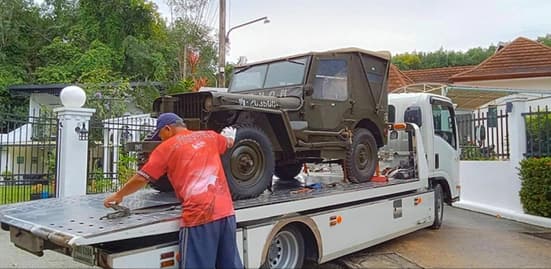
What French registration asks for
- Certificate 846 A
Issued by French customs once the car is cleared, using its Thai registration book, proof of purchase and your proof of residence. Under the relief there's nothing to pay; without it, duty and TVA come first. - Proof it meets European standards
Start by asking the manufacturer's French representative for a certificate of conformity. Cars built for the Thai market often don't get a full one, and then the car needs an individual approval, called a réception à titre isolé, from the regional DREAL office. - Registration through ANTS
With 846 A and proof of conformity, you register the car online with the national vehicle agency and receive its French registration.
What it really costs
- With the relief: no duty and no TVA
As long as you've owned and used the car for at least six months and it arrives within the 12-month window. The 12-month rule on not selling it applies too. - Without the relief: 10% duty plus 20% TVA for a car
Calculated on the car's value plus shipping. A pickup truck is classified differently and can face a different duty rate depending on its engine, so check its classification before you book it on a ship. - Shipping and approval
Freight for a vehicle isn't cheap, and an individual approval can mean inspection fees, test reports and changes such as headlights adapted for driving on the right. Get the manufacturer's answer on conformity first.
For a much-loved classic, bringing it may be worth the effort. For an everyday pickup or city car, most people on this route sell it in Thailand and buy in France: no approval process, the steering wheel on the right side, and a car that's easy to sell later.
Bringing your dog or cat
Your pet can come, with no quarantine in France if everything is in order. The thing to know early is that Thailand isn't on the EU's list of countries exempt from the rabies blood test. That means an extra test and then a wait of at least three months before your pet can travel, so the pet paperwork often sets the timeline for the whole move.
On the Thai side, the export goes through the Department of Livestock Development, with an application and a visit to its animal quarantine office at your departure airport. If you might return to Thailand one day, keep copies of everything, because bringing a pet back needs a Thai import permit. For help with the flight itself, see our pet transport service.
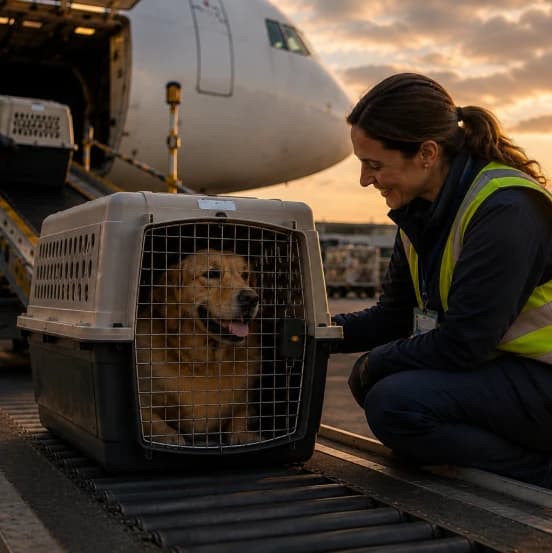
The steps, in the order that matters
- 1. Microchip first
The rabies vaccination only counts if it's given on or after the day the microchip is implanted, so get the chip done before anything else. - 2. Rabies vaccination
Given when your pet is at least 12 weeks old. Keep the vaccination record, with the microchip number on it. - 3. The blood test, then the wait
A blood sample taken at least 30 days after the vaccination and tested at an EU-approved laboratory, with a result of at least 0.5 IU/ml. The EU health certificate can't be issued until at least three months after that sample was taken. - 4. The EU animal health certificate
Issued by an official vet in Thailand no more than 10 days before your pet enters the EU, together with the Thai export steps. Your pet must arrive through an airport designated for pet checks, such as Paris Charles de Gaulle. - 5. Up to five pets
The rules for a personal move cover up to five animals. If they don't fly with you, they must travel within five days before or after your own journey.
What people who've made this move say
Thailand to France
Life in France after Thailand
The first things you'll notice are the seasons and the pace. Evenings in June stay light until nearly ten, winter afternoons are dark by five, and the markets change with every month. Shops often close on Sundays, lunch is taken seriously, and small talk usually starts with a polite bonjour. France is five hours behind Thailand in summer and six in winter, so calls home tend to happen in the morning.
The early months are mostly paperwork. Validating your visa, getting a social security number, opening a bank account and registering with a doctor each need documents, and some need the document from the step before. It feels slow at first, and then one day it's done. Keep copies of everything, and bring translated civil documents like birth and marriage certificates with you.
12 months
how long you must have lived outside the EU before your belongings qualify for France's duty-free relief
20%
the French TVA charged on your household goods if the relief doesn't apply, before any customs duty
3 months
the minimum wait after your pet's rabies blood test before the EU health certificate can be issued
What things cost
France costs more than Thailand, and the difference shows most in housing and eating out. A small apartment in Paris can take a large share of a salary, while cities like Lyon, Nantes or Toulouse are more manageable and smaller towns more so again. Restaurant meals are a treat rather than a daily habit, but a market basket of bread, cheese, fruit and vegetables is good value.
You'll miss some flavours at first. Thai ingredients are easy to find in bigger cities, especially in the Asian supermarkets of Paris's 13th arrondissement, though fresh herbs and fruit cost more than at a Thai market. Electricity and heating in winter are new costs for most people, as is home insurance, which every tenant must have.
For the move itself, the costs that surprise people are about timing. If the container arrives before you have a French address, storage starts, and a short-term rental while you look for a home adds up quickly. Lining up those dates saves more than haggling over the freight.
Safety, and what changes
Safety, and what changes
France is a safe country by international standards, and daily life in most towns is calm. In big cities, pickpockets work busy places like metro stations, tourist areas and crowded trains, so keep your phone and bag close, as you would around busy markets in Bangkok.
Roads are a real change: traffic rules are strictly enforced, speed cameras are everywhere, and scooters are far fewer. Carry your residence permit or passport, since you may be asked for ID. For emergencies, dial 112 from any phone, or 15 for an ambulance, 17 for police and 18 for the fire brigade.
What catches newcomers out is less crime than bureaucracy. French administration follows the checklist, and one missing document can pause a whole process. Keep copies of everything and bring more paperwork than you think you'll need.
What people earn
France's minimum wage, the SMIC, is 1,867.02 euros gross a month for full-time work from 1 January 2026, about 1,478 euros after employee contributions. Salaries in Paris and in fields like tech, engineering, finance and luxury are well above that, and they are much higher than Thai salaries for similar work, though so is the cost of living.
The gap between gross and net pay is wider than most people expect. Social contributions come out before income tax, and in return you get health cover, a state pension, unemployment insurance and family benefits.
When comparing job offers, remember French salaries are usually quoted as a yearly gross figure. Some employers pay a thirteenth month, and a cadre contract changes your contributions, notice period and sometimes your hours. Ask which one you're being offered.
Tax, on both sides of the move
Thailand taxes you as a resident in any year you spend 180 days or more there. Once you've moved and become a French tax resident, France taxes your worldwide income. France and Thailand have had a tax treaty since 1975, which decides which country taxes each kind of income, so the same money isn't taxed twice. Income from property you keep in Thailand, like rent from a Bangkok condo, is the classic case to check with an adviser.
French income tax on 2025 income, declared in 2026, is 0% up to 11,600 euros, 11% up to 29,579 euros, 30% up to 84,577 euros, 41% up to 181,917 euros and 45% above that. These bands apply per share of the household under the family quotient system, so a married couple with children pays quite differently from a single person on the same income.
If you own a lot of property, France's real estate wealth tax, the IFI, starts above 1.3 million euros of net property. Someone who hasn't been a French tax resident in the previous five years pays it only on French property until the end of their fifth year in France, which matters if you're keeping a house or land in Thailand.
Finding work
Start with permission. As a spouse of a French citizen, your residence permit allows you to work. On other visas, your right to work depends on the category, and a French employer hiring from abroad usually has to apply for a work authorisation for you. The talent permit is simpler for employers because less of the paperwork sits with them.
French is the key to most jobs outside international companies. English helps in tech, tourism and big firms in Paris and Lyon, and Thai-language skills are valued in hospitality, trade and some travel businesses. Free French classes are part of the integration contract many new residents sign with OFII, and they are worth taking seriously.
If you'd like to work for yourself, the micro-entrepreneur regime is a simple way to start, within turnover limits. Regulated professions such as nursing, medicine, law or accounting need your Thai qualifications recognised in France, which rarely happens automatically, so begin early.
Healthcare, schools and getting around
French healthcare is excellent, though it works differently from Thai private hospitals. You usually pay the doctor and get part of it back, and a top-up insurance called a mutuelle covers most of the rest. If you work in France, you're covered through your job. If you don't, you can join the public system, PUMa, after three months of stable residence. There's no health agreement between France and Thailand, so arrange private international cover for the gap.
State schools are free and secular. Children who arrive without French usually join special support classes, called UPE2A, alongside a regular class, and younger children often pick up the language faster than their parents. International and bilingual schools exist in Paris, Lyon, Nice and a few other cities, with private fees.
Getting around is easy. High-speed trains link the big cities, city transport is cheap, and motorways are excellent but tolled. In the countryside a car is still very useful, even if the next town is only a few minutes away.
Pensions, social security and banking
France and Thailand have no social security agreement, so years paid into Thailand's Social Security Office don't count towards a French pension, and French years don't count in Thailand. Before you leave, ask the Social Security Office what happens to your old-age contributions, and keep your records safe.
Open a French bank account as early as you can, because rent, salary and bills all expect one. If banks turn you down, the Banque de France can designate a bank that must open a basic account for you. Keep a Thai account open too, for any income or bills in Thailand, and move larger sums through a currency transfer service rather than a standard bank wire, which usually costs less.
When you travel, remember the cash limits at both ends: no more than 50,000 baht in Thai currency out of Thailand to France, and a declaration for 10,000 euros or more in cash when you enter the EU.
The weather, honestly

The weather, honestly
This is the biggest change of all. Paris, Lyon and the north have real winters, with short grey days, frost and sometimes snow. After years of 30 degrees, the first cold snap is a shock, so buy a proper coat, boots and gloves when you arrive. French shops know winter much better than Thai ones.
The south is gentler. The Mediterranean coast has hot, dry summers and mild winters, and summer heatwaves have become common everywhere in July and August. Spring and autumn are lovely almost anywhere, and many people from Thailand find they enjoy the seasons once the first winter is behind them.
One thing that makes the move easier: Thailand uses 220 volts and France 230, both at 50 hertz. Your appliances will work with a plug adapter for French sockets, so the choice of what to bring comes down to space and shipping cost, not electricity.
Questions people actually ask
Plan on roughly three months door to door. One published June 2026 schedule puts Laem Chabang to Le Havre at 49 days at sea, and Fos-sur-Mer often involves a change of ships in Singapore. Packing and export in Thailand, then customs and delivery in France, add a few weeks around that.
A shared container can add a week or two while it fills. If you need a few things sooner, send a small air shipment from Bangkok to Paris, which arrives in days.
Because most ships between Asia and Europe have been avoiding the Red Sea since 2024 and sailing around southern Africa instead. That adds a week or two compared with the Suez Canal route that older guides describe.
In 2026 a few carriers began returning some services to Suez, but not across whole networks. We confirm the actual routing of your sailing when you book, instead of quoting a number that may not apply.
Usually not, if you're really moving your main home. France's relief for a transfer of normal residence removes customs duty and the 20% TVA on personal belongings, claimed on form Cerfa 10070 with a dated, signed inventory.
The conditions are that you've lived outside the EU for at least 12 months, owned and used the goods for at least 6 months, bring them within 12 months of moving, and don't sell, lend or rent them out for 12 months afterwards. Alcohol, tobacco, work equipment and goods that look like stock are excluded.
Yes. Thailand uses 220 volts and France 230 volts, both at 50 hertz, so rice cookers, kettles, fans, televisions and most kitchen gadgets work with a simple plug adapter for French sockets.
Whether they're worth shipping is a separate question. Cheap, bulky items often cost more to send than to replace, while good appliances you love are usually worth the space.
Often yes, but only with an export licence from Thailand's Fine Arts Department. Buddha images, religious objects, antiques and some artworks all fall under this rule. The department's guidance lists heads and fragments of Buddha images as not permitted to leave, and state-owned antiques may not leave at all; other antiques need a licence.
Raise it at your survey, not on packing day, so there's time for the licence or for other plans. Exporting without permission can mean the piece is confiscated and a fine.
Yes, even for a short visit you need a Schengen visa. To live in France you need a long-stay visa, applied for in Thailand before you go, through France-Visas and the TLScontact visa centre in Bangkok.
The most common routes on this corridor are the spouse of a French citizen visa, a work visa or talent permit, a student visa through Campus France, and the long-stay visitor visa for people living on their own means. After arriving, validate the visa online within three months.
A long-stay visa as the spouse of a French citizen, which can only be refused on narrow grounds such as fraud or a threat to public order. The key document is the marriage record: either a French marriage, or a Thai marriage that has been transcribed into the French civil register by the consulate.
The consulate may ask you to take a short assessment of your French and of the values of the Republic, with a free course if you need one. Once in France, the residence permit allows you to work.
For your first year as a resident, yes, carried together with an official French translation. After that you need a French licence, and because Thailand isn't on France's list of countries whose licences can be exchanged, that means passing the French theory test and driving test.
A year passes quickly, especially with waiting lists for driving tests, so start the process in your first months.
For most people, no. A Thai car is right-hand drive in a right-hand-traffic country, and models built for the Thai market often lack a full European certificate of conformity, which means an individual approval from the regional DREAL office before registration.
A vehicle you've owned and used for at least six months can use the same relief as your furniture, with certificate 846 A from customs. Without it, a car pays 10% duty plus 20% TVA, and pickups can be classified differently. For an everyday vehicle, selling in Thailand and buying in France is usually simpler.
Start early. Thailand isn't on the EU's list of countries exempt from the rabies blood test, so your pet needs a microchip, a rabies vaccination, a blood test at least 30 days later showing at least 0.5 IU/ml, and then a wait of at least three months before the EU health certificate can be issued.
The certificate must be issued no more than 10 days before your pet enters the EU, and the Thai export goes through the Department of Livestock Development. There's no quarantine in France when everything is in order.
Thailand limits Thai baht leaving the country to 50,000 baht per person for travel to France. When you enter the EU, you must declare cash of 10,000 euros or more.
For larger sums, bank transfers or a currency transfer service are safer and usually cheaper. Moving your savings in planned steps, rather than in a rush in moving week, often gets a better rate.
The France–Thailand tax treaty, in force since 1975, exists to stop the same income being taxed twice. Once you're a French tax resident, France taxes your worldwide income, and the treaty decides which country taxes things like rent from property you keep in Thailand.
Thailand treats you as a tax resident in any year you spend 180 days or more there, so the year you move may count in both countries. A short session with an adviser who knows both systems is worth it.
Teak furniture and silk are fine as part of your household, as long as they're personal belongings rather than stock. Old carved pieces or antiques may need a Fine Arts Department export licence, so show them to your Move Manager early.
Products from protected species need care. Crocodile-leather goods are allowed as personal items only in small numbers, up to four worked items per person, and ivory, python skin and some rare woods can need CITES permits at both ends. If you're not sure, ask before it's packed.
If you work in France, you're covered through your job. If you don't, you can join the public health system, PUMa, after three months of stable residence. There's no health agreement between France and Thailand, so arrange private international health insurance for the time in between.
Most residents also take a mutuelle, a top-up insurance that covers the part of doctor and hospital costs the public system doesn't reimburse.
Two to three months ahead is comfortable for booking a container, and more if you're aiming for the French school year in September. A shared container needs flexibility more than notice.
The real lead time is everything around the container: a visa granted before you go, Fine Arts Department licences, a pet timeline of four months or more, and a sailing of around seven weeks. If a pet is coming, start with the vet before anything else.
Your next steps
Your next steps
Start the visa first. Apply through France-Visas and the visa centre in Bangkok no more than three months before you travel, and remember French customs want to see that your residence has moved before they apply the relief.
If a dog or cat is coming, see your vet now. Microchip, rabies vaccination, a blood test at least 30 days later, then at least three months before the health certificate can be issued.
Walk through your home for anything Thailand restricts. Buddha images, antiques, religious objects and older artworks need a Fine Arts Department licence, and that takes weeks, not days.
Gather proof of your life in Thailand while it's easy to find: leases, utility bills, work permits and bank statements covering at least 12 months.
If you're married, check your marriage paperwork. A French marriage record, or a Thai marriage transcribed by the French consulate, makes the visa and everything after it much simpler.