Your next chapter in Britain starts here, straight from Thailand
Join the people who handed us the packing tape and got on with the goodbyes. Free estimate in about a minute.
Planning the move to Britain?
Thailand to the UK: the short version
This is the longest ocean leg we run, and right now it is also the least predictable, because the route itself is unsettled. A Laem Chabang sailing that goes through the Suez Canal reaches Felixstowe in roughly 28 to 34 days. One routed the long way round the Cape of Good Hope takes 38 to 48. Through 2026 most Asia to Europe services have still been sailing the Cape, with a few carriers testing a cautious return to the Red Sea, so we quote the range honestly rather than the number you would like to hear. Door to door, with Thai packing at one end and British delivery at the other, plan on 8 to 13 weeks.
One piece of paperwork decides your bill: Transfer of Residence relief. Get it approved by HMRC and your used household effects arrive free of customs duty and the 20% import VAT. You apply on the ToR1 form, HMRC issues you a reference number, and your customs declaration quotes it. If you have already been charged, HMRC does allow a late claim with a repayment application on form C285 or C82, but that route is slow and your things sit in a shed while it runs. Applying before the container sails is cheaper and far calmer.
Here is the good news nobody expects. Thailand runs 220V at 50Hz and Britain runs 230V at 50Hz, which means your appliances genuinely work. Your rice cooker, your fan, your stand mixer, all of them. The only thing that changes is the plug on the end, and a Type G adapter or a rewired plug handles that. Movers arriving from the United States or Canada have to sell almost everything electrical. You do not.
The harder news is on the Thai export side. A Buddha image cannot simply be packed. Exporting one needs a licence from the Fine Arts Department, heads and fragments are refused outright, and genuine antiques are not going to leave at all. Antiques and religious artefacts more broadly need the same licence, and cash is capped at 50,000 baht per person leaving for the UK. Get your inventory checked before the packers arrive, not after.
Two more things worth knowing now. Your dog or cat can reach Britain without quarantine, but Thailand is an unlisted country for pet travel, so the rabies blood test and the three month wait that follows it set your whole timeline: start five months out. And if you have been drawing a UK State Pension while living in Thailand, it has been frozen at the rate you left on. Move back and it is uprated to the current rate again.
Leaving Thailand is rarely a tidy decision. Sometimes it is a contract ending in Bangkok, sometimes a family reason, sometimes just the quiet realisation after ten years in Chiang Mai that you would like to be near people again. Whatever brought you here, the practical side splits neatly in two: what Thailand will let you take out, and what Britain will let you bring in. Get both right and the move is unremarkable. Get the second one wrong and you pay 20% VAT on your own sofa.
We handle the whole line: packing at your address in Bangkok, Phuket, Chiang Mai or Koh Samui, the Thai export paperwork, the sailing out of Laem Chabang, your ToR1 application while the container is at sea, UK clearance at the arrival port, and delivery to your British door. One Move Manager owns your file the entire way, so you are never explaining your own move to a new person.
Below: how the Suez question changes your dates, what HMRC actually asks for, what the Fine Arts Department will and will not let you export, which UK route your passport opens, why your Thai driving licence has a twelve month shelf life in Britain, the pet timeline, and an honest account of what living costs look like after Thailand.
How we get you there
We build your Thailand-to-Britain move around the parts that actually catch people out: the routing question that moves your dates by two weeks, the ToR1 timing, and the inventory check that has to happen before the packers arrive. Three simple steps, one specialist on your side.
Tell us about your move
Your Thai address, where you are landing in Britain, and roughly what is coming. You get a clear plan, a timeline with the routing spelled out, and a price up front. No guessing.
Meet your Move Manager
One person builds your shipment plan, starts the ToR1 early, and walks your inventory with you against the Thai export rules before a single box is taped.
We handle the rest
Packing, Thai export clearance, the sailing, UK customs, and delivery to your British door. You get on with the goodbyes; we keep the move running to plan.
Times of year that shape this route
Thailand-to-Britain household moves cluster into a few predictable windows, set by the British school year, the end of Bangkok contract cycles, and one constraint that belongs to this corridor alone:
- January to March
The busiest stretch. Corporate postings in Bangkok tend to end with the calendar year, the Thai cool season makes packing bearable, and people want to be settled in Britain before the spring. Vessel space out of Laem Chabang tightens from late January, so book 6 to 8 weeks ahead. - May to July
The family window, timed so an 8 to 13 week move lands before the British school year opens in early September. It is also when HMRC's ToR queue is at its longest, so the application wants to be in before you think you need it. - Any month, the routing question
Unlike a seasonal port closure, this one does not follow the calendar. Whether your carrier sails through the Suez Canal or round the Cape of Good Hope can move your arrival date by two weeks in either direction, and carriers have been changing their minds service by service. We confirm the routing when your booking is made rather than quoting a number and hoping.
UK customs, and what Thailand asks on the way out
Every shipment from Thailand needs a full import declaration to HMRC. There is no shortcut through Europe and no single-market exception since Brexit, so the goods are cleared as arriving from a third country whichever port they land at. For a household move, the relief that matters is Transfer of Residence, and it is the single thing worth getting right before anything else.
Thailand's side is usually calmer than people fear. Personal effects leave without much ceremony, and your export declaration is our job rather than yours. What does need your attention is the inventory itself: a handful of categories cannot leave Thailand, or cannot leave without a licence, and finding that out on packing day is how a move loses a fortnight.
What you'll need to hand
Nothing exotic, but the residency evidence is the part people underestimate. Have these ready before you apply:
- Your passport, plus your UK visa or Biometric Residence Permit if you are not a British citizen
- Your HMRC ToR reference number, once the application is approved
- An itemised inventory with descriptions and honest values, which we produce as we pack
- Evidence you lived outside the UK for at least 12 consecutive months: a Thai lease, Thai utility bills, a work permit, or bank statements showing a life based in Thailand
- Evidence the goods were yours and in use for at least 6 months before the move, which for most people means receipts, photographs, or simply a plausible inventory
- Your bill of lading or air waybill, which we issue
- A Fine Arts Department export licence for any antique, artwork or religious item that needs one
- Purchase paperwork or a valuation for anything genuinely high value, such as jewellery, cameras or art
- For a vehicle, its Thai registration book and export clearance
Checks, holds, and how long they add
Britain has no biosecurity quarantine stage for household goods, so nothing sits in a compound for weeks the way it does on an Australian move. What you can meet instead is a Border Force examination, and these are the things that trigger one:
- A vague inventory. "Household items, 40 boxes" invites a look inside; a proper list rarely does
- Food, plant material, seeds, or anything with soil on it. Thai spices and dried goods are the usual culprits, and they are worth leaving behind
- Untreated wood. Teak, rattan and bamboo furniture bought in Thailand is lovely and it is exactly what an inspector looks at twice, so declare it plainly
- Anything religious or antique-looking without the licence to match, which raises questions on both sides of the journey
- An examination typically adds 3 to 7 working days. It is an inconvenience rather than a disaster, and a clean inventory is the best insurance against it
Sea freight, and the routing that decides your dates
Almost everything on this corridor travels by sea, in a container from Laem Chabang. The question that actually moves your calendar is which way the ship goes. The short way is the Strait of Malacca, the Indian Ocean and the Suez Canal, which puts your goods in Felixstowe in something like 28 to 34 days. The long way is round the Cape of Good Hope, which adds roughly ten days to two weeks. Through 2026 most Asia to Europe services have still been sailing the Cape, while a few carriers have begun testing the Red Sea again on selected services. We tell you which one your booking is on rather than quoting an average, and we build the ToR timing around the real date.
What you can import to the UK

Personal belongings

Used clothing

Household appliances

Fragile items

High-value items

Large items & furniture

Excess luggage

Pets
Microchip, rabies vaccine and pet travel document

Vehicles
Vehicle approval and DVLA registration required
What the UK restricts

Illicit drugs & drug paraphernalia

Explosives, fireworks & flares

Biological & contaminated materials

Hazardous chemicals

Corrosive substances

Counterfeit & pirated goods

Ivory & protected wildlife products

Firearms, ammunition & weapon parts

Controlled & prescription medicines

Counterfeit currency

Offensive weapons, flick knives & self-defence sprays

Other dangerous or hazardous goods

Meat & dairy products
Most meat and all dairy banned; EU poultry allowed

Alcohol & tobacco
No relocation relief; excise duty payable
How much can you bring?
We are built for household relocations from Thailand to Britain, not parcel forwarding, so there is a sensible floor:
- Minimum: 6 boxes
Roughly a studio's worth once the furniture stays behind. Below that, a courier will usually serve you better and cost less.
- No upper limit
From a Sukhumvit condo to a full family villa across several containers, we have shipped it all to Britain before.
For a full household, most families ship a 20ft or 40ft container. A single room or a studio's contents usually travels as LCL groupage, consolidated with other Thailand-to-Britain shipments before the vessel loads. On this route the honest question is not size but suitability: heavy carved teak that looked magnificent in an open-plan house in Chiang Mai can be a genuine problem in a Victorian terrace with a turn in the stairs. Measure the British property first.
The forms, in plain English
- ToR1
The Transfer of Residence application, submitted to HMRC before your goods arrive. Approval comes back as a unique reference number, which goes on the customs declaration. - Form C3
The Northern Ireland equivalent, used instead of ToR1 if you are settling in Belfast, Derry or anywhere else in NI. - C285 or C82
The repayment claims, if duty or VAT was charged before your relief came through. Workable, but slow, which is the whole argument for applying early. - Thai export declaration
Filed on the Thai side. We prepare it as part of the move; you do not deal with the Customs Department yourself. - Fine Arts Department export licence
Needed for Buddha images, religious artefacts, antiques and certain artworks. Allow several weeks, and apply before the packing date rather than after.
Where to check UK customs guidance

HM Revenue and Customs guidance on Transfer of Residence relief for people moving their home to the UK, straight from the source.
Duty, VAT, and the relief that removes both
Without relief, your household goods are treated like any other import from Thailand: customs duty at whatever rate the goods classify under, and then 20% VAT calculated on the value of the goods plus the freight and insurance it cost to get them here. On a full container that freight element is not small, which is why the relief matters more on this corridor than on a short European move. There is no UK trade agreement with Thailand to soften it either.
What you'd pay without relief
- Customs duty
Roughly 0% to 12% on household categories under the UK Global Tariff. Furniture and most electricals sit at the low end, clothing and footwear at the high end. Thailand has no preferential rate, so there is nothing to claim.
- Import VAT at 20%
Charged on the goods value plus freight plus insurance, and then on top of any duty already added. This is the number that hurts, and it is the number Transfer of Residence removes.
Transfer of Residence, and who actually qualifies
- The four conditions
You must have lived outside the UK for at least 12 consecutive months, have owned and used the goods for at least 6 months before you move, bring them in within 12 months of coming to live in Britain, and not sell, lend or transfer them for 12 months after they arrive. Meet all four and duty and VAT both fall away.
- Who it is for
Anyone genuinely transferring their home to the UK, which covers a British citizen returning after years in Thailand, a Thai national arriving on a work or family visa, and a third-country expat leaving Bangkok for a London posting alike. It does not cover a holiday home's contents, alcohol, tobacco, or anything bought new for the move, and vehicles run on their own separate track.
Where it goes wrong
The relief is generous and the refusals are boringly consistent. These are the ones we see:
- Applying too late, so the container arrives before the reference number does and the charge lands first
- Thin residency evidence, usually because someone kept no Thai paperwork at all and cannot show the 12 months
- New goods bought in the last weeks in Bangkok, still boxed and still price-tagged in the inventory
- Selling something within the first 12 months after import, which retrospectively breaks the relief on that item
- Treating the whole thing as our problem. We prepare the application and chase it, but the declaration is made in your name and the evidence is yours
If the charge does land first, it is recoverable. HMRC will accept a late Transfer of Residence claim and repay the duty and VAT on form C285 or, for some declarations, form C82. It works. It is just slow, and your belongings usually wait somewhere expensive while it runs, which is the entire reason we push the ToR1 out early.
Where a shipment holds a mix of qualifying and non-qualifying items, HMRC assesses only the part that fails. An itemised inventory that shows the age of things is what lets them do that cleanly instead of taking a broad view of the whole container.
Insuring your shipment
This is a long crossing with several changes of hands, tropical humidity at one end and a British winter at the other. Cargo insurance is worth having here more than on most routes, particularly for anything you would be genuinely upset to lose.
Why it's worth having
A Thailand-to-Britain move puts your belongings through six to thirteen weeks of international transit with some real risks:
- Heat and humidity in the container during the Asian leg, which is hard on timber, leather, artwork and anything with a bit of glue in it
- Handling and storage at Laem Chabang, at a transhipment hub such as Singapore or Port Klang, and again at the British port
- Customs examination or container stripping at the UK end
- Ordinary loss, breakage or damage during loading, transit and the final British delivery, including the narrow stairwells that come with a lot of UK housing
What's usually covered
It depends on your policy, but cargo cover for a Thailand-to-Britain household move typically includes:
- Protection across the sea or air leg between Thai and UK ports
- Cover for named risks such as fire, theft or water damage
- Limits, exclusions and conditions based on the value you declare
Go through the terms, exclusions and declared values with your broker or insurer before you commit. Humidity and gradual deterioration are commonly excluded, which is worth knowing on this particular route.
How to get insured through us
You can arrange cargo insurance for your Thailand-to-Britain shipment through:
- A general insurer offering marine or cargo cover
- A specialist cargo or relocation insurance broker
- Your bank or financial provider, where they offer it
- Our own cargo insurance, arranged as part of your move.
Note: our cover is charged at 3% of your declared shipment value.
Which UK route is open to you
This is the part of the move that depends entirely on the passport in your hand, not on the fact that you have been living in Thailand. If you are a British citizen coming home, none of this applies to you: you walk in, and your only paperwork is the ToR1. If you hold a Thai passport, the position is at the strict end. Thailand sits on the UK's visa national list, which means there is no Electronic Travel Authorisation route even for a short visit, and no Youth Mobility Scheme place, and no UK Ancestry visa unless you happen to have a British-born grandparent. What you need is a proper visa, arranged before you travel.
The routes people on this corridor actually use
Four routes cover almost everyone leaving Thailand for Britain. Which one fits depends on whether you have an employer, a family connection, a place at a university, or a track record someone will endorse:
Skilled Worker
The main employment route, and it needs a UK employer holding a sponsor licence to issue you a Certificate of Sponsorship before you apply. The general salary floor is £41,700 a year or the going rate for the job, whichever is higher, with a lower £33,400 threshold for new entrants and certain listed occupations. It runs up to five years and leads towards settlement. Budget for the Immigration Health Surcharge of £1,035 per adult per visa year, paid upfront.
Global Talent
No employer needed, which is what makes it interesting if you have been working for yourself in Bangkok or Chiang Mai. You need an endorsement from a recognised UK body in academia, research, arts and culture, or digital technology. It is open to any nationality, the application is made from Thailand, and the endorsement stage is the slow part rather than the visa itself.
Family and partner
For the spouse, partner or dependent child of a British citizen or someone settled in the UK. The sponsor has to meet a minimum income requirement, currently £29,000 a year, which the government has been reviewing since the Migration Advisory Committee reported in June 2025. Applications from Thailand are among the slower ones, so start this months before you think about shipping dates.
Student, and what follows it
For a confirmed place with a licensed UK institution, which issues a Confirmation of Acceptance for Studies before you apply. Worth knowing that a student who has genuinely been living in Thailand for 12 months can still claim Transfer of Residence relief on their belongings, and that the Graduate route afterwards allows a period of work without a sponsor.
The timing that matters: your immigration permission wants to be granted before your container reaches a British port, not while it is sitting there. Clearance against an unresolved status is where charges and storage costs start.
Application requirements change, so check the current position with the British Embassy in Bangkok before you file anything.
Thai departure ports and UK arrival ports
Thailand has one port that really matters for this route and Britain has four. Almost every household container leaves through Laem Chabang, whether you are packing up in Bangkok, Phuket, Chiang Mai or Koh Samui, because that is where the deep-sea services to Europe call. Where you land in Britain matters less than people expect: clearance happens at the arrival port, and the road leg afterwards is usually a few hours whichever gateway your carrier uses.
The ports at each end
The ports at each end
- Laem Chabang – Thailand's deep-water container port, about 130km down the coast from Bangkok, and the departure point for essentially every household container going to Europe. Collections from Chiang Mai, Phuket and Koh Samui all road-feed into it.
- Bangkok Port (Khlong Toei) – the older river port, still useful for smaller consignments, though the draft limits mean cargo generally moves on to Laem Chabang or a regional hub before it heads west.
- Songkhla – the southern option, occasionally the sensible one for a move originating deep in the south, feeding through Singapore or Port Klang.
- Suvarnabhumi (BKK) – Bangkok's airport, and the route for anything you cannot be without for two months. Expensive per cubic metre, but it does land in days rather than weeks.
- Felixstowe (Suffolk) – Britain's largest container port and the usual arrival point for Asian services. Most Thailand shipments land here.
- London Gateway (Thurrock) – the deep-water Thames port, generally the shortest onward leg for London and the home counties.
- Southampton – the south-coast gateway, and often the quickest final run for the South and the West Country.
- Liverpool – reached by feeder from a southern hub rather than directly, but the most practical arrival point for the North West, North Wales and onward into Scotland.
Thailand-to-UK route timings
| From | To | Est. transit time |
|---|---|---|
| Laem Chabang, Thailand | Felixstowe, UK | 30-45 days |
| Laem Chabang, Thailand | London Gateway, UK | 32-47 days |
| Laem Chabang, Thailand | Southampton, UK | 32-47 days |
| Laem Chabang, Thailand | Liverpool, UK | 36-50 days |
| Bangkok Port, Thailand | Felixstowe, UK | 34-48 days |
| Songkhla, Thailand | Felixstowe, UK | 36-50 days |
| Bangkok Suvarnabhumi, Thailand (air) | London Heathrow, UK | 3-8 days |
Door to door, Thailand to Britain
The service covers everything between your Thai front door and your British one. Packing, the Thai export side, the sailing, HMRC clearance, and the delivery. You are not left to coordinate a Thai packing crew, a shipping line and a UK customs broker who have never spoken to each other.
In practice it looks like this:
- Survey and quote
In person around Bangkok, or by video walkthrough if you are in Chiang Mai, Phuket or on Koh Samui. We measure the volume, ask the awkward questions about teak furniture and Buddha images early, and give you a fixed price. - The inventory check
Before packing day, not on it. Your Move Manager goes through the list against Thai export rules, so anything needing a Fine Arts Department licence goes into the process with weeks to spare instead of being left on the floor. - Packing at your address
Our Thai crew wraps everything for a long sea journey rather than a short one. The itemised list they produce is the same list HMRC sees, which is why it is worth being specific. - Export and loading
We file the Thai export declaration and book your container onto a confirmed service out of Laem Chabang. You get the bill of lading, the vessel name, the routing, and a realistic arrival window.
The ToR1, while you are in the air
Your Move Manager assembles and submits the Transfer of Residence application during the crossing, and can advise on which residency evidence carries the most weight for your situation. The aim is a reference number in hand well before the ship is off the Suffolk coast.
UK clearance
Our British customs broker files the import declaration quoting your ToR reference, tracks the container through HMRC, and deals with any queries or examination directly.
Delivery to your British door
Cleared goods are trunked to your address, carried in, placed where you want them, and the packing materials leave with the crew rather than living in your hallway for a month.
Throughout, one person answers the phone. Not a queue, not a case reference.
One person on your side the whole way
Our Thailand-to-UK support is built around a single contact: a dedicated Move Manager who owns your file from the first quote through the Thai packing, export, the crossing, British clearance and delivery. You are not handed between teams at each stage, and you are not re-explaining your own move at 3am Bangkok time.
On this route that continuity earns its keep twice. Once around the inventory check, because a Buddha image or an old carved chest found on packing day is a problem that needs weeks, not hours. And once around the ToR timing, because the reference number has to be in hand before the customs declaration is made and recovering the money afterwards is far slower than never paying it.
From collection in Thailand through loading at Laem Chabang, the long leg west, UK clearance, port release and the final delivery to your British door, your Move Manager stays in touch and keeps you posted at every stage.
Talk to a real person now
Bringing a car from Thailand
Both countries drive on the left and Thai-market cars are right-hand drive, so the car itself can suit British roads. A qualifying private vehicle can be included in Transfer of Residence relief, removing customs duty and import VAT if you meet HMRC's conditions. You normally need to have lived outside the UK for at least 12 months, owned and used the vehicle for at least 6 months, import it within 12 months of moving, and keep it for 12 months after import. Even with relief, freight, UK type approval or an Individual Vehicle Approval test, DVLA registration and British insurance can make importing more expensive than selling in Thailand and buying after arrival.
If you're doing it anyway
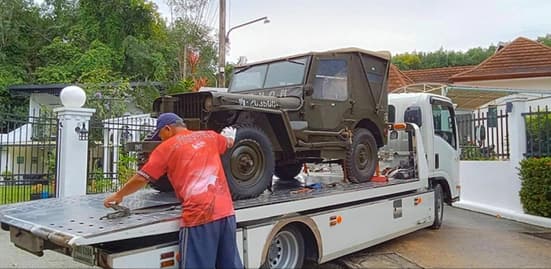
If you're doing it anyway
- Ownership and export paperwork
The Thai vehicle registration book, evidence of what you paid or an independent valuation for the customs value, the VIN documentation, and Thai export clearance before it loads at Laem Chabang. - UK approval
An Individual Vehicle Approval test if the car has no European whole-vehicle type approval, which a Thai-market model generally will not. Expect headlight and speedometer work as part of it. - Relief, registration and cover
Apply for Transfer of Residence relief before importing if you are eligible, then notify HMRC through NOVA within 14 days of arrival. You will also need a DVLA registration application and UK insurance before using the vehicle on the road.
What it actually costs
- Duty and VAT
A vehicle that meets the Transfer of Residence conditions can be imported without customs duty or import VAT. If it does not qualify, duty and VAT may apply to the customs value, freight and insurance; confirm the current calculation with HMRC before shipping. - Freight
Roughly £1,000 to £2,000 to move a saloon from Laem Chabang, whether in a container or on a roll-on roll-off service. - Approval and registration
The IVA test fee, any modification work it demands, DVLA registration, and first-year vehicle tax.
Rates and test fees change, so get current figures from HMRC and the DVSA before you commit. Compare the full cost of freight, approval, modifications, registration, insurance and any tax that applies with the price of a suitable replacement vehicle in Britain.
Bringing your dog or cat
Good news first: there is no quarantine. If the sequence is done properly your dog or cat flies into Britain and comes home with you the same day. The catch is that Thailand is an unlisted country for Great Britain pet travel, which means one extra step, and that step carries a three month wait attached to it.
That wait is what makes the pet the long pole in the whole move. Everything else on this page can be arranged in weeks. This cannot. Start it the day the decision is made, before you have booked a single thing, and the rest of the move will comfortably catch up.
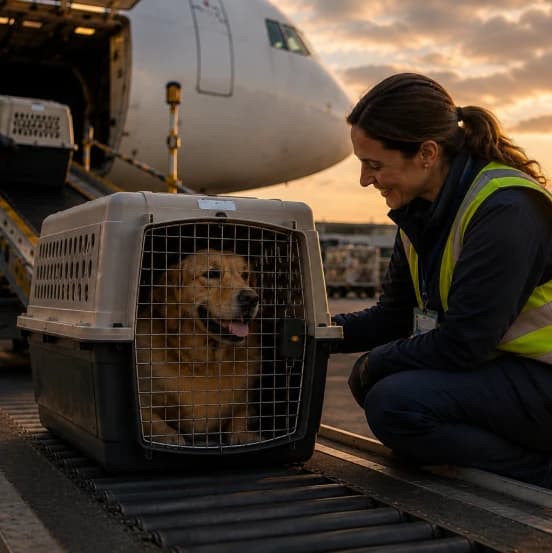
The sequence, and why the order matters
- Microchip first, then rabies vaccination
In that order. A vaccination given before the chip does not count and has to be redone, which is the single most common and most expensive mistake on this route. - A rabies blood test, at least 30 days after the vaccination
Taken by an approved vet in Thailand and sent to an approved laboratory. The result needs to show a rabies antibody level of 0.5 IU/ml or above. - Then wait three months from the date the blood was drawn
Not from the date the result comes back. This is the step that sets your timeline, and there is no way to shorten it. - A Great Britain health certificate within 10 days of travel
Issued by a Thai government-authorised vet, plus tapeworm treatment for dogs given between 24 hours and 5 days before you land. - Booked as manifested cargo on an approved route
Your pet travels as cargo rather than in the cabin or as baggage, on a carrier and route approved for animal arrivals, with the notification to the authorities made in advance.
What people who've made this move say
Thailand to the UK
Life in Britain after Thailand
The logistics are the easy part. The adjustment is the real move, and it is worth being honest about it before you land rather than discovering it in a Tesco car park in November.
Most people arriving from Thailand describe the same three shocks, in the same order: the cost of everything, the darkness in winter, and how much of daily life happens indoors. None of them are reasons not to come. All of them are easier if you saw them coming.
230V
British mains, near enough to Thailand's 220V that your appliances simply work
£1,035
Immigration Health Surcharge per adult, per year of visa, paid upfront
3 months
The wait after your pet's rabies blood test, and the reason to start early
What things cost
Prepare for this one. Almost everything that made Thailand affordable works in reverse. A one-bedroom flat in London runs somewhere around £1,500 to £2,500 a month, and the same flat in Manchester, Leeds, Glasgow or Sheffield is more like £800 to £1,400. That gap is the single biggest financial decision you will make, and it is worth more thought than which sofa survives the container.
Eating is where the change bites hardest. The 60 baht lunch has no British equivalent, and the habit of eating out most days does not survive contact with UK prices. A pub meal is around £12 to £20 a head and a mid-range restaurant £15 to £30. Supermarket cooking is genuinely cheap by comparison, which is why most returners rediscover their kitchen within a fortnight. Thai ingredients are easy to find in any city, and a decent Thai restaurant is usually £12 to £18 for a main.
Then the bills. Utilities for a two-bedroom flat run roughly £150 to £250 a month and rise sharply between October and March, which is a category most people simply did not have in Thailand. Council tax is another. Outside London a car is close to unavoidable, with petrol around £1.40 to £1.60 a litre. In London, an annual zones 1 to 2 travelcard is about £1,600 and you will not miss the car at all.
Safety, and what changes
Safety, and what changes
Britain is a low-crime country by international standards and most people arriving from Thailand find daily life calm. The clearest single improvement is on the roads. Thailand has one of the world's higher road fatality rates and Britain one of the lowest, and if you have spent years watching motorbikes come the wrong way up a soi, the change is noticeable within a week.
The trade-off is petty crime in the bigger cities. Phone snatching, bike theft and bag theft are more common in London than most Thai cities, and the casualness with which people leave a phone on a cafe table in Chiang Mai does not transfer. Ordinary urban habits are enough.
Neighbourhood character varies a lot street by street, more than the city-level picture suggests. Before you sign a tenancy it is worth checking the local area properly, walking it at different times of day, and speaking to people who live there. Britain rewards that kind of research more than most places, because two postcodes a mile apart can feel entirely different.
What people earn
The National Living Wage for workers aged 21 and over rose to £12.71 an hour in April 2026, which is roughly £24,000 to £25,000 a year full time. Average full-time earnings across the UK sit around £35,000 to £37,000, and London and the South East carry a premium of perhaps 15% to 30% for the same job, most of which the rent then takes back.
Rough ranges by sector: software and technology £45,000 to £90,000; financial services in London from £50,000 well upwards; nursing and allied health £28,000 to £45,000; state school teaching £30,000 to £48,000. If you are arriving on a Skilled Worker visa the salary question is already settled, because the route has its own floor of £41,700 or the going rate for the occupation, whichever is higher.
The comparison worth making is not salary against Bangkok salary but salary against local cost. A number that looks transformative on a Sukhumvit spreadsheet behaves quite differently once British rent, council tax and winter heating come out of it, and the same figure goes considerably further in Newcastle or Cardiff than in the Home Counties.
Tax, and the four-year window worth knowing about
For 2026/27, the first £12,570 of income is untaxed, the band up to £50,270 is taxed at 20%, up to £125,140 at 40%, and above that at 45%. National Insurance sits on top. Whether you are taxed on the year you arrive comes down to the Statutory Residence Test, and arriving partway through a tax year often means split-year treatment, so only the post-arrival part counts.
Now the part that matters for long-stay Thailand expats. Since April 2025 the old non-domicile rules are gone, replaced by a four-year regime for new arrivals: if you have been non-UK resident for the previous ten tax years, you can claim to keep your foreign income and gains outside UK tax for your first four years of residence. A great many people leaving Thailand after a decade fit that description exactly, including returning British citizens. Claiming it costs you your personal allowance, so it is worth modelling rather than assuming.
The UK and Thailand have had a double taxation convention in force since 1981, which decides which country gets to tax what and stops the same income being taxed twice. Between the treaty, the Statutory Residence Test, split-year treatment and the four-year regime, this is genuinely worth one paid hour with an adviser who handles both systems, ideally before you move money rather than after.
Finding work
Demand has held up in technology, healthcare, engineering, finance, education and the trades. If you are arriving on a Skilled Worker visa the job is already in place, so the question is settled before you land. For British citizens coming home after years abroad, re-entry is usually easier than expected, particularly anywhere with a skills shortage.
The one thing worth preparing for is the gap on the CV. A decade in Bangkok reads oddly to a British recruiter unless you frame it, and "remote work from Thailand" lands much better than a silence. Many people keep existing clients or a remote role through the transition, which takes the pressure off the first few months entirely. LinkedIn, Indeed and Reed are where most of the market sits.
Self-employment is straightforward: you register with HMRC as a sole trader, and the whole thing takes an afternoon. If you are here on a sponsored visa, check what your conditions allow before you take freelance work alongside it. Regulated professions such as medicine, law and accountancy will want your qualifications assessed against UK equivalents, and that is a process to begin from Thailand rather than after arrival.
Healthcare, schools and getting around
The NHS is the biggest structural difference from Thailand. Once you are resident, GP registration is free and you are entitled to NHS care, funded through National Insurance or through the Immigration Health Surcharge you paid with your visa. It is also a genuine adjustment: the private hospital experience in Bangkok, where you see a specialist the same afternoon, has no NHS equivalent. Waits for non-urgent specialist care can be long, and many people who moved from Thailand end up taking out private cover as a top-up rather than a replacement.
Schools are free and compulsory from 5 to 16, and quality varies enough by area that families routinely choose where to live around it. If your children have been in an international school in Bangkok on a British or IB curriculum, the transition is usually smooth, and the independent sector exists if you want to keep the continuity, typically at £12,000 to £25,000 a year per child.
Rail connects the major cities well enough, though reliability varies by region and by year. London to Manchester, Birmingham, Bristol or Edinburgh runs somewhere between an hour and a half and four and a half hours. Home broadband is good and cheap by Thai standards at roughly £25 to £45 a month, and full fibre is now available across most urban areas.
Banking, and starting from zero again
The currency is sterling. The high street banks are Barclays, HSBC, Lloyds, NatWest and Santander, and they will generally want proof of a UK address before they open anything, which is awkward in your first fortnight when you do not have one. The workaround most arrivals use is a digital bank such as Monzo, Starling or Revolut, which will open an account on a passport and get you a working account number and sort code within days.
For moving money out of Thailand, or for keeping a Thai account open to settle bills and support family, the usual services on this corridor work well and cost far less than a bank wire. Do the larger transfers deliberately rather than in a rush on moving week, and keep your Thai account open until the last direct debit is genuinely dead, because reopening one from Britain is not simple.
The part that surprises returning British citizens most: your credit file starts at nothing. Experian, Equifax and TransUnion hold no record of a decade of perfectly paid Thai bills, so on paper you look like someone who has never borrowed. Get on the electoral roll, take a starter credit card, pay it off in full monthly, and the picture repairs itself within a year. It is worth doing before you need a mortgage rather than during.
The weather, honestly

The weather, honestly
British winters run roughly 2 to 8°C, summers 18 to 25°C in the south, and rain is spread thinly across the whole year rather than arriving in a season. Snow happens and rarely stays. On paper it is mild. That is not the part that gets people.
The part that gets people is the light. In late December it is dark by four in the afternoon in the Midlands and earlier still in Scotland, and after years of Thailand's steady twelve hours it lands harder than the temperature does. Almost everyone who makes this move finds the first winter difficult and the second one ordinary. Practical things help more than you would expect: proper waterproof outerwear bought here rather than optimistically in Bangkok, a home that is actually heated and insulated, a daylight walk built into the day, and budgeting for the October to March energy bills before they arrive.
Where you settle matters too. London and the South East are the mildest and sunniest corner of the country; the West Country and Wales get noticeably more rain; Scotland is colder and darker in winter and glorious in June. If your job or family does not decide it for you, treat the weather as a real factor alongside cost and commute rather than an afterthought.
Questions people actually ask
Plan on 8 to 13 weeks door to door. The sea leg alone is 30 to 45 days from Laem Chabang to Felixstowe, and the spread is wide because carriers are currently split between the Suez Canal route and the longer voyage around the Cape of Good Hope. Around that you have packing and export in Thailand at the start, and clearance plus the road leg in Britain at the end. Air freight from Bangkok to Heathrow lands in 3 to 8 days and costs several times as much per cubic metre, which is why most people send one air consignment of essentials and let the container follow.
Because the route itself is unsettled. The short way from Asia to Northern Europe goes through the Suez Canal; the alternative goes all the way around southern Africa and adds roughly ten days to a fortnight. Through 2026 most Asia to Europe services have continued to sail the Cape while a handful of carriers have begun testing a return to the Red Sea on selected services. Rather than quote you an average that matches neither, we tell you the routing on your actual booking and build the customs timing around it.
It is the relief that lets you bring used household effects into the UK without customs duty and without the 20% import VAT. Four conditions: you have lived outside the UK for at least 12 consecutive months, you have owned and used the goods for at least 6 months before moving, you import them within 12 months of coming to live in Britain, and you do not sell, lend or transfer them for 12 months afterwards. Apply on form ToR1 as soon as you have a move date. HMRC issues a reference number which goes on your customs declaration, and the queue is longest over the summer.
The declaration gets made without the relief, so duty and 20% VAT are charged, and your goods generally sit until it is paid. It is recoverable: HMRC will accept a late Transfer of Residence claim and repay what you were charged, using form C285 or, for some declarations, form C82. So it is a delay and a cash-flow problem rather than a permanent loss. It is also entirely avoidable, which is why your Move Manager pushes the application out while the ship is still at sea.
Yes, and this is the pleasant surprise of the corridor. Thailand runs 220V at 50Hz and Britain runs 230V at 50Hz, which is close enough that appliances designed for one work on the other. Your rice cooker, kettle, fan, stand mixer and hair dryer will all run. What does change is the plug: Thailand uses a mix of flat and round pins, Britain uses the three rectangular pins of a Type G plug. An adapter works, and having the plug properly changed is neater and safer for anything that will live plugged in. Movers coming from the United States or Canada have to abandon almost everything electrical, so this is a genuine saving you should not throw away.
Not without a licence, and sometimes not at all. Exporting a Buddha image from Thailand requires permission from the Fine Arts Department, and there is no informal version of this: it is a licensing process with an inspection, photographs and a passport copy, taking a number of working days once submitted. Heads and fragments are refused outright, and a genuine antique will not be permitted to leave. The practical answer is to raise it at the survey rather than on packing day, so there is time either to obtain the licence or to make other arrangements for the piece. Attempting to export one without permission risks confiscation and a fine.
Antiques, artworks and religious artefacts all fall under the same Fine Arts Department licensing regime as Buddha images, so anything old, carved or devotional needs checking rather than assuming. Cash is capped: you can take up to 50,000 baht per person out of Thailand to the UK, and larger amounts of foreign currency have to be declared at customs. Weapons, controlled substances and protected wildlife products are prohibited in the ordinary way. Everything else in a normal household, including furniture, books, kitchen equipment and clothing, leaves without difficulty.
Yes, for any purpose, including a short visit. Thailand is on the UK's visa national list, which means Thai citizens are not eligible for the Electronic Travel Authorisation that visitors from many other countries use. There is also no Youth Mobility Scheme place for Thailand and no UK Ancestry route unless you have a grandparent born in the UK, the Channel Islands or the Isle of Man. In practice that leaves the Skilled Worker route with a sponsoring employer, Global Talent with an endorsement, a family or partner visa, or a student visa. Apply well ahead: from Thailand, family applications in particular can take months.
Immigration-wise, nothing at all. You come home on your British passport. What you do need is the ToR1, and you qualify comfortably on the residency test if you have been in Thailand for over a year. Keep the evidence: a Thai lease, utility bills, bank statements or a residence certificate. Two other things are worth doing before you land. If you have been claiming a UK State Pension, it has been frozen at the rate it was when you left, and it is uprated back to the current rate once you are living in the UK again, though the missed years are not backdated. And if you have been out of the UK for ten tax years or more, look at the four-year foreign income and gains regime before you move any savings.
For 12 months after you become resident, yes. After that, no, and this is where Thailand differs from a lot of other countries. Thailand is not on the DVLA's designated list, so there is no straight exchange available. You have to apply for a provisional British licence and pass both the theory test and the practical test, exactly as a new driver would. Twelve months sounds generous and disappears quickly, especially with a driving test waiting list on top, so book the theory test in your first few months rather than your eleventh.
By air, as manifested cargo on an approved route, and with no quarantine at the other end if the sequence is right. Thailand is an unlisted country for Great Britain pet travel, so there is an extra step compared with a European move. The order is fixed: microchip first, then the rabies vaccination, then a rabies antibody blood test at least 30 days after that vaccination showing 0.5 IU/ml or above, then a three month wait counted from the date the blood was taken. After that comes a Great Britain health certificate issued within 10 days of travel, plus tapeworm treatment for dogs 24 hours to 5 days before arrival. Allow four to five months minimum and start it before anything else in the move.
It depends on whether the vehicle qualifies for Transfer of Residence relief and what approval work it needs. A private vehicle you have owned and used for at least six months can qualify for relief from customs duty and import VAT when the other ToR conditions are met. A Thai-market model may still need an Individual Vehicle Approval test, headlight or speedometer work, DVLA registration, insurance and freight. Get ToR approval and a complete landed-cost estimate before comparing import with the price of an equivalent used car in Britain.
It starts rising again. Thailand is one of the countries where the UK State Pension is frozen, meaning it stays at the rate that applied when you first claimed it or left the UK, with none of the annual increases. Once you are living in the UK again it is uprated to the current full rate. The increases you missed while abroad are not paid retrospectively, so there is no back payment, but the ongoing amount catches up immediately. Tell the Pension Service your new UK address as soon as you have one.
It depends on your residence status and how long you have been away. UK tax residence is decided by the Statutory Residence Test, and arriving mid-year often qualifies you for split-year treatment so only the post-arrival part of the year counts. The significant point for long-term Thailand residents is the regime that replaced non-domicile status in April 2025: if you have been non-UK resident for the previous ten tax years, you can claim to keep foreign income and gains outside UK tax for your first four years of UK residence. Claiming it costs you your personal allowance, so it needs modelling. The 1981 UK-Thailand double taxation convention sits underneath all of it and prevents the same income being taxed twice.
Six to eight weeks between confirming the move and the container loading at Laem Chabang is a comfortable minimum. That covers the survey and quote, the inventory check against Thai export rules, packing and export documentation, and the vessel booking itself. Add three weeks or more for the ToR1 to clear HMRC before arrival, and more than that if you are moving between May and July when the queue is longest. The exception, as always on this route, is the pet: four to five months, started before everything else.
Your next steps
Your next steps
Start the pet process today if a dog or cat is coming. The microchip, then the rabies vaccination, then the blood test 30 days later, then a three month wait. Nothing else on this list takes as long.
Get the ToR1 application moving as soon as you have a move date, and gather the Thai residency evidence now while you can still walk into the bank or the amphoe office rather than emailing them from Britain.
Book your inventory check early, not on packing day. Buddha images, antiques and old carved furniture all need a Fine Arts Department licence, and that is a matter of weeks.
Keep your electricals. Thailand and Britain both run 50Hz at around the same voltage, so a plug adapter is genuinely all most appliances need. Measure the British rooms and stairs before deciding about the furniture.
Speak to an adviser who knows both tax systems before you move money, and check whether the four-year foreign income regime applies to you. If you have been out of the UK ten years or more, it probably does.